Top 10 Types of Self Storage Containers for Global Buyers
Choosing the right storage unit can shape a project’s cost, safety, and daily efficiency. For global buyers, self storage containers are more than simple steel boxes. Their structure, ventilation, insulation, access design, and transport options all affect long-term value. A container placed beside a construction site may need wide doors, while a retail facility may prioritize appearance and customer access.
This guide examines the top 10 types of self storage containers used across different markets. It considers standard steel units, insulated models, portable containers, modified shipping containers, refrigerated options, and other practical designs. Each type has different strengths. Some perform well in wet coastal climates, while others suit dry commercial yards or compact urban locations. Dimensions, locking systems, floor materials, and corrosion protection deserve careful comparison.
Details matter.
Reliable purchasing also requires more than comparing online prices. Buyers should review material grades, manufacturing records, warranty terms, delivery conditions, and supplier experience. Independent inspections can reveal uneven doors, weak seals, or poor paint coverage before installation. Regional climate and site access should guide the final decision, not attractive photographs alone.
There is no universal best container. That assumption often causes expensive mistakes. Even experienced buyers may overlook drainage, ground preparation, or future relocation costs. The following overview offers a practical starting point, based on common industry requirements and real-world purchasing considerations. It also encourages careful questions, because a cheaper unit may become costly when maintenance, transport, or modification is included.

Understanding Self-Storage Containers and Their Main Applications
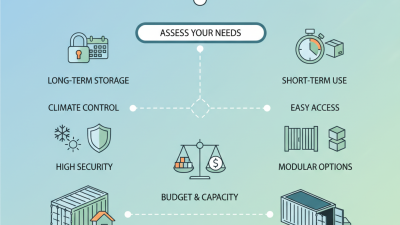
Self-storage containers serve different needs, and their design affects daily handling, security, and operating costs. Standard steel containers suit household goods, tools, furniture, and seasonal inventory. High-cube models provide extra internal height for bulky items. Side-opening units make pallets easier to reach, while double-door designs support through-loading at busy sites. Flat-pack containers reduce shipping volume and work well for temporary storage locations.
Insulated containers help protect temperature-sensitive materials from sudden outdoor changes. Refrigerated units offer controlled cooling, but they require reliable electricity and routine equipment checks. Open-top containers support tall cargo, although weather protection needs careful planning. Portable units can be delivered directly to a property, reducing repeated transport for customers. Modular units create larger storage areas when several sections are connected.
Details matter more than appearance. Check steel thickness, door seals, ventilation, floor strength, drainage, and locking points before purchase. A clean exterior does not guarantee a dry interior. Inspect welds and corner fittings, especially after long-distance shipping. Local climate also changes the decision: humid regions need airflow, while cold areas may need insulation. Buyers should confirm dimensions, loading limits, certification documents, and maintenance access with qualified suppliers. I have found that the cheapest container often becomes expensive after repairs, repainting, or site modifications. Mistakes still happen. A realistic inspection plan prevents many of them.
Top 10 Types of Self-Storage Containers for Global Buyers
Understanding Self-Storage Containers and Their Main Applications
The chart compares the approximate typical internal volume of widely used self-storage container types.
Standard and high-cube containers are commonly used for household goods, inventory, equipment, and general warehousing.
Open-top and side-opening designs improve loading flexibility, while refrigerated and insulated containers support temperature-sensitive storage.
Actual dimensions and usable capacity may vary by manufacturer, door configuration, insulation, and regional specifications.
Standard Steel Containers for General-Purpose Storage
Standard steel containers remain a practical choice for general-purpose storage worldwide. Their strong corten steel walls protect furniture, tools, packaged goods, and seasonal equipment from rain and impact. Common sizes include 20-foot and 40-foot units, but available space should guide the decision. Measure twice.
From hands-on inspections, the details matter more than the label. Check door seals, locking bars, corner posts, and the wooden floor before delivery. A sound floor should feel firm and dry, without soft areas or deep stains. Ventilation openings help reduce condensation, especially when day and night temperatures change sharply. In humid regions, pallets should keep cartons above the floor and away from the walls. Leave a narrow air gap.
Site preparation also affects service life. Place the container on level concrete, compacted gravel, or suitable support blocks. Uneven ground can twist the frame and make doors difficult to close. Buyers should confirm transport access, crane clearance, drainage, and local placement requirements before ordering. Corrosion protection deserves regular attention near coastal areas. Wash off salt deposits and repair damaged coating promptly.
Steel containers are not perfect. I once underestimated how quickly poor airflow could affect stored textiles. That mistake reinforced a simple rule: inspect the interior after the first wet season. Choose a lock compatible with the door design, record visible damage at delivery, and verify internal dimensions rather than relying only on nominal size. This disciplined approach makes standard steel storage more predictable for international buyers.
Portable, Mobile, and Drive-Up Storage Containers
Portable, mobile, and drive-up containers are central choices for global storage buyers. The Self Storage Association’s 2024 Self Storage Demand Study found 16.7 million U.S. households rented storage in 2023. That demand supports flexible capacity, but buyers should not copy U.S. assumptions without local validation. Portable units arrive by truck and suit relocations, renovations, and temporary inventory. Mobile units can be delivered, loaded at ground level, then collected after a project ends.
Drive-up containers remain practical for frequent access and facility-based storage. Steel construction, lockable doors, forklift pockets, ventilation, and corrosion protection matter in real conditions. For coastal sites, salt-resistant coatings deserve attention. In hot climates, airflow can protect furniture and electronics. Other options in a top-ten evaluation include modular, insulated, refrigerated, high-security, open-top, and specialty containers. Price alone is a weak shortcut. Bigger capacity is not always better. Unused space still creates transport, handling, and site costs.
Tips: Measure the access route, turning radius, ground slope, and overhead clearance before ordering. Request payload limits, door dimensions, floor loading, drainage details, and delivery insurance in writing. Check local planning and fire requirements. Run a small pilot first. A container that looks ideal online may fail at the gate. This deserves a second check.
Specialized Containers for Climate Control and Secure Storage
Top 10 Types of Self Storage Containers for Global Buyers
Specialized Containers for Climate Control and Secure Storage
Climate-controlled containers protect goods from heat, cold, condensation, and sudden temperature changes. Insulated panels, sealed doors, ventilation, and monitoring systems work together. They suit furniture, electronics, archives, and temperature-sensitive inventory. Ask for temperature ranges, humidity targets, sensor records, and alarm response procedures. Numbers matter. An attractive specification means little without maintenance logs and calibration dates.
Secure storage requires more than a strong steel shell. Look for tamper-resistant locks, controlled entry, lighting, cameras, and clear access records. International buyers should confirm drainage, corrosion protection, fire planning, and local installation requirements. Container placement also matters. Shade can reduce heat gain, while raised foundations limit water exposure.
A careful inspection often reveals issues hidden in brochures. Check door seals personally or request dated inspection photos. Small gaps can weaken an expensive climate-control system. Do not assume every unit measures humidity continuously. Some systems control temperature but neglect moisture, which may damage paper or metal. A trial unit can reveal noise, power demand, and uneven cooling before larger orders. Specifications are useful, but maintenance decides reliability.
How Global Buyers Compare Sizes, Standards, Costs, and Delivery Options
Global buyers compare storage containers by usable space, not only advertised length. A standard 20-foot unit measures about 6.058 meters long, 2.438 meters wide, and 2.591 meters high under ISO 668. High-cube versions provide roughly 30 centimeters more height. That difference matters for shelving, machinery, and stacked cartons. Open-side, insulated, and modified units solve specific access or climate problems. They can also increase inspection and maintenance needs.
Standards reduce uncertainty, but they do not remove it. ISO 1496 covers container testing and performance requirements, while local rules may govern placement, fire safety, and electrical work. Buyers should request internal dimensions, door clearance, floor loading, corrosion records, and certification documents. A 20-foot box is not always the better bargain. A poorly planned delivery can erase its price advantage.
Delivery costs remain difficult to compare. UNCTAD’s Review of Maritime Transport 2024 reported a 2.4% increase in maritime trade during 2023, while routing disruptions continued to affect schedules and rates. Compare ocean freight, terminal handling, documentation, inland transport, unloading, and site access separately. Request a delivered-cost quotation, not only a container price. Small details matter. A narrow gate, weak road, or absent crane can create unexpected charges. Published estimates can mislead, and buyers should leave room for seasonal changes and imperfect information.