Let’s discuss your container requirements
01708 225350
Call Us
sale@modularmarbles.com
Email Us

2026 Best Excavator Tracks Buying Guide for Global Buyers

Choosing Excavator Tracks in 2026 is not simply a matter of comparing prices. Global buyers must match each track to the excavator’s model, operating weight, undercarriage design, and working environment. A track that performs well on soft farmland may fail quickly on broken concrete. A deep tread may improve traction, but it can also increase vibration on hard surfaces.

“Track life begins with correct application, not with the lowest purchase price,” says Richard Hale, an independent undercarriage specialist with more than two decades of field experience. His point is practical. Buyers should verify the exact track number, width, pitch, link count, rubber compound, and steel-core construction before ordering. Even a small measurement error can cause poor alignment, premature wear, or installation problems.

This guide examines the details that matter to contractors, rental companies, dealers, and fleet managers. It covers tread patterns, rubber quality, core strength, supplier reliability, warranty terms, shipping conditions, and total ownership cost. It also considers muddy sites, rocky ground, demolition work, and long-distance transport. These conditions are not equal.

Look closely at the sidewalls. Check the steel cores. Ask for traceable specifications.

A low-cost option may appear attractive beside a premium track. However, downtime, emergency freight, and lost productivity can change the calculation quickly. No buying guide removes every risk. Some supplier claims still require careful verification. That is the uncomfortable part.

The best decision combines technical evidence, field experience, and realistic maintenance planning. For global buyers, reliable Excavator Tracks should fit the machine precisely, survive the intended workload, and remain supportable after delivery.
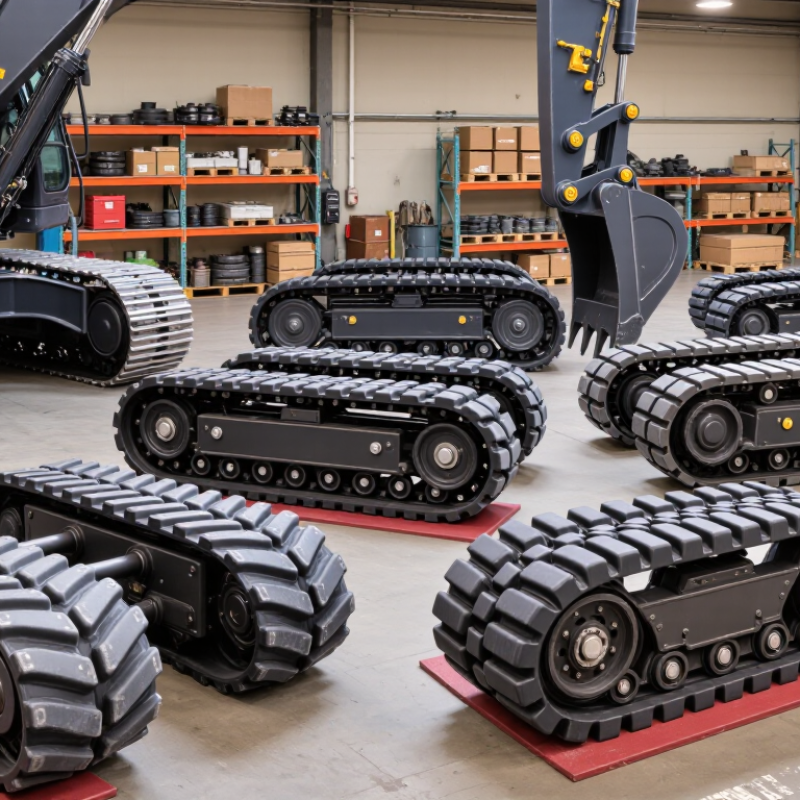
2026 Best Excavator Tracks Buying Guide for Global Buyers

Excavator Track Types: Rubber, Steel, and Hybrid Systems Compared

2026 Best Excavator Tracks Buying Guide for Global Buyers

Rubber, steel, and hybrid tracks serve different working conditions. Rubber tracks protect asphalt, finished concrete, and landscaped ground. They also reduce vibration around residential sites. The trade-off is faster wear on sharp rock, demolition debris, and abrasive soil. A 2024 Grand View Research report estimates the global rubber track market will grow strongly through 2030, supported by compact construction equipment demand.

Steel tracks provide stronger resistance against cuts, heat, and heavy impact. They suit quarries, forestry, demolition, and long shifts on rough ground. However, steel can damage paved surfaces and create more vibration. Track width matters. Wider shoes reduce ground pressure, but they may increase turning resistance and undercarriage stress. Hybrid systems combine steel chains with replaceable rubber pads. They offer better surface protection without abandoning structural strength. Still, pad bolts loosen if installation torque and daily inspection are neglected. The choice is not always neat.

Tips: Match the track to the worst surface, not the average one. Check the machine manual for tension limits. Measure grouser wear, bolt condition, and sprocket alignment every 50 operating hours. The Association of Equipment Manufacturers reported continued global construction equipment demand in its 2024 market outlook, but regional conditions vary. Therefore, calculate transport, climate, service access, and replacement time before buying. A cheaper track can become expensive after one avoidable failure. Feedback from operators often matters more than a glossy specification sheet.

Match Track Dimensions to Machine Specs, Load, and Ground Pressure

2026 Best Excavator Tracks Buying Guide for Global Buyers

Match Track Dimensions to Machine Specs, Load, and Ground Pressure

Buying excavator tracks starts with measurement, not price. Record track width, pitch, link count, shoe pattern, and undercarriage clearance. Match every dimension to the machine’s service manual. A small pitch error can accelerate sprocket wear. ISO 16754:2004 provides a recognized method for estimating ground pressure. Use actual operating data, not catalogue assumptions. For example, a 20,000 kg excavator with two 800 mm tracks and 4.6 m contact length provides about 7.36 m² of contact area. Static ground pressure is roughly 27 kPa. Payload and uneven terrain increase it quickly.

Tips: Measure both tracks separately. Check worn shoes before ordering. Wider shoes can reduce pressure, but they may increase bending stress. Narrower shoes usually improve stability on firm ground. The European Commission’s Joint Research Centre estimates that about 23% of European subsoils face compaction risk. Low pressure matters on wet fields, landscaped sites, and weak embankments.

Track selection must also reflect real load cycles. A heavy bucket, long reach, or frequent side-slope work changes the pressure pattern. Field checks often reveal uneven wear that specifications miss. This calculation is useful, but imperfect. Soil moisture, track tension, and turning resistance still matter. Leave room for inspection.

2026 Best Excavator Tracks Buying Guide for Global Buyers - Match Track Dimensions to Machine Specs, Load, and Ground Pressure

Use this reference table to shortlist rubber tracks or steel track assemblies by excavator operating class. Final selection must be confirmed against the machine's service manual, undercarriage serial number, sprocket profile, roller design, track pitch, and the actual working conditions.

Excavator Operating Class Typical Operating Weight Typical Track Width Common Track Pitch Range Typical Track Link Count per Side Typical Ground Contact Length Estimated Ground Pressure Recommended Track Configuration and Application
Mini Excavator 0.8–3.5 t 180–300 mm 72–101 mm 28–42 links 1.2–1.9 m 25–45 kPa Rubber tracks with a smooth or lightly patterned tread are suitable for landscaping, utility work, paved areas, and finished surfaces. Wider tracks can reduce rutting on soft ground.
Compact Excavator 3.5–6.0 t 300–450 mm 90–125 mm 38–48 links 1.7–2.3 m 35–60 kPa Choose rubber tracks for mixed urban and construction work. Reinforced steel cores and high-tensile cables are preferred for demolition debris, sharp aggregate, and frequent travel.
Light Excavator 6.0–12.0 t 400–600 mm 125–154 mm 42–52 links 2.2–2.8 m 45–70 kPa Steel tracks with standard or triple-grouser shoes are common for earthmoving. Rubber or bolt-on rubber pads are useful where surface protection and road travel are important.
Mid-Size Excavator 12.0–20.0 t 500–800 mm 154–175 mm 45–54 links 2.6–3.3 m 50–80 kPa Use heavy-duty steel chains and appropriately sized shoes for quarrying, trenching, and bulk excavation. Wider shoes improve flotation but can increase turning resistance and final-drive load.
Heavy Excavator 20.0–30.0 t 600–900 mm 171–203 mm 46–56 links 3.0–3.8 m 55–90 kPa Heavy-duty steel tracks with reinforced links are recommended for rock, overburden, and high-cycle digging. Select shoe width according to soil bearing capacity and transport limits.
Large Excavator 30.0–45.0 t 700–1,000 mm 190–216 mm 48–60 links 3.4–4.3 m 65–105 kPa Use reinforced track groups, heavy-duty pins and bushings, and durable grouser shoes for continuous production work. Monitor chain elongation, shoe bolt torque, and sprocket wear together.
Very Large Excavator 45.0–70.0 t 800–1,200 mm 203–240 mm 50–64 links 3.8–4.8 m 80–135 kPa Specify the complete undercarriage as a matched system. Heavy-duty or extreme-duty components are appropriate for mining, mass excavation, and high-impact applications.

Technical notes: Ground pressure is an indicative range calculated from approximate operating weight divided by the combined ground-contact area of both tracks. Actual values vary with counterweight, attachment, fuel level, track adjustment, shoe width, soil conditions, and machine configuration. Track pitch is the center-to-center distance between adjacent track pins. Track link count is not interchangeable between machines with different sprocket tooth counts, pitch standards, or undercarriage designs. Always verify the complete dimensions in millimetres before ordering.

Select Tread Patterns for Ground Pressure Below 0.5 kg/cm²

2026 Best Excavator Tracks Buying Guide for Global Buyers

Select Tread Patterns for Ground Pressure Below 0.5 kg/cm²

Keeping ground pressure below 0.5 kg/cm² requires more than choosing a wider track. Machine weight, track length, attachment load, and soil moisture all affect the result. A useful estimate divides operating weight by total track contact area. The estimate is not perfect. Mud can hide uneven loading, while lifting work may increase pressure sharply.

For soft clay, wetlands, and prepared landscaping sites, choose wide pads with a shallow, open grouser pattern. These tracks spread weight and reduce deep rutting. Bar-style or low-profile tread designs often provide a better balance between traction and soil protection. Deep grousers may pull strongly, but they can concentrate force at each edge. That matters on saturated ground. Flat or lightly raised patterns suit finished surfaces, although steering traction may decline.

Tips: Measure actual track width and contact length. Check pressure with the planned attachment installed. Test on the jobsite before full production. Inspect packed soil between grousers. A clean tread does not always mean low pressure. I have seen machines meet a paper calculation yet sink because one track carried more load. Recheck after adding tools, fuel, or counterweights. Local soil tests are valuable, but they are easy to overlook. Select the pattern after considering both flotation and control, not pressure alone.

Estimate Service Life: Rubber Tracks Typically Last 1,200–2,000 Hours

For global excavator buyers, 1,200–2,000 operating hours is a practical service-life estimate for rubber tracks. Not a guarantee. A compact excavator working on clean soil may reach the upper range. The same track can fail earlier on broken concrete, sharp rock, or abrasive sand. Hours are only clues. Jobsite conditions often decide the result.

During inspections, look for deep cuts, exposed steel cords, missing tread blocks, and uneven wear. Check tension after the machine cools. Overtight tracks create heat and accelerate wear around the sprocket area. Loose tracks may derail during turning and damage the undercarriage. Daily cleaning also helps, especially when mud packs inside the frame. A simple log of hours, ground conditions, and adjustment dates improves replacement planning.

Before purchase, request technical specifications, manufacturing dates, load ratings, and clear warranty terms. Confirm the track width, pitch, link count, and machine operating weight. A lower price can become expensive when fit is poor or delivery is delayed. I have seen buyers underestimate abrasive sites and overestimate service life. That mistake is understandable, but costly. Budget for uneven conditions, because forecasts are rarely perfect. Replace both tracks when wear differs sharply, unless a qualified technician approves another approach.

Verify Supplier Quality Through ISO 9001, Warranty, and Global Support

For global excavator buyers, supplier verification should begin with ISO 9001, not a polished website. The ISO Survey 2023 recorded 1,265,216 ISO 9001 certificates worldwide. Yet certification alone does not guarantee durable rubber tracks. Ask for the certificate number, issuing body, scope, and latest audit date. The scope should cover track design, compounding, production, and inspection.

Warranty terms reveal more than sales promises. Request written coverage for tread separation, premature cracking, core failure, and manufacturing defects. Check the operating limits, claim process, response time, and excluded conditions. A useful warranty should state hours, months, evidence requirements, and replacement rules clearly. Vague language creates expensive arguments later. It happens.

Global support matters when a track fails beside a quarry or remote road. KHL’s Yellow Table 2024 reported that the world’s 50 largest construction equipment manufacturers generated 243.4 billion dollars in 2023 sales. This scale reflects a complex supply chain, where replacement availability and technical communication affect downtime. Verify regional warehouses, emergency shipping options, multilingual engineers, and local service partners. Request two customer references from similar soil conditions. Also review sample inspection reports, batch traceability, tensile testing, and field-failure records. A supplier may provide excellent documents but weak after-sales support. That uncomfortable gap deserves careful questioning before the purchase order.

2026 Best Excavator Tracks Buying Guide: Supplier Verification Timeline

ISO 9001 certification is commonly maintained on a three-year certification cycle with annual surveillance audits. Warranty duration and technical-support response times are commercial terms, so buyers should confirm them in writing before ordering excavator tracks.

We are proud to support

Registered Company Name: Upminster Containers Limited. Registered Address: Mardyke Works, St Mary's Lane, Upminster, Essex RM14 3PA. Registered Company Number: 00940382
Developed & Maintained By Space Rocket Digital.
chevron-down