Let’s discuss your container requirements
01708 225350
Call Us
sale@modularmarbles.com
Email Us

2026 Top Automatic Circuit Recloser Suppliers for Buyers

Choosing an Automatic Circuit Recloser supplier is a protection decision, not just a price comparison. Buyers must check voltage and current ratings, interruption capacity, control options, environmental suitability, testing records, and local service support. On a feeder, a recloser may open after a fault, then close again when the fault appears temporary. Coordination matters. So does dependable maintenance.

The International Energy Agency’s Electricity Grids and Secure Energy Transitions report says annual grid investment needs to rise from about USD 300 billion to more than USD 600 billion by 2030. That estimate signals the scale of grid upgrades, not a forecast of recloser sales. IEEE Fellow Thomas A. Short, author of the Electric Power Distribution Handbook, has emphasized the importance of sound distribution-system design and protection coordination. Put plainly, and as a paraphrase rather than a verbatim quotation: “A protection device must work as part of a coordinated system.” This guide compares leading suppliers for 2026, focusing on product capability, documented experience, and support that buyers can verify. A glossy specification sheet is not enough. Ask for test evidence, references from comparable networks, and clear details on spare parts and response times. Supplier information can change, so confirm current models and regional availability before purchasing.
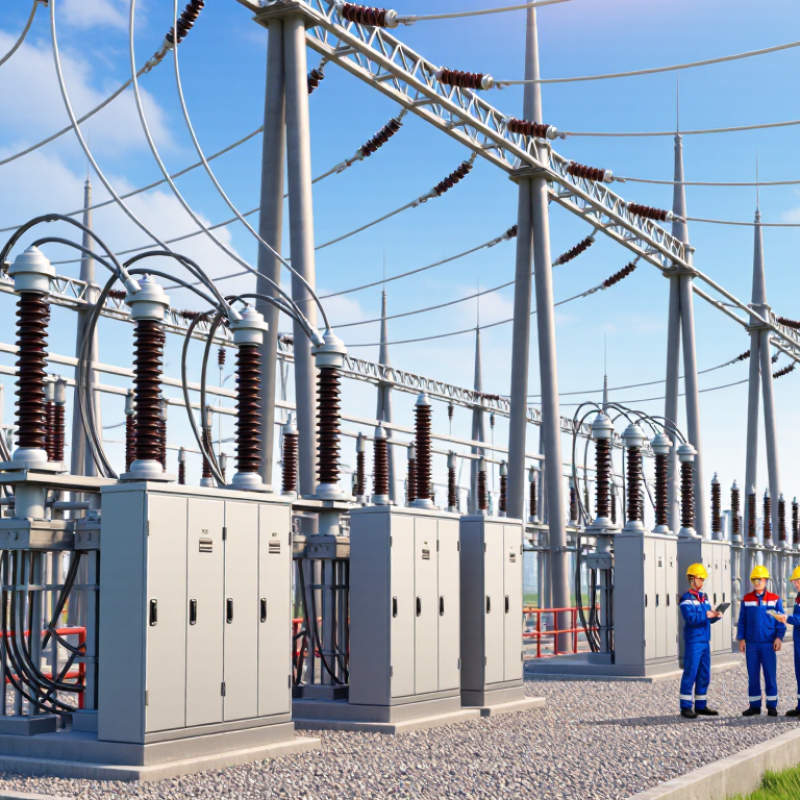
2026 Top Automatic Circuit Recloser Suppliers for Buyers

Automatic Recloser Basics: Their Role in Medium-Voltage Distribution Networks

Automatic Recloser Basics: Their Role in Medium-Voltage Distribution Networks

A medium-voltage feeder can be interrupted by a branch brushing a line or lightning causing a brief fault. An automatic recloser detects abnormal current, opens its contacts, then attempts to restore service after a short pause. Many faults clear quickly. Persistent faults trigger a lockout, keeping the damaged section isolated rather than repeatedly energizing it.

That pause matters.

Reclosers work alongside relays, fuses, and sectionalizing devices. Their settings must coordinate so the nearest suitable device responds first, limiting how many customers lose power. IEEE C37.60-2018 specifies requirements for high-voltage alternating-current circuit reclosers; utilities use such standards when evaluating equipment and performance. Field conditions still matter. A setting that looks sound in a study may need adjustment after feeder changes or load growth.

The U.S. Energy Information Administration reported an average of about 5.5 hours of electricity interruptions per customer in 2022, including major event days, in its Electric Power Annual. That figure reflects many causes, not recloser performance alone. Reclosers cannot prevent every outage, and poor coordination can create unnecessary interruptions. Their value is practical: isolate persistent faults, restore service after temporary ones, and make feeder behavior easier to manage.

The details are easy to underestimate.

Operating Sequence: How Reclosers Detect Faults and Make Repeated Attempts

An automatic circuit recloser monitors line current and, on many designs, voltage as well. Sensors report abnormal conditions to a control unit. When current exceeds a configured threshold, the control signals the interrupter to open. This isolates the affected section and gives a temporary fault time to clear. A brief contact with a branch, for example, may end before the next attempt.

Timing matters. After a programmed dead time, the recloser closes again and checks the line. If current remains within limits, service continues. If the fault persists, it trips open once more. Settings may allow several attempts, with different delays between them. The exact sequence depends on the device and the protection plan.

Not every fault clears. A damaged cable or fallen conductor can cause repeated trips, so the recloser eventually enters lockout and stays open until inspected and reset. Buyers should compare trip curves, sequence settings, sensing options, and coordination with upstream and downstream protection. These details affect which device operates first and how much of the network loses power. Field conditions can be less tidy than a test sheet suggests; settings need review against actual load and fault data.

Standards and Ratings: IEC 62271-111 Covers Reclosers Above 1 kV to 38 kV

IEC 62271-111 applies to AC automatic reclosers and fault interrupters rated above 1 kV and up to 38 kV. For buyers, this scope is a useful starting point, not a complete selection guide. Check the applicable edition and whether its requirements match the intended network and procurement documents.

Compare the rated voltage with the system’s highest operating voltage. Then check continuous current, short-circuit breaking capacity, insulation levels, and the specified operating sequence. Ratings matter. A recloser may meet the voltage range yet still be unsuitable for a feeder’s fault current or switching duty. Ask for relevant type-test documentation, and confirm the stated ratings against the actual product configuration.

Consider the installation, too. A pole-mounted unit exposed to heat, dust, or frequent switching faces different conditions from one in a sheltered substation. Confirm control-power needs, protection settings, communications interfaces, and service support before ordering. Small details matter. A rating table cannot show every site constraint, and standard compliance alone does not guarantee a good fit. Check assumptions with the utility or project engineer, especially where network data is incomplete. That review can prevent a costly mismatch.

2026 Supplier Comparison: Assess IEEE C37.60 Compliance, Controls, and Service

For a 2026 automatic circuit recloser purchase, compare suppliers against the exact duty on your feeder, not just headline ratings. Ask for IEEE C37.60 test evidence tied to the offered configuration, including rated voltage, interruption capability, insulation level, and operating conditions. A general compliance statement is not enough to verify that the tested unit matches the proposal. Check that drawings, nameplate data, and technical schedules agree. Small mismatches can slow approval or commissioning.

Controls deserve the same scrutiny as the interrupter. Confirm protection-setting ranges, local and remote operation, event records, and compatibility with the utility’s SCADA interface. Ask to see sample fault and switching logs; clear timestamps and readable records help crews investigate a trip at the substation. Details matter. Compare service coverage by asking about commissioning support, spare-part availability, training, and response arrangements for your region. Request references for installations with similar voltage and operating conditions, then ask what problems arose after energization. A polished presentation cannot answer that by itself. One limitation in any supplier comparison is that service promises can be hard to measure before a fault occurs, so record response expectations in the purchase documents. Even a careful checklist may miss a site-specific issue; have protection and operations staff review the final configuration together.

2026 Top Automatic Circuit Recloser Suppliers for Buyers — 2026 Supplier Comparison: Assess IEEE C37.60 Compliance, Controls, and Service

Buyer comparison matrix. Request the same information from each supplier and verify that test evidence applies to the exact recloser configuration being offered.

Comparison dimension Information to compare across suppliers Evidence to request Buyer verification point
IEEE C37.60 compliance Applicable standard edition; stated compliance scope; tested recloser type and configuration. Declaration of conformity and type-test reports, including the test laboratory, report date, and tested ratings. Check that the evidence identifies the offered model and relevant options. Confirm the applicable edition and project requirements with the supplier and utility.
Electrical ratings Rated maximum voltage, continuous current, short-circuit interrupting capability, insulation levels, and operating sequence. Published rating tables, nameplate data, and supporting test documentation for the offered configuration. Compare ratings with system voltage, available fault current, insulation coordination, and the required reclosing duty; do not compare interrupting ratings without checking their stated conditions.
Installation and insulation Overhead or other applicable installation type; insulation medium; environmental and enclosure options. Technical drawings, installation instructions, insulation details, and environmental operating limits. Verify compatibility with the site layout, ambient conditions, altitude, pollution exposure, clearances, and utility specifications.
Control and protection functions Protection elements, curve selection, sequence coordination, event records, settings access, and available communications options. Control manual, function list, settings software details, sample event records, and communications protocol documentation. Confirm required functions and interoperability with the utility’s protection and operating practices. Treat protocol support as configuration-specific, not automatic.
Auxiliary power and backup Control supply options, battery requirements, backup duration, and behavior during loss of auxiliary power. Power-system specifications, battery sizing guidance, and operating limits for the proposed control package. Check supply compatibility and required backup duration against site conditions and operating requirements.
Monitoring and cybersecurity Available status, metering, alarms, remote access, user management, and security features. Communications manuals, supported interfaces, firmware policy, access-control details, and security advisories process. Assess against the utility’s network and cybersecurity requirements; verify which features are included in the quoted configuration.
Testing and quality documentation Routine production tests, inspection records, traceability, and documentation delivered with each unit. Sample test certificates, inspection and test plan, serial-number traceability process, and quality-system documentation. Agree on required factory tests, witness points, documentation format, and acceptance criteria before purchase.
Delivery and lifecycle support Quoted lead time, warranty terms, spare-parts availability, repair options, and product-support period. Written quotation, warranty document, parts list, support policy, and stated lead time for the specified configuration. Compare like-for-like scope, exclusions, delivery assumptions, and warranty start conditions; request written confirmation of service commitments.
Field service and training Commissioning assistance, technician training, troubleshooting support, and service coverage for the project location. Service coverage statement, escalation contacts, training outline, and any response-time commitments offered in writing. Confirm coverage for the installation location, support hours, travel or service charges, and availability of trained personnel.

Comparison note: IEEE C37.60 compliance, ratings, options, delivery, and service availability should be verified from supplier documentation for the specific project and offered configuration.

Buyer Selection Criteria: Match System Voltage, Fault Duty, and Reclosing Requirements

Choosing an automatic circuit recloser starts with the feeder, not a catalog voltage. Confirm nominal and maximum system voltage, grounding method, insulation level, and continuous-current requirements. Then check fault duty at the installation point using an up-to-date short-circuit study, including expected source changes. Interrupting and making ratings must cover the calculated fault current. A close-and-latch mismatch can stress equipment. Details matter.

Reclosing requirements deserve equal care. Specify shot count, dead time, reset behavior, and coordination with fuses and downstream devices. IEEE C37.60-2018 provides performance requirements for AC automatic reclosers up to and including 38 kV. It is a useful technical reference. The U.S. Energy Information Administration’s 2022 Form EIA-861 reliability data reported about 5.5 hours of customer interruptions on average, including major events. Excluding major events, the average was about 2.5 hours. These figures do not guarantee a particular recloser will improve reliability; feeder design and fault causes vary. Still, restoration behavior belongs in the specification. A missed detail happens.

We are proud to support

Registered Company Name: Upminster Containers Limited. Registered Address: Mardyke Works, St Mary's Lane, Upminster, Essex RM14 3PA. Registered Company Number: 00940382
Developed & Maintained By Space Rocket Digital.
chevron-down