Let’s discuss your container requirements
01708 225350
Call Us
sale@modularmarbles.com
Email Us

What is a 20ft container and how is it used?

In the logistics and transportation industry, "20ft containers" play a crucial role. These containers are used globally for shipping various goods. According to John Smith, a logistics expert with over 20 years of experience, "20ft containers are the backbone of international trade." His insights highlight their importance in facilitating large volumes of cargo movement.

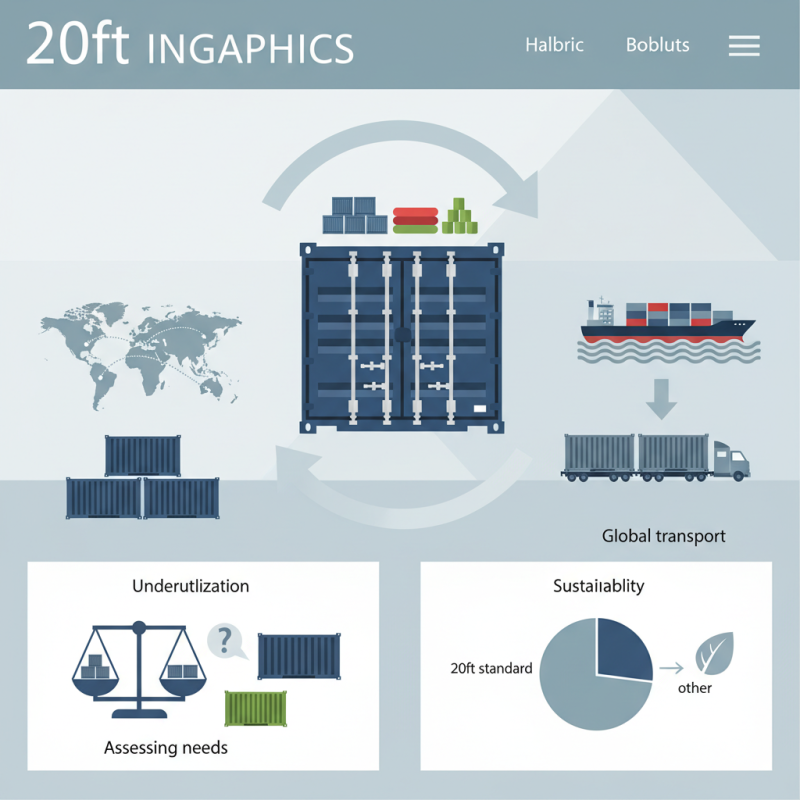
These containers are standardized, making them easy to stack and transport. They can hold a variety of items, from electronics to clothing. Their versatility is key for businesses looking to optimize shipping costs. However, challenges persist. Not all cargo fits perfectly into these containers, leading to potential waste or underutilization.

While they are the industry standard, not every shipment requires a 20ft container. Over-reliance on this size can limit flexibility. Companies should assess their needs carefully. The goal should always be efficient use of resources. Balancing container size with shipment volume is essential for sustainability.
What is a 20ft container and how is it used?

What is a 20ft Container: Dimensions and Specifications

A 20ft container is a standard shipping unit widely used for transporting goods globally. Its dimensions typically measure 20 feet in length, 8 feet in width, and 8.5 feet in height. These containers have a maximum payload capacity of about 30,480 pounds (around 13,500 kg) and a volume of approximately 1,170 cubic feet (33.2 cubic meters). This makes them ideal for various commodities, including machinery, electronics, and consumer goods.

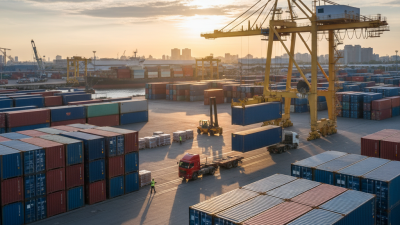
Despite their versatility, the utilization of 20ft containers faces challenges. One major issue is the available space for storage and transport. Some ports struggle with congestion, limiting the movement of these containers. Additionally, the improper stacking and handling can lead to damage, affecting contents and supply chains. According to a report from the International Maritime Organization, inefficient loading and unloading processes can increase costs by up to 25%.

Shipping with 20ft containers is often seen as cost-effective. However, their standardization does not always meet specific needs. Customizations can be costly, and not all shipping companies provide options. Moreover, the environmental impact of container shipping raises concerns. Research indicates this mode of transport accounts for about 3% of global greenhouse gas emissions. Balancing efficiency with sustainability requires ongoing reflection within the industry.
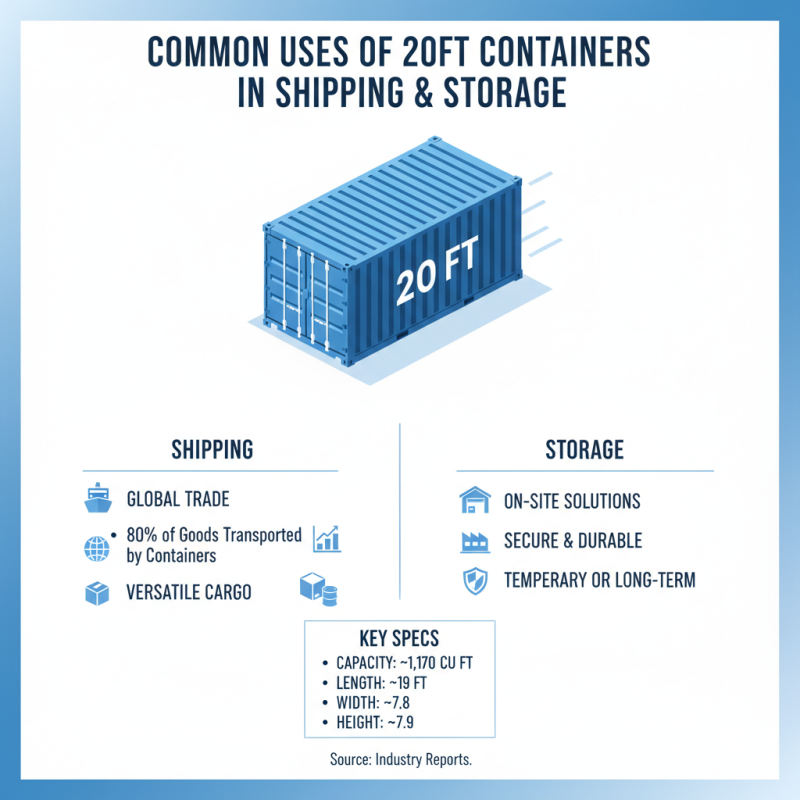
Common Uses of 20ft Containers in Shipping and Storage

What is a 20ft container and how is it used?

A 20ft container is a standard shipping container that is widely used for transporting goods. Its interior measures approximately 19 feet long, 7.8 feet wide, and 7.9 feet high. This gives a capacity of around 1,170 cubic feet. According to industry reports, around 80% of global trades are conducted using containers, with a significant number of these being 20ft units.

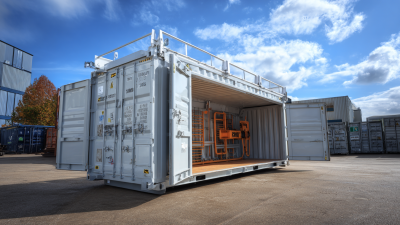
Common uses of 20ft containers include shipping and storage. They are often used by manufacturers to export goods. Many businesses prefer them for their portability and efficiency. In storage, these containers provide a secure solution for excess inventory. They can be easily transported and stacked, making them ideal for warehouses.

However, challenges exist. Containers can suffer from wear and tear. They may rust or get damaged during transport. Additionally, not all loading and unloading procedures are optimized. This can lead to delays. While they offer flexibility, storage space can be limited compared to larger containers. Strategic planning is crucial to mitigate these issues and fully utilize the benefits of 20ft containers.

How Weight Capacity Affects the Loading of a 20ft Container

When dealing with a 20ft container, understanding its weight capacity is crucial. These containers are commonly used for transporting goods. They have a standard weight limit, typically around 22,000 pounds, including the container's own weight. This limitation can impact how you load your cargo.

Balancing the weight evenly is essential. If one side is heavier, it can cause issues during shipping. Think of it like stacking books. Too many on one side makes it unsteady. Improper loading can lead to damages. Always check the weight of items before packing.

Many underestimate the importance of precise measurements. Items like machinery can vary greatly in weight. It's easy to miscalculate, leading to overloading. This not only creates risks but can result in fines. Planning ensures safer transport and peace of mind. Attention to weight capacity provides a smoother shipping experience.

What is a 20ft container and how is it used? - How Weight Capacity Affects the Loading of a 20ft Container

Dimension Metric Value Imperial Value Weight Capacity Common Uses
Length 6.058 meters 20 feet Up to 30,480 kg (67,200 lbs.) Shipping goods
Width 2.438 meters 8 feet N/A Transporting bulk items
Height 2.591 meters 8.5 feet N/A Storage solutions
Volume 33.2 cubic meters 1,172 cubic feet N/A Moving household items
Typical weight for cargo 23,000-25,000 kg 50,000-55,000 lbs. N/A Exporting goods

Types of Goods Ideal for Transporting in 20ft Containers

A 20ft container is a versatile shipping option. It's widely used for transporting various types of goods. These containers are ideal for medium-sized shipments. They can hold a range of products, from furniture to machinery. The standardized size makes loading and unloading easier in ports.

Goods that fit perfectly in a 20ft container include household items. For instance, moving an entire household is manageable. You can fit appliances, boxes, and personal belongings. Additionally, retail products can also be transported in these containers. Clothing, electronics, and toys are common items shipped this way.

Tips: Remember to pack items securely. Use cushioning to prevent damage. Label your boxes well. This practice saves time during unloading. Also, consider the weight distribution. Overloading one side can cause issues during transport. A balanced load keeps the container stable.

In some cases, shipping documents may not be clear. This can lead to delays or extra costs. Always double-check paperwork before shipping. A little attention goes a long way. It ensures everything runs smoothly, minimizing surprises along the way.

Types of Goods Ideal for Transporting in 20ft Containers

Advantages of Using 20ft Containers in the Supply Chain Management

What is a 20ft container and how is it used?

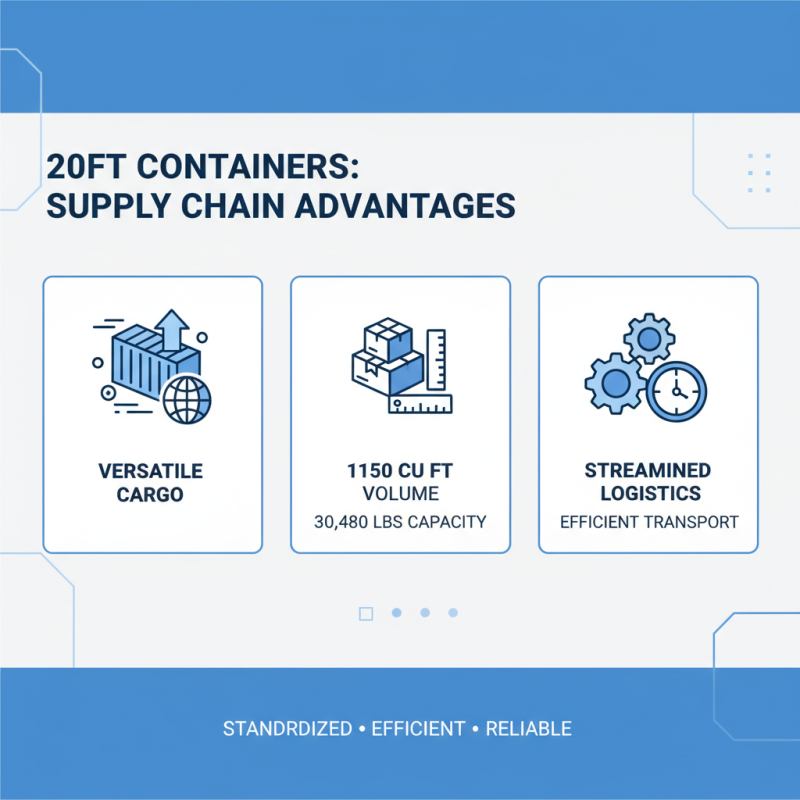
A 20ft container is a popular choice in supply chain management. Its standardized dimensions make it versatile for various types of cargo. Typically, a 20ft container can hold about 1,150 cubic feet of goods and has a maximum weight capacity of 30,480 pounds. This efficiency is key for businesses looking to streamline logistics.

Using 20ft containers offers numerous advantages. First, they optimize shipping costs. Reports indicate that companies can save up to 20% on shipping fees by utilizing these containers effectively. This is particularly beneficial for smaller businesses that need to manage expenses. Additionally, 20ft containers can be easily transported by truck, rail, or ship, enhancing flexibility in distribution.

Tips: Always assess the type of goods you plan to ship. Certain items may require specific handling. Moreover, keeping containers organized can reduce loading times. Implementing tracking technology can also provide real-time updates on shipments, enhancing transparency.

However, not every shipment fits perfectly in a 20ft container. Some oversized goods may require alternative solutions. It's vital to weigh the pros and cons carefully. Additionally, consider regional regulations that can impact container transportation. These factors can complicate logistics if disregarded.

We are proud to support

Registered Company Name: Upminster Containers Limited. Registered Address: Mardyke Works, St Mary's Lane, Upminster, Essex RM14 3PA. Registered Company Number: 00940382
Developed & Maintained By Space Rocket Digital.
chevron-down