Let’s discuss your container requirements
01708 225350
Call Us
sale@modularmarbles.com
Email Us

7 Shuttering Magnet Tips Every Buyer Should Know?

A shuttering magnet may look like a compact steel block, but its performance can affect setup speed, panel alignment, and concrete finish. The wider precast market shows why these small components matter. Grand View Research estimated the global precast concrete market at USD 144.6 billion in 2023 and forecast 6.6% annual growth through 2030. That figure describes precast concrete, not shuttering magnets; it is useful context, not a magnet-market estimate.

For a sound technical perspective, consider NIST concrete materials researcher Dale P. Bentz. His published work addresses concrete materials and production variables, rather than shuttering magnets specifically. I cannot verify a magnet-specific quotation from him, so I will not put invented words in quotation marks. The practical takeaway, in paraphrase, is simple: controlled processes matter. Buyers should apply that mindset to magnet force, housing quality, corrosion protection, dimensions, handling, and supplier testing.

Small details count. A magnet that shifts on a production table can leave a visible edge in the finished panel. Yet headline holding force alone does not tell the whole story. These seven tips will help buyers compare specifications with actual shop-floor needs, ask sharper questions, and check performance before committing to volume. They are not a substitute for testing. Real conditions can be messier.
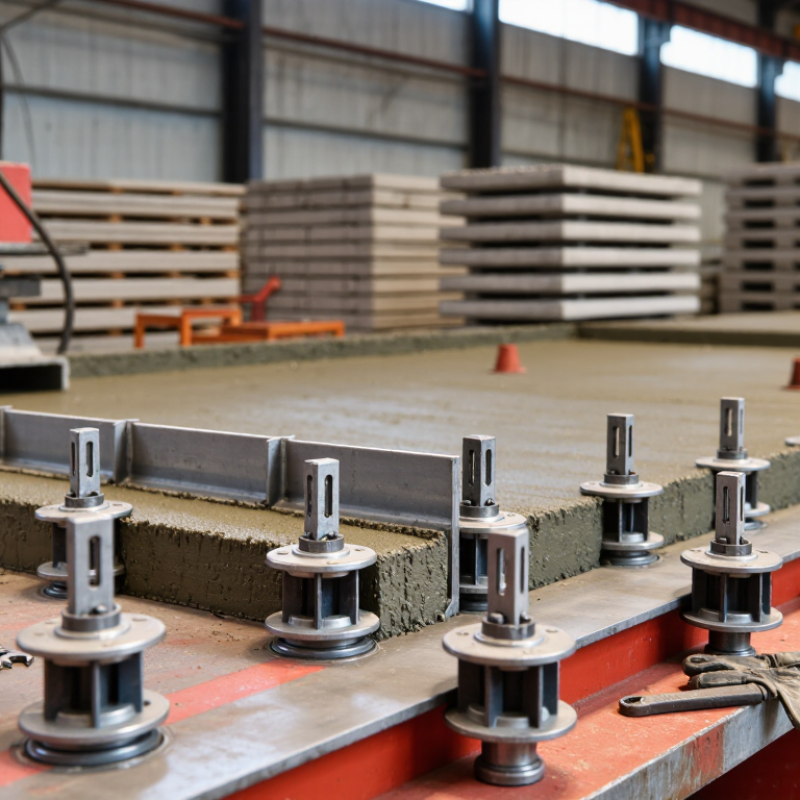
7 Shuttering Magnet Tips Every Buyer Should Know?

Understand How Shuttering Magnets Work and Where They Fit

Shuttering magnets hold steel formwork against a casting bed through a concentrated magnetic circuit. They do not attach to concrete. Their practical role is to position side rails, block-outs, and edge forms quickly, then release them for reuse. On a precast line, that can reduce drilling and leave the steel table largely undamaged. McKinsey’s 2019 report, Modular construction: From projects to products, says modular methods can shorten construction schedules by 20–50%. That is a broad industry estimate, not a guaranteed result for magnet-equipped formwork. Still, faster setup matters only when alignment and repeatability remain reliable.

Tips: Match magnet capacity to the form and expected loading. Keep the contact face and casting bed clean; even a thin gap can reduce holding performance. Check the magnet’s seating after each move. A small rocking movement is a warning, not a detail to ignore. Test the layout before pouring.

Where they fit best is repetitive precast work with flat, ferromagnetic steel beds and changeable form layouts. They are less suitable on rough, coated, warped, or non-magnetic surfaces without a verified alternative fixing method. A clean-looking setup can still conceal poor contact. That is easy to miss. Record positioning and release checks, and follow the supplier’s rated-force data rather than treating pull force as a universal site capacity.

Choose the Right Magnetic Force for Your Formwork

Choosing magnetic force starts with the concrete load, not the magnet’s largest advertised pull figure. ACI 347R-14, Guide to Formwork for Concrete, explains that fresh-concrete pressure depends on factors such as placement rate, temperature, concrete density, and vibration. For a rough screening estimate, normal-weight concrete is often taken as about 24 kN/m³. At a one-metre fluid head, that is roughly 24 kPa of pressure. If one magnet supports 0.1 m² of formwork, the simple estimate is 2.4 kN before allowances. This is not a final design value; real pressure and load sharing vary.

Check how the supplier measured holding force. A straight pull from clean, thick steel is not the same as resistance to sliding on a dusty, painted, or uneven bed. Small detail. Big difference. Map magnet spacing to the panel area each unit actually supports, then include the loads from concrete placement and vibration. Leave an engineering margin, and verify the panel, steel surface, and magnet arrangement together. A high-rated magnet can still disappoint if contact is partial. I would also question any selection based only on magnet count; it skips the load path and the site conditions.

7 Shuttering Magnet Tips Every Buyer Should Know: Choose the Right Magnetic Force for Your Formwork

Use this conversion chart to compare force ratings: 1 kN is approximately 224.81 lbf. These are reference values, not universal recommendations. Choose a magnet based on the formwork design, concrete pressure, contact conditions, and the manufacturer’s rated holding force.

Check Compatibility with Panels, Rails, and Concrete Loads

A shuttering magnet must match the actual panel steel, not just the catalogue drawing. Check plate thickness, flatness, coating, and contact area; paint, rust, or a small gap can reduce holding force. Small gaps matter. Confirm that the magnet’s rated force was measured on steel comparable to your panel. Then check the rail width and profile: a magnet that seats unevenly can shift when concrete is placed or vibrated.

Concrete pressure also matters. ACI 347R-14, Guide to Formwork for Concrete, estimates lateral pressure using factors including placement rate and concrete temperature. For a placement rate of 1.5 metres per hour and a concrete temperature of 20°C, its applicable equation gives about 38 kPa before project-specific coefficients and limits. This is pressure, not the total force on one magnet. Calculate the panel’s resultant load, then consider spacing, eccentricity, vibration, and the rail’s stiffness. Real sites vary.

One easy-to-miss detail is the load path: concrete pushes the panel, the panel transfers force to the rail, and the rail loads the magnets. Verify each connection, not just the magnet’s pull rating. Ask for test conditions and a safety margin; a rated value alone can be misleading. I would still confirm the setup with a representative trial panel, especially when coatings, narrow rails, or uneven surfaces are involved.

Compare Build Quality, Safety Features, and Supplier Support

When comparing shuttering magnets, inspect the housing, welds, and contact surfaces rather than relying on appearance alone. A sturdy steel case should sit flat against the formwork, with no loose parts or rough edges that could snag gloves. Check the magnet’s stated holding force against your panel system and working conditions. Numbers need context.

Safety features deserve the same attention as magnetic strength. Look for a release mechanism that workers can operate without striking the unit with improvised tools. A clear handle or lever can make removal more controlled, especially when concrete residue has built up around the magnet. Test the release during a sample setup, not only in a clean showroom. That step is easy to skip.

Supplier support matters after delivery. Ask for practical guidance on placement, cleaning, storage, and inspection intervals. Useful answers should address your actual formwork dimensions, not repeat a generic product sheet. Confirm whether replacement parts and technical help are available if a handle bends or a casing is damaged. Response time matters on a busy site. Still, even a helpful supplier cannot replace routine checks by the crew. Record defects and remove questionable units from service until they are assessed. A small oversight can become an expensive delay.

7 Shuttering Magnet Tips Every Buyer Should Know? — Compare Build Quality, Safety Features, and Supplier Support
Tip What to Compare Practical Checks Why It Matters
1. Check the housing and finish Housing material, plate thickness, weld quality, surface finish, and protection against corrosion. Look for a rigid, evenly finished housing with no visible cracks, sharp burrs, loose parts, or poorly finished welds. Ask how the unit is protected for the conditions at your site. The magnet is repeatedly handled and exposed to concrete residue, moisture, and jobsite impacts. A sound housing helps protect its internal components.
2. Verify holding-force information Published holding-force data, test method, contact surface, and the conditions used for testing. Request the test details and compare products under equivalent conditions. Confirm suitability with a trial on the actual formwork; holding performance can change with surface gaps, dirt, alignment, and mounting conditions. A stated force alone does not guarantee performance in every application. Real contact conditions affect how securely a magnet attaches.
3. Inspect the release mechanism Button or lever design, accessibility, movement, and protection against accidental operation. Check that the mechanism can be operated deliberately and that it moves smoothly during a sample inspection. Ask for the recommended release and cleaning procedure. A suitable release mechanism can make positioning and removal more manageable while helping reduce unintended release during handling.
4. Review handling and pinch-point risks Grip points, edges, handling instructions, and any supplied guards or accessories. Identify areas where fingers could be trapped when the magnet attaches to steel. Confirm that workers receive safe-handling instructions and use appropriate site procedures. Strong magnetic attraction can cause sudden movement when the unit approaches a steel surface. Careful handling helps reduce pinch and impact hazards.
5. Confirm formwork compatibility Magnet dimensions, mounting arrangement, contact-face geometry, and compatibility with the intended steel formwork system. Compare drawings and measurements with the actual formwork. Check for obstructions, uneven contact, required accessories, and the manufacturer’s installation guidance. A magnet that does not sit flat or fit the mounting arrangement may not perform as expected, even if its listed specifications appear suitable.
6. Ask about inspection and maintenance Cleaning guidance, wear limits, inspection frequency, repair options, and replacement-part availability. Request written maintenance instructions. Ask how to check for housing damage, a sticking release mechanism, excessive residue, or other signs that a unit needs attention. Regular checks can help identify damage or contamination before the magnet is used again. Follow the supplier’s instructions and site safety procedures.
7. Evaluate supplier documentation and support Product drawings, technical data, test information, operating instructions, warranty terms, and response to application questions. Ask for current documentation and clear guidance for your intended use. Confirm lead times, support channels, warranty conditions, and how product changes or replacement parts are handled. Useful documentation and responsive technical support help buyers assess compatibility, plan operation, and resolve questions throughout the product’s service life.

Inspect, Handle, and Store Magnets for Reliable Reuse

Reliable reuse begins with a clean, close inspection. Wipe concrete dust and steel filings from the contact face. Check the casing, welds, fasteners, and release handle for cracks, looseness, or deformation. Small details matter. Look for rust, chipped coatings, and debris that could hold the magnet slightly above the form. Even a thin gap can reduce contact and holding performance.

Handle each unit by its designated grip, not by its cable or release lever. Keep fingers clear of pinch points, and avoid dropping or striking the magnet. The NIOSH Applications Manual for the Revised NIOSH Lifting Equation (1994) sets a 23 kg (51 lb) load constant under ideal lifting conditions. That is not a universal safe lifting limit: awkward reaches, twisting, and repeated lifts call for a lower load or mechanical assistance. Check the unit’s actual weight before moving it. It is easy to rush this step.

After stripping, remove residue with a suitable non-damaging tool, then dry the magnet fully. Store it flat in a dry area, with contact faces protected from impact and loose metal debris. Keep release mechanisms accessible, and do not stack units if the load could bend handles or housings. Before reuse, seat each magnet on a clean, representative form and confirm its position and engagement. A quick visual check can miss hidden damage, so record recurring faults and take questionable units out of service.

We are proud to support

Registered Company Name: Upminster Containers Limited. Registered Address: Mardyke Works, St Mary's Lane, Upminster, Essex RM14 3PA. Registered Company Number: 00940382
Developed & Maintained By Space Rocket Digital.
chevron-down