An Automobile Bushing is a small component with an outsized role. Pressed between suspension or chassis parts, it cushions impacts, reduces vibration, and permits controlled movement. Look closely at a control arm: its bushing sits between the arm and frame, where rubber flexes as the wheel travels over a pothole. The detail matters. A worn bushing can contribute to noise, uneven tire wear, or imprecise handling, although these symptoms can have other causes.
The demand for durable components is clear. The International Organization of Motor Vehicle Manufacturers (OICA) recorded 93,546,599 vehicles produced worldwide in 2023. S&P Global Mobility reported that the average age of U.S. light vehicles reached 12.6 years in 2024. These figures do not measure bushing failures, but they show why component condition and lifespan deserve attention. There is no single replacement interval for every vehicle.
This guide explains what an Automobile Bushing does and how its main types differ, including control-arm, stabilizer-bar, shock-absorber, and subframe bushings. It also compares common materials, such as rubber and polyurethane, and outlines practical signs of wear. Design varies by model. A quick visual check can help, but it cannot confirm every fault; a qualified inspection may be needed. Even experienced owners can misread a clunk. The aim is to make the component easier to identify, not to promise that one material or type suits every vehicle.
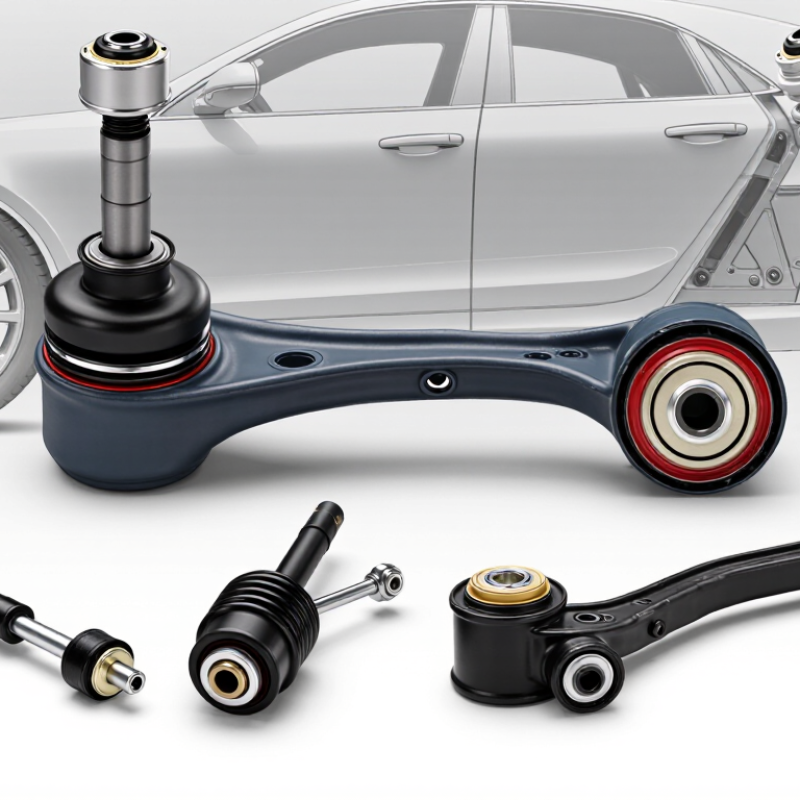
An automobile bushing is a flexible sleeve or mount placed between connected parts, often around a metal bolt or pin. It is commonly made from rubber or polyurethane, and some designs contain hydraulic fluid. You may find bushings in control-arm joints, stabilizer links, and engine mounts. Their role is to allow limited movement while cushioning vibration, road impacts, and noise before these reach the cabin. Small part. Big job.
A bushing also helps keep suspension components in their intended positions as wheels move over bumps. The fit matters: a worn or split sleeve can let a control arm shift, sometimes causing clunks, uneven tire wear, or imprecise steering. Not every noise means a failed bushing, though; inspection is needed. SAE International’s J200 standard classifies automotive elastomer materials by type, class, and grade, illustrating why “rubber” alone does not describe a compound’s performance. S&P Global Mobility reported that the average age of U.S. light vehicles reached 12.6 years in 2024. That figure is not a bushing-life estimate, but it highlights why age, heat, and repeated flexing deserve attention during maintenance checks. A bushing can look intact and still feel loose.
An automobile bushing is a flexible sleeve between suspension parts, often made from rubber or another elastomer. Common forms include solid, voided, and fluid-filled designs. Each lets components move slightly while limiting harsh contact. As a wheel crosses a pothole, the bushing compresses and shears, absorbing some impact before it reaches the body. That small movement also helps prevent metal-on-metal knocks.
The effect depends on stiffness and condition. Softer bushings can isolate more vibration, but may allow extra suspension movement; firmer ones can sharpen control while transmitting more road feel. It is a trade-off, and not always an obvious one. The World Health Organization’s 2018 Environmental Noise Guidelines recommend road-traffic exposure below 53 dB Lden. That outdoor exposure figure is not a cabin target or a bushing test, but it shows why reducing noise matters. Bushings address only part of vehicle noise; tires, road surfaces, and engine mounts matter too. A worn bushing may cause a dull thump over bumps or a faint steering-wheel tremor. Inspection should check for cracks, looseness, and fluid leakage in hydraulic types. A visual check can miss internal wear.
Automobile bushings commonly use natural rubber, synthetic rubber, polyurethane, or layered composites. Each material handles vibration, heat, movement, and wear differently. Natural rubber flexes well and helps isolate road noise, making it suitable for many suspension joints. Synthetic compounds, such as EPDM or nitrile rubber, can be selected for particular exposure conditions. EPDM tolerates weathering and ozone; nitrile offers better resistance to oils. The right choice depends on where the bushing sits, not simply its price.
Supply matters, too. The U.S. Geological Survey’s Mineral Commodity Summaries 2024 estimates global natural-rubber production at about 14.7 million metric tons in 2023. That figure describes the wider raw-material market, not bushing use specifically. For bushings, engineers assess hardness, tensile strength, and aging behavior; ASTM D2000 classifies rubber compounds, while ASTM D412 covers tensile testing. Polyurethane can resist abrasion and hold its shape under load, but may transmit more vibration or create squeaks if poorly designed. Small differences count. A bushing that feels firm in a hand sample may behave differently after heat, compression, and repeated suspension movement. I would not choose by material name alone. Check the compound and the actual service conditions.
Automobile bushings are flexible joints that isolate vibration while guiding suspension movement. Their design changes how they handle noise, impact, and steering response. Bonded-rubber bushings use rubber fixed between metal sleeves, making them common in control arms and trailing arms. They absorb road shock quietly. Polyurethane versions are usually firmer and resist deformation, but may transmit more vibration. Hydraulic bushings contain fluid-filled chambers that damp certain frequencies; they often appear in higher-comfort suspension applications. Spherical bushings allow precise pivoting, though they provide less vibration isolation.
Location matters as much as material. Control-arm bushings manage wheel movement during braking and cornering. Sway-bar bushings hold the bar against the chassis, while subframe bushings soften vibration between the suspension cradle and body. Engine and transmission mounts also use compliant bushings to limit powertrain movement. S&P Global Mobility reported that the average age of U.S. light vehicles reached 12.6 years in 2024. That figure is not a bushing-failure rate, but older vehicles may warrant closer inspection for cracked rubber, fluid leakage, or excess play. Diagnosis still needs care: tire wear or a loose fastener can mimic bushing symptoms.
Tips: Check for torn rubber and shiny contact marks. Compare both sides. A quiet test drive alone can miss early wear.
Automobile bushings are rubber or polyurethane joints that cushion movement between suspension parts. They help limit vibration while allowing controlled movement. Wear often appears gradually. A dull clunk over a speed bump, extra steering wander, or vibration through the floor can be a clue. None proves a bushing has failed; tires, joints, and other suspension parts can cause similar symptoms.
With the vehicle parked, look for rubber that is split, crumbling, or separated from its metal sleeve. Check for shiny contact marks, uneven gaps, or a bushing that looks pushed out of place. Use a flashlight, and never crawl beneath a vehicle supported only by a jack. If safe access is limited, have a qualified technician inspect it with the suspension loaded and unloaded. Compare both sides. A visual check can miss internal wear, and some movement is normal. Note when the noise occurs and whether steering or braking feels different; those details help narrow down the cause.


