Choosing the best Aluminum Profile supplier in China is less about finding a famous name than matching production to your project. A window-frame order, for example, may require different alloy grades, wall thicknesses, and surface finishes than an industrial machine component. Small differences matter. A profile that looks right in a catalog may not fit an assembly after installation.
A reliable comparison starts with clear specifications: alloy and temper, dimensions, tolerances, finish, order quantity, and intended use. Ask suppliers how they control extrusion quality and whether they can provide samples, inspection records, and relevant test information. Check whether anodizing or powder coating is handled in-house or by a partner, since that can affect consistency and lead time. No single supplier suits every buyer. A low quotation may omit tooling, packaging, or finishing costs, so compare complete offers rather than headline prices. Communication is also evidence: timely, specific answers about production capacity and delivery schedules are more useful than broad promises. This guide examines practical ways to evaluate Chinese manufacturers, verify claims, and balance quality, service, and cost. Some details can still be difficult to confirm remotely; a sample and careful specification review reduce uncertainty, but they do not remove it.
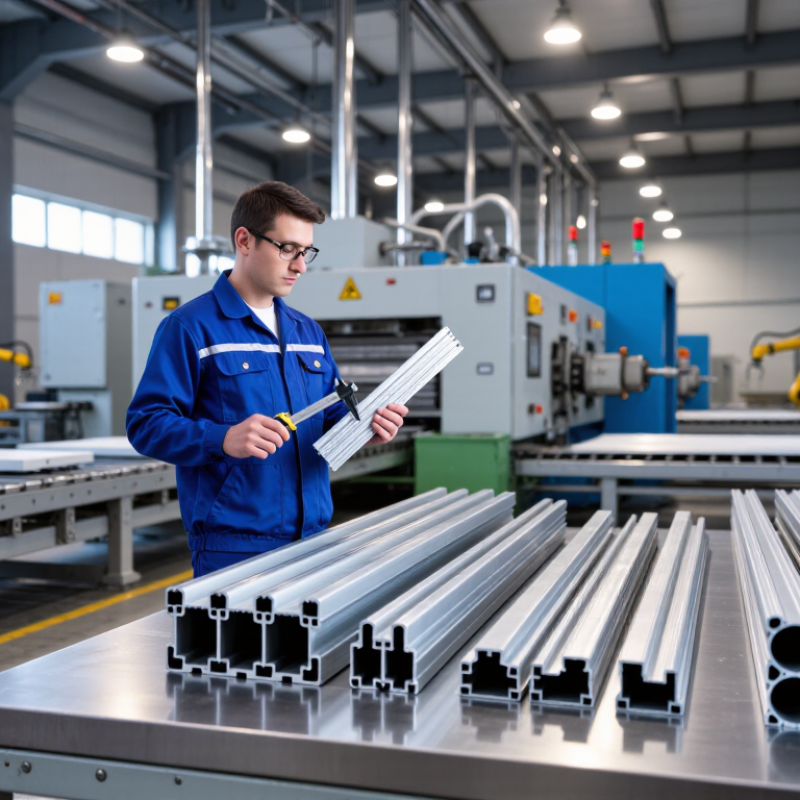
A leading aluminum profile supplier is defined by repeatable performance, not a polished catalog. Ask how it controls alloy composition, billet heating, extrusion speed, and aging. These choices affect strength, straightness, and fit. Good answers include measurable tolerances, inspection records, and clear explanations of what can vary. Details matter.
Review samples under realistic conditions. A profile may look clean on a desk yet twist during installation. Check dimensions at several points, inspect cut ends, and test the finish for consistent color and adhesion. For anodized or powder-coated surfaces, ask about coating thickness and how defects are recorded. Request material certificates and batch traceability, then compare them with delivered goods. A supplier should also explain how packaging protects long profiles from dents and abrasion.
Service matters too. Confirm minimum order quantities, tooling charges, sample timelines, production capacity, and shipping schedules in writing. Ask who handles technical questions when a drawing changes. A dependable supplier flags risks early instead of promising every deadline. Still, no factory is perfect; small variations can happen, and buyers sometimes overlook unclear drawings. That deserves honest discussion. Choose a partner willing to investigate defects, share evidence, and improve processes—not merely offer the lowest quote.
Who Is the Best Aluminum Profile Supplier in China?
Key Factors for Comparing Chinese Aluminum Profile Manufacturers
A large factory is not automatically a reliable one. The USGS Mineral Commodity Summaries 2024 estimated China’s primary aluminum production at 41 million metric tons in 2023, showing the scale of its supply base. That figure says little about an individual extruder’s consistency. Compare alloy control, die design, and dimensional inspection. Ask for batch-level chemical composition and tolerance records, not only a sample polished for display. Small details matter: a profile that varies by a fraction of a millimeter may complicate assembly.
Check surface-treatment controls, too. Request measured coating thickness and test records for the finish you need, such as anodizing or powder coating. The World Bank’s Logistics Performance Index 2023 ranked China 19th among 139 economies, but a national ranking cannot predict one factory’s delivery record. Ask for recent on-time shipment data, packaging photos, and a realistic production schedule. Scale is not proof. I would still verify a trial order; factory visits can impress, yet they do not replace documented checks. Compare how clearly each supplier answers questions about rejected batches, tooling ownership, and corrective action. Hesitation is worth noticing.
| Comparison Factor | What to Look For | How to Verify | Score (1–5) |
|---|---|---|---|
| Product and alloy suitability | Experience with the required profile shape, alloy, temper, and intended application. | Request alloy and temper details, technical data sheets, and samples made to the relevant specification. | _____ |
| Dimensional control | Clear dimensional tolerances and inspection procedures for critical features. | Review sample inspection reports and confirm measurement methods and acceptance criteria before production. | _____ |
| Surface finishing | Finishing options that match the project, such as anodizing, powder coating, or mill finish, with agreed acceptance criteria. | Check finish samples, color and gloss requirements, coating specifications, and inspection records for the requested finish. | _____ |
| Quality management | Documented quality controls covering incoming material, production, inspection, and nonconforming products. | Review relevant procedures and audit records; verify any claimed management-system certification, including its scope and validity. | _____ |
| Production capability | Suitable extrusion, tooling, machining, and finishing resources for the order’s requirements and volume. | Ask which processes are performed in-house, what is subcontracted, and how capacity and production scheduling are managed. | _____ |
| Traceability and documentation | Consistent records linking production lots to material and inspection documentation. | Request a sample document pack, such as a material certificate and inspection report, and check that the records match the supplied lot. | _____ |
| Lead time and delivery planning | A clear production schedule that accounts for tooling, sampling, manufacturing, finishing, and shipment. | Request a written schedule with milestones and ask how delays, order changes, and shipment updates are handled. | _____ |
| Export packing and logistics | Packaging appropriate for the profile length, surface protection, transport method, and destination requirements. | Review packing specifications and confirm shipping terms, loading arrangements, and export-document responsibilities in writing. | _____ |
| Communication and issue resolution | Responsive communication, clear technical answers, and a defined process for handling complaints or corrective actions. | Evaluate response clarity during quotation and sampling; ask for the documented process for investigating quality issues. | _____ |
| Total score | Use the same requirements and scoring method for each supplier. A higher score indicates a closer fit to the project criteria; it is not a guarantee of future performance. | ____ / 45 | |
Scoring guide: 1 = does not meet requirements; 2 = major gaps; 3 = acceptable with conditions; 4 = meets requirements; 5 = strong documented evidence.
An aluminum profile is designed around its real job, not just its outline. Engineers consider load, unsupported span, fixing points, and the space available for assembly. Wall thickness and internal ribs affect strength, weight, and extrusion difficulty. A narrow slot may look neat on a drawing but leave too little room for a fastener. Die feasibility matters. Generous corner radii and consistent wall sections usually help metal flow more evenly through the die. Hot metal moves fast, but not magically. Small design compromises can prevent costly revisions later.
During extrusion, a heated billet is pushed through a shaped steel die. The profile is cooled, stretched straight, and heat-treated to reach its specified temper. It is then cut to length, with straightness and dimensions checked against the drawing. Surface treatment follows. Anodizing can provide a durable oxide layer, while powder coating adds color and another protective layer. Each finish needs suitable pretreatment, and samples should be checked in the intended lighting. Inspection should include coating consistency, critical dimensions, and a trial assembly. A drawing can still miss a real-world snag, so reviewing a finished sample is worthwhile.
Certifications are a useful starting point when assessing an aluminum profile supplier in China. Ask for current certificates and check that their scope covers the actual factory, processes, and products you need. A document alone cannot prove consistent performance. Paper matters. Request recent test reports for alloy composition, tensile strength, coating thickness, and corrosion resistance where relevant. Confirm that reports identify the tested product and laboratory, rather than relying on a generic certificate.
Quality control should be visible on the production floor. Look for incoming billet checks, documented extrusion parameters, and dimensional inspections using calibrated instruments. For a finished profile, inspect cut ends, surface marks, color consistency, and packaging. Ask how defects are recorded and corrected, and whether batches can be traced to production dates and material lots. A supplier may show an impressive inspection checklist, yet still miss issues between sampling points. That is not enough. Review sample results alongside a factory audit or a controlled trial order.
Production capacity means more than a large workshop or many presses. Check which extrusion lines, dies, and finishing processes are available for your profile, then compare realistic monthly output with your forecast. Ask about current machine loading, maintenance downtime, and lead times for new dies. Capacity claims can be optimistic; request recent production schedules or shipment records, with sensitive details removed. I would also leave room for a small pilot run, since specifications that look clear on paper sometimes need adjustment after the first extrusion.
Choosing an aluminum profile supplier starts with a clear project specification. Define the alloy, temper, dimensions, tolerances, surface finish, and expected order volume before comparing quotations. Send the same drawings to each candidate. This makes differences easier to spot. Ask whether the supplier can provide inspection records and material traceability for the profiles you plan to order.
Details matter. Request a sample with the specified finish, then check dimensions using calipers and inspect corners, coating consistency, and visible scratches under good light. Ask how dimensional checks are recorded and what happens when a part falls outside tolerance. A polished sample can still hide production variation, so ask about quality controls during full-scale runs. Ask for evidence.
Compare more than unit price. Review tooling charges, minimum quantities, lead times, packaging, and the process for handling defects. Confirm who coordinates freight and how profiles are protected from bending or surface damage. If possible, visit the facility or arrange a live video walkthrough of extrusion, cutting, and inspection areas. A spreadsheet rarely shows how clearly a supplier communicates when plans change. That part can be difficult to judge, but response times and specific answers are useful signals. Check them against your project’s delivery schedule and technical requirements.


