Let’s discuss your container requirements
01708 225350
Call Us
sale@modularmarbles.com
Email Us

What Is the Best Intelligent Pole for 2026?

Choosing the best Intelligent Pole for 2026 means looking beyond a sleek housing or a long list of connected features. A pole beside a busy intersection has different needs from one on a quiet campus path. The right choice depends on its location, purpose, and long-term operating costs.

A useful comparison starts with practical details: light quality, energy use, sensor options, network compatibility, and resistance to rain, dust, and temperature changes. Check whether the system supports routine maintenance and clear access to replacement parts. Ask how data is protected and who manages software updates. These points can matter more than a dramatic product demonstration. Small details count.

Still, a specification sheet cannot show every real-world limitation. A sensor may perform differently when trees block its view, and a connected feature may add complexity without improving daily operations. No pole wins everywhere. Buyers should compare verified technical documents, installation requirements, service arrangements, and results from relevant projects. Where independent evidence is limited, that uncertainty deserves attention rather than confident claims.

This guide explores what “best” can mean in 2026 and how to assess options for different sites. It focuses on measurable performance, adaptability, reliability, and the people who will operate the system. Some trade-offs remain difficult. A careful shortlist, matched to local needs, is more useful than choosing the model with the most features.
What Is the Best Intelligent Pole for 2026?

Intelligent Poles Defined: Core Functions and Smart-City Roles

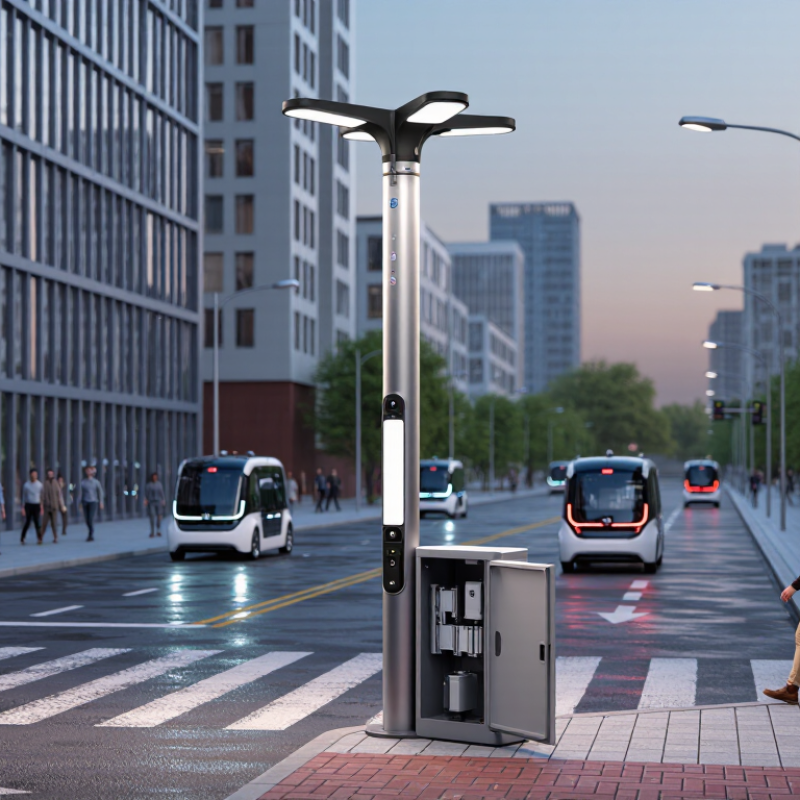
An intelligent pole combines street lighting with digital infrastructure. A typical unit may include adaptive LED controls, wireless access equipment, cameras, air-quality sensors, and traffic counters. Its value comes from coordinating these systems, not simply mounting more devices. Dimming lights when streets are empty can reduce wasted energy, while brighter settings can support visibility when people are nearby. Sensor readings can help city teams identify pollution hotspots or adjust traffic signals. The pole becomes a local data point. It also needs reliable power, secure communications, and routine maintenance—details that are easy to underestimate.

The GSMA’s 2024 Mobile Economy report projects global IoT connections will grow from 15.1 billion in 2023 to 23.3 billion by 2030. This is a broad market estimate, not a forecast for intelligent poles. Still, it signals the growing need for connected infrastructure. A pole can host several services in one location, but crowded equipment cabinets and incompatible systems can make upgrades difficult. More sensors do not automatically mean better decisions.

Tips: Check open interfaces, power capacity, data ownership, and maintenance access before choosing a pole. Ask for measured results from a pilot, such as energy use and network uptime. Keep one question open: will the city still be able to replace a component ten years from now?

How Intelligent Poles Integrate LED Lighting, 5G, Sensors, and Edge Computing

A strong intelligent pole for 2026 brings several systems together without making maintenance harder. Its LED fixture can adjust brightness as streets grow quieter, while sensors track conditions such as traffic, temperature, or air quality. A 5G radio can support fast connections for nearby devices, but coverage depends on placement and local network capacity. The pole’s design matters. A crowded cabinet can turn a smart installation into a difficult repair.

Edge computing lets the pole process some sensor data nearby instead of sending every reading to a distant server. That can reduce delay and network traffic, especially for time-sensitive alerts. It also means operators need clear plans for software updates, data quality, and equipment failures.

Practical details count: summer heat inside an enclosure, water around cable entries, and a technician’s access to connectors. More features do not always mean better performance. I would not call integration simple; even a well-designed pole can produce unreliable readings if sensors are poorly placed.

For a city, the best choice is one that combines useful lighting and connectivity with components that can be tested, replaced, and maintained over time.

Which 2026 Selection Metrics Align with ITU-T Y.4903 Smart-City KPIs?

What Is the Best Intelligent Pole for 2026?

Which 2026 Selection Metrics Align with ITU-T Y.4903 Smart-City KPIs?

The best intelligent pole is not the one with the longest feature list. It is the one that can show measurable value against a city’s needs. ITU-T Y.4903 provides a KPI framework for assessing smart, sustainable cities; it is not a product certification. For 2026 planning, connect each pole function to an outcome, such as reliable public connectivity, safer streets, or lower energy use. Set a baseline before installation, then compare results across similar locations. Small details matter. A shaded sidewalk and a busy transit stop may need different configurations.

Evaluate energy use per operating hour, service uptime, network coverage, data quality, and maintenance response time. Track these metrics across seasons, not only during a short pilot. A pole that dims lights efficiently but loses connectivity during rain may underperform in practice. Include interoperability and upgrade options, since requirements can change. Document who can access collected data and how long it is retained. That detail supports trust, although it is often left until later. Do not assume one device alone improves a city KPI; placement, operations, and public services all matter. Context matters.

Tips: Request performance logs, not just dashboard screenshots. Test contrasting sites. Compare energy use, uptime, and repair time using consistent definitions. Record data gaps instead of hiding them.

How to Verify Outdoor Durability: IP66 and IK10 (20-Joule) Ratings

What Is the Best Intelligent Pole for 2026?

How to Verify Outdoor Durability: IP66 and IK10 (20-Joule) Ratings

A smart pole may face wind-driven rain, dust, grit, and accidental impacts. Check its enclosure ratings before comparing cameras, sensors, or connectivity. IEC 60529 defines IP66 as dust-tight protection and resistance to powerful water jets. It does not certify protection against immersion. IEC 62262 classifies IK10 equipment for impact energy of 20 joules. That is a laboratory rating, not a promise that every part of a pole resists every strike. Small distinctions matter.

Look closely at what the test report covers. Was the complete assembled pole tested, or only its control cabinet? Cable glands, door seals, fasteners, and connector openings can become weak points outdoors. IP66 and IK10 also say nothing by themselves about corrosion, ultraviolet exposure, or temperature cycling. I would ask for independent test documentation tied to the exact configuration. A rating on a product sheet is helpful, but it is not the whole story.

Tips: Request reports referencing IEC 60529 and IEC 62262, including test date and tested components. Inspect gasket compression and cable entries in person, if possible. Ask separately for evidence of corrosion and UV testing. A neat-looking seal can still be poorly seated; that detail is easy to miss.

How to Compare 2026 Poles by Interoperability, Lifecycle Cost, and Security

What Is the Best Intelligent Pole for 2026?

A strong 2026 pole should work with equipment from different suppliers, not lock a city into one control platform. Ask vendors to demonstrate device discovery, data export, and replacement of a single sensor without rebuilding the whole system. Check protocol support and API documentation in a live trial. A polished dashboard proves little. Test it.

Compare lifecycle cost over the same service period, such as ten years. Include installation, power, network fees, software support, inspections, repairs, and component replacement. Energy savings matter, but so do truck rolls and downtime. Request assumptions behind every estimate; small changes in connectivity or maintenance can shift the result. Even careful models miss things.

Security should be assessed alongside interoperability, not added after purchase. NIST’s NISTIR 8259A identifies six baseline cybersecurity capabilities for IoT devices, including secure updates and access control. Ask how long updates will be available, who handles vulnerabilities, and whether logs can be reviewed. IBM’s 2024 Cost of a Data Breach Report puts the global average breach cost at US$4.88 million across studied organizations; it is not a smart-pole-specific estimate, but it shows why security belongs in procurement. A sensible comparison weighs open integration, credible support commitments, and documented security controls—not the longest feature list.

We are proud to support

Registered Company Name: Upminster Containers Limited. Registered Address: Mardyke Works, St Mary's Lane, Upminster, Essex RM14 3PA. Registered Company Number: 00940382
Developed & Maintained By Space Rocket Digital.
chevron-down