Let’s discuss your container requirements
01708 225350
Call Us
sale@modularmarbles.com
Email Us

7 Best Power Bank Rental Business Solutions for 2026

A dead phone can interrupt a payment, a map search, or a customer’s evening out. That simple moment explains the appeal of a Power Bank Rental Business: customers borrow a charged battery nearby, then return it to a station elsewhere. The opportunity is tied to mobile use, but demand is not automatic. Location, pricing, station uptime, and return convenience all shape whether a rental feels worth the effort.

GSMA’s Mobile Economy 2024 report estimates that 5.6 billion people subscribed to mobile services in 2023, with the total projected to reach 6.3 billion by 2030. This signals a vast connected audience, not a guaranteed customer base for rental operators. That distinction matters. A busy transit hub may produce frequent rentals, while a poorly placed kiosk can sit idle beside a full outlet. Small details count: charging speed, clear fees, reliable app access, and visible return points.

The seven solutions in this guide compare practical business models, from station networks to software and hardware partnerships. We consider deployment needs, operating costs, user experience, and room to scale. Forecasts can look persuasive on paper. Real results depend on local testing, and operators should verify supplier claims before investing. No model fits every venue. The right choice starts with foot traffic, not hype.
7 Best Power Bank Rental Business Solutions for 2026

Market Demand: 5.6 Billion Mobile Subscribers (GSMA, 2024)

GSMA’s 2024 Mobile Economy report estimates that 5.6 billion people subscribed to mobile services worldwide in 2023. That scale makes phone charging a visible business opportunity, but it does not prove that people will rent a power bank. Access isn’t usage. ITU reported 5.5 billion people were online in 2024, reinforcing how central connected devices have become. Yet subscriber totals are not a rental forecast. Treating them as one is tempting, but weak.

For 2026, rental solutions should match local routines: compact stations near café queues, transport hubs, or event entrances; clear return instructions; and software that tracks availability and failed returns. A phone at 8% battery beside a crowded station is a concrete need. A quiet location with high foot traffic may still produce few rentals. Test placement, rental duration, and repeat use before expanding. That is less exciting than a rapid rollout, but more dependable.

Tips: Run a small pilot in two contrasting locations. Record rentals by hour, not just daily totals, and check whether customers return units on time. Compare results after several weeks; adjust station size and placement. GSMA’s subscriber figure is a useful market signal, not a substitute for local evidence.

Rental-System Fundamentals: Stations, Power Banks, Apps, and Cloud Software

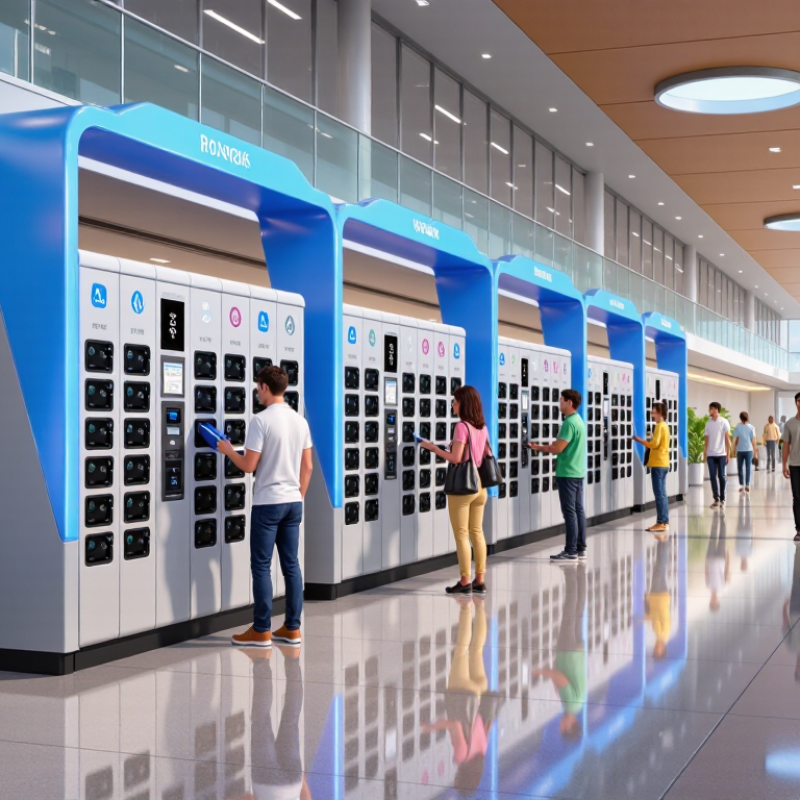
A power bank rental system has four working parts: stations, portable batteries, a customer app, and cloud software. The station needs a visible screen or clear instructions, secure charging slots, and reliable network access. Place it near seating, checkout areas, or venue entrances, where people can find it without blocking foot traffic. A neat installation helps, but it cannot fix poor placement. Small details matter.

Power banks should match typical phone use, not just look compact. Check charging speed, cable condition, battery health, and return-slot fit during routine inspections. A station with many empty bays may signal strong demand—or a delayed restock. Operators should compare rental activity by location and time, then adjust inventory accordingly. Real usage is often messier than forecasts.

The app should make scanning, payment, rental status, and return instructions easy to understand. Cloud software connects those actions with station status, inventory counts, and service alerts. Useful dashboards show failed sessions and low stock, not only total rentals. A clean report can still hide inaccurate station data, so staff should verify alerts in person. No setup is perfect. Regular checks reveal what the software misses.

Seven Business Models: Venue, Transit, Retail, Events, and Franchise Networks

Power-bank rental works best where people pause, travel, or cannot easily return to a charger. A venue model places docks beside food courts, entrances, or ticket desks; staff can check inventory during routine rounds. Transit operators can offer rentals near station gates, where short waits and missed connections matter. Retailers can put a dock near checkout, but rentals should not obstruct queues. Event organizers can deploy temporary stations at registration, seating areas, and exits. Keep the return point obvious. Small pilots help.

Three further models broaden coverage: campus or hospitality operators can serve libraries, dormitories, and hotel lobbies; multi-site networks can share operating procedures across several venues; franchise networks can give local operators defined territories and service standards.

GSMA’s State of Mobile Internet Connectivity Report 2024 estimates that 4.6 billion people used mobile internet in 2023, underscoring how much daily activity depends on charged phones. UN Tourism reported about 1.4 billion international tourist arrivals in 2024, a useful indicator for transport and visitor sites. Neither figure proves rental demand.

Foot traffic alone can mislead. Before expanding, track rentals per dock, return rates, idle inventory, and maintenance visits; a busy lobby may still produce weak utilization.

Safety and Compliance: IATA’s 100 Wh Lithium Battery Threshold

For a power bank rental business, the 100 Wh threshold is a key safety checkpoint. IATA’s Dangerous Goods Regulations distinguish lithium batteries by watt-hour rating, but the threshold is not a universal permission slip. Passenger carriage rules and cargo requirements differ, and airlines may apply stricter conditions. Power banks are generally treated as spare batteries, so customers may need to keep them in carry-on baggage. Always check current carrier guidance before setting rental or return procedures.

Tips: Check the Wh rating printed on each unit. If only volts and amp-hours are shown, calculate Wh by multiplying them. Keep labels readable, inspect cases for swelling or damage, and train staff to isolate questionable units safely.

Make compliance part of daily operations, not a note buried in a manual. Record battery specifications, inspection dates, and incident reports for each device. Clear customer instructions can prevent confusion at checkout and during travel. We sometimes assume a small battery is automatically simple to manage; that assumption deserves a second look. Rules can change, and a rental fleet may include units with different ratings. Review procedures regularly with qualified transport-safety personnel.

Deployment Economics: Utilization, Return Rates, and Payback Metrics

A rental network earns from repeat use, not from the number of charging stations installed. Grand View Research’s 2024 Power Bank Market report estimated the broader global power bank market at about US$13.1 billion in 2023. That figure signals hardware demand, not guaranteed rental revenue. Operators should measure daily rentals per station, battery return rates, and contribution after payment fees and venue commissions.

Consider an illustrative station costing US$1,800 to deploy. At 10 rentals daily and US$2.50 per rental, gross revenue reaches US$25 per day. If 40% remains after variable costs, simple payback is about 180 days, before support, maintenance, and replacement costs. A 92% return rate sounds healthy, but eight missing batteries per 100 rentals require a clear recovery or replacement allowance. Real results will vary. This estimate is easy to overstate.

Tips: Track utilization by location and weekday, not just network averages. Log unreturned units and repair time each month. Test one busy venue and one quieter site before expanding. Payback can slip fast. A spreadsheet should include seasonal dips, host payments, and idle inventory; these are often underestimated.

We are proud to support

Registered Company Name: Upminster Containers Limited. Registered Address: Mardyke Works, St Mary's Lane, Upminster, Essex RM14 3PA. Registered Company Number: 00940382
Developed & Maintained By Space Rocket Digital.
chevron-down