Choosing a Paper Box Glue Spraying Machine is less about buying the fastest unit and more about matching it to your boxes, adhesive, and daily workload. A machine suited to small cartons may struggle with wide panels or frequent size changes. Start with the box dimensions, board type, glue pattern, and required output. Bring actual samples to a supplier when possible. A flat specification sheet cannot show every curl, seam, or coating problem.
Packaging machinery specialist Daniel Wu puts the principle this way: “Choose for the box you make every day, not the capacity you hope to reach someday.” Treat that as a practical rule, not a substitute for a production test. Ask how operators adjust spray width, clean the nozzles, and change settings between jobs. Watch a live demonstration. Check whether the glue lands evenly along a flap without pooling or leaving dry gaps. Small defects matter. They can weaken a carton or slow packing.
This guide examines the factors that shape a sound purchase: box format, spray control, line speed, adhesive compatibility, maintenance, and supplier support. It also considers the less comfortable question: will the machine still suit your work when orders change? Buyers sometimes focus too heavily on headline speed. That is understandable, but not always wise. A careful trial with your own materials may reveal inconvenient limits—and save costly guesswork later.
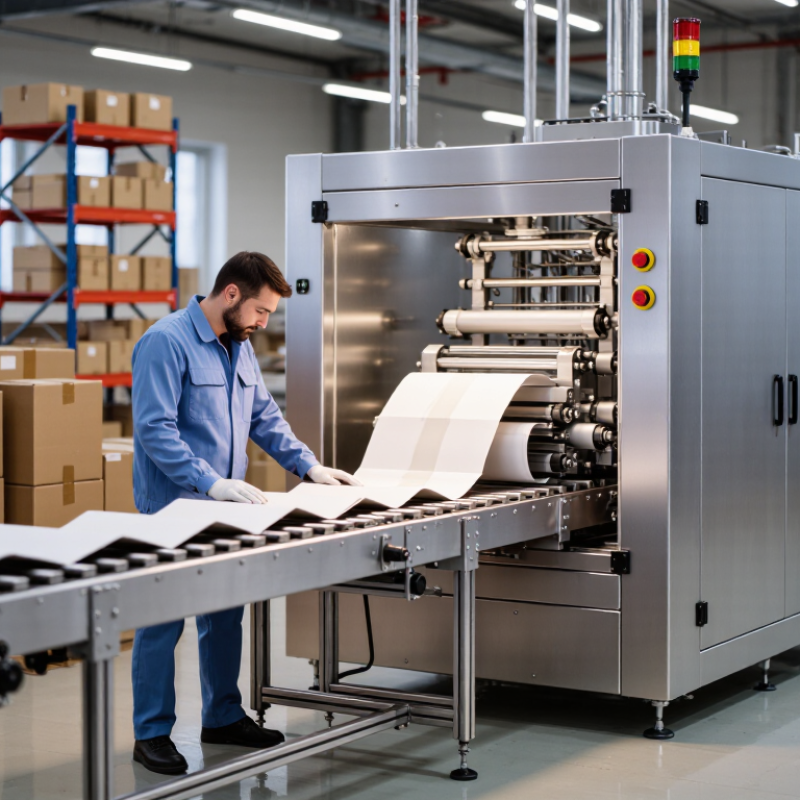
Before choosing a paper box glue spraying machine, describe the boxes your line actually makes. Record each box’s length, width, depth, and style, including any tabs or narrow corners. Measure the paperboard thickness and note whether its surface is coated or absorbent. These details affect how glue lands and how easily the box closes. Small differences matter. A machine that handles a broad panel well may miss a short flap.
Set a realistic production target, not just the fastest speed listed in a specification. Note how many boxes you need per hour, how often sizes change, and whether the machine must connect with existing feeding or folding equipment. Decide where glue is required, how wide each line should be, and whether intermittent spraying is needed. Test representative samples, including the smallest box and the most awkward fold. Watch for overspray, weak bonds, and glue buildup during a longer run. A clean first test can be misleading. Requirements may change after operators work with the machine, so leave room for adjustment in the layout and process.
Example hourly output targets for different box styles. Use your own peak demand and product mix when comparing machines.
These figures are illustrative planning targets, not machine performance ratings. Confirm that a machine can meet your required output with your box dimensions, glue pattern, material, and changeover schedule.
A paper box glue spraying machine should match the adhesive, box format, and production rhythm. Intermittent systems spray only when a box passes, limiting waste on short runs. Continuous systems suit steady lines, but can leave excess adhesive during pauses. Some machines use a single nozzle for narrow panels; multi-nozzle setups cover wider surfaces faster. More nozzles are not always better. Check spray width, overlap, and nozzle-cleaning access with an actual carton sample.
Configuration matters as much as machine type. Manual or semi-automatic units give operators control over small batches and frequent changeovers. Automatic systems can synchronize spraying with conveyors and folding equipment. Confirm that the pump and nozzle support your adhesive’s viscosity; cold glue and hot-melt systems are not interchangeable.
Smithers’ 2023 packaging market report valued global packaging at about $1.14 trillion and projected growth to $1.38 trillion by 2028. That broader expansion makes consistent application more valuable, but it does not prove one machine suits every plant. Test for stringing, missed edges, and glue transfer on your own paperboard. Small details matter. A rushed test can mislead.
When choosing a paper box glue spraying machine, check accuracy on your own cartons, not just on a showroom sample. Measure glue-line width, position, and continuity across repeated runs. Even small shifts can leave flaps weak or squeeze adhesive onto visible surfaces. Ask for test runs using your board grade, coating, and adhesive. A neat factory demo can mislead.
Speed matters only when the machine maintains accuracy. FEFCO’s 2023 European Database Report records 41.9 billion square metres of corrugated board production in Europe in 2022, showing the scale of carton manufacturing. Compare the machine’s rated speed with sustained output after setup, refills, and changeovers. Track rejects, too. A fast line that needs frequent adjustment may deliver fewer usable boxes per shift.
Compatibility needs a practical check. Eurostat reported that paper and cardboard made up 40.8% of EU packaging waste in 2022, underlining the importance of handling varied paper-based packaging. Confirm the machine supports your box dimensions, board thickness, surface finish, and adhesive viscosity. Ask operators to test narrow flaps and corners, where spray can drift or miss. Looks good on paper. Record the settings and results; real production conditions may expose problems a short trial misses.
| Machine Configuration | Typical Glue-Path Accuracy | Indicative Throughput | Common Box Formats | Glue and Material Compatibility | Best Suited For |
|---|---|---|---|---|---|
| Manual spray station | Usually operator-dependent; roughly ±2–4 mm with a guide or fixture | About 3–10 boxes per minute | Prototypes, short runs, and varied box sizes | Often suitable for water-based adhesives on paperboard; confirm nozzle and adhesive specifications | Low-volume production and frequent changeovers |
| Semi-automatic, single spray head | Approximately ±1–2 mm when the workpiece is consistently positioned | About 8–25 boxes per minute | Small to medium cartons with repeatable glue paths | Commonly configured for water-based or hot-melt adhesives, depending on the pump and nozzle system | Small and medium batches with moderate output needs |
| Automatic, programmable spray system | Approximately ±0.5–1.5 mm under stable setup conditions | About 20–60 boxes per minute | Regular production runs with stored patterns and repeatable dimensions | Compatibility depends on adhesive viscosity, temperature requirements, and wetted-part materials | Production lines requiring repeatability and reduced manual handling |
| Multi-head or multi-nozzle system | Typically around ±0.5–1.5 mm per programmed path, subject to calibration | About 40–100 boxes per minute | High-volume formats with several glue lines applied in one cycle | Requires consistent adhesive flow and coordinated nozzle control; verify the system supports the selected glue | High-output lines where multiple glue paths must be applied quickly |
| Vision-guided automatic system | Can compensate for workpiece position variation; achievable accuracy depends on camera, lighting, and setup | About 15–50 boxes per minute, depending on inspection and handling time | Printed or irregularly positioned blanks and jobs with variable registration | Adhesive options depend on the dispensing hardware; test on the actual board and coating before purchase | Applications where blank position varies or glue placement needs visual correction |
Selection note: Figures are indicative ranges, not guaranteed specifications. Actual accuracy and throughput depend on box size, feed method, glue viscosity, nozzle choice, operator or line setup, and quality requirements. Request a production trial using your own board and adhesive.
When choosing a paper box glue spraying machine, check how easily operators can control speed, spray width, and glue volume. Run a test with your own box blanks. Look for even coverage along folds, with no pooled glue or dry gaps. Controls should be easy to read, and adjustments should not require reaching near moving parts. A sample run reveals more than a quick demonstration. Small details matter.
Maintenance affects output and downtime. Ask how nozzles, filters, and adhesive lines are cleaned, and whether routine service points are easy to reach. Dried glue can narrow a nozzle opening and create uneven spray. Check the manual for adhesive compatibility and cleaning instructions; assumptions can be costly. Safety features deserve the same close review. Confirm that guards, emergency stops, and access doors are clearly marked and work as intended. Review ventilation needs and safe handling guidance for the adhesive being used. A checklist helps, but it cannot replace hands-on operator training.
Tips: Before purchase, inspect the machine during a full production cycle. Note cleaning time, noise, and how quickly staff can correct a blocked nozzle. Record these observations; a polished demo may not show every inconvenience.
How to Choose a Paper Box Glue Spraying Machine?
Assess supplier support, testing, and total cost before comparing machine prices. Ask the supplier to run your actual paperboard and adhesive, not just a convenient sample. Watch the spray pattern across corners and narrow flaps. Check for clogged nozzles, uneven coverage, and glue buildup after a sustained run. A quick demonstration is useful, but it may not reflect a full shift. Request test results and note the material, speed, and settings used.
Tips: Bring several box blanks from your regular production. Ask who installs the machine, trains operators, and answers service calls. Get response times and spare-part availability in writing. Small details matter.
Calculate total cost over the expected service life. Include installation, air supply, cleaning materials, routine maintenance, and likely nozzle replacement. Ask how much adhesive the machine uses per box at your target speed. A lower purchase price can be misleading if setup takes longer or waste increases. Check whether staff can adjust settings without calling a technician. I would not rely on verbal assurances alone; written support terms are easier to compare. Still, some estimates will remain uncertain, especially when your box sizes or production mix change. Leave room in the budget for that.


