Let’s discuss your container requirements
01708 225350
Call Us
sale@modularmarbles.com
Email Us

How to Choose a Steel Rebar Manufacturer in 2026?

Choosing a Steel Rebar Manufacturer in 2026 is not just a price comparison. The decision affects concrete strength, project schedules, and the work crews handle on site. A bundle arriving with clear labels and consistent bar markings saves time. Missing heat numbers can create costly questions. Small details matter.

Manufacturing quality deserves close attention. W. Edwards Deming, a renowned manufacturing quality expert, said, “Quality comes not from inspection, but from improvement of the production process.” His principle offers a useful lens for evaluating a supplier. Ask how the mill controls chemistry, rolling, straightness, and batch consistency—not only whether it provides test certificates. Check that documentation matches the delivered bar sizes and grades. For projects involving welding or seismic requirements, confirm suitability with the project engineer and applicable specifications. A polished brochure is not proof. Request traceable records and examples of recent deliveries.

Price still counts. So do lead times, transport capacity, communication, and the supplier’s response when a shipment changes. Compare quotes on the same grade, dimensions, testing scope, and delivery terms. Visit the facility when practical, or arrange a live review of production and quality records. A visit may not reveal everything. That is worth remembering. This guide explains how to assess technical capability, verify documentation, compare service, and spot warning signs before placing an order. The strongest choice is the manufacturer that can support consistent, documented supply—not simply promise it.
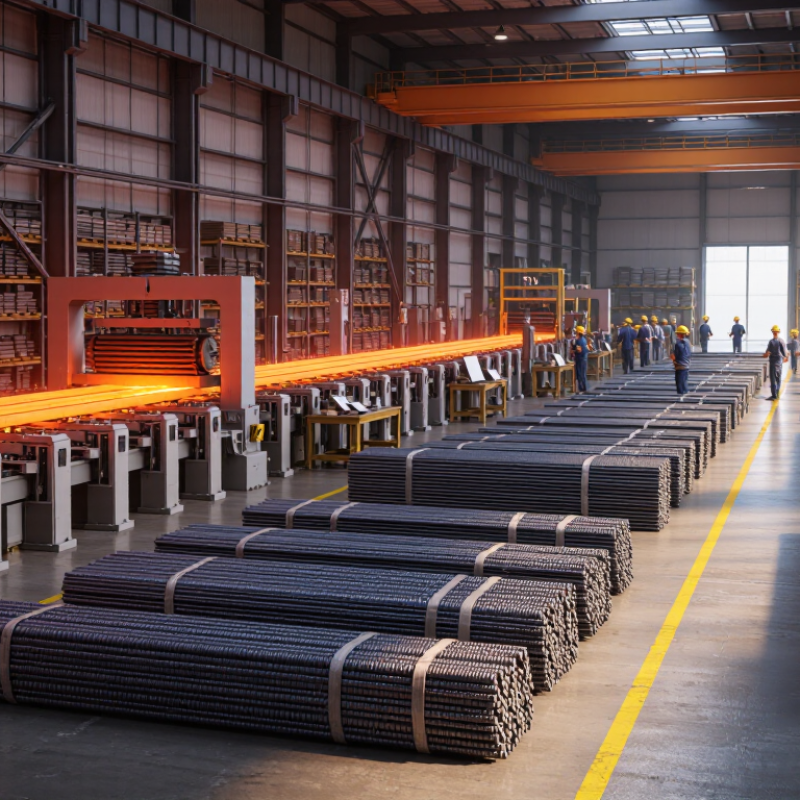
How to Choose a Steel Rebar Manufacturer in 2026?

Define Project Requirements and Applicable Rebar Standards

Before comparing Steel Rebar Manufacturers, write down what the project actually requires: bar diameter, grade, yield strength, ductility, bend performance, and any welding or seismic provisions. Specify coating or corrosion resistance where exposure demands it. The drawings and project specification should identify the governing standard and its edition.

ASTM A615/A615M and A706/A706M cover different rebar requirements; ISO 6935-2 addresses ribbed reinforcing bars, while EN 10080 sets general requirements. These are not automatic substitutes. One easy mistake is treating a familiar grade as universally interchangeable. It isn’t.

Scale makes verification important. World Steel Association’s World Steel in Figures 2024 reports 1,892.2 million tonnes of crude steel production worldwide in 2023; that figure describes the industry, not the quality of any individual bar.

Ask manufacturers for heat-specific mill test certificates, then compare reported chemistry and mechanical properties with the specified grade. Check bar markings, dimensions, and rib patterns against the applicable product standard. Confirm that the certificate covers the actual delivery, not just a sample from another production run. Details matter. If requirements are unclear, resolve them with the engineer before ordering; a technically sound product can still be the wrong product for the project.

Assess Manufacturer Experience, Capacity, and Production Processes

Choosing a steel rebar manufacturer in 2026 means checking more than its years in business. Ask how long it has produced the grades and sizes your projects require. Request examples of comparable orders, including delivery schedules and how production issues were handled. Experience matters most when it shows up in repeatable results.

Capacity needs evidence, not just a large figure on a brochure. Ask about monthly output, rolling-line availability, maintenance plans, and current order commitments. A plant may have impressive equipment but little room for your schedule. Check whether it can provide test records for tensile strength, bend performance, dimensions, and chemical composition. Paperwork helps. So does a visit. Observe how billets move through reheating, rolling, cooling, and inspection, and ask how batches are identified. A polished tour is useful, but it cannot prove every shift follows the same process. Compare sample records with actual production practices, and note any questions that remain unanswered. No supplier is perfect; a clear explanation of limitations can be more reassuring than a flawless sales pitch.

How to Choose a Steel Rebar Manufacturer in 2026? — Assess Manufacturer Experience, Capacity, and Production Processes

Use this evidence-based checklist to compare manufacturers. Applicable requirements depend on the project, destination market, contract, and specified rebar standard; confirm the current edition and project requirements before ordering.

Assessment Dimension What to Evaluate Evidence to Request or Verify Practical Evaluation Method
Relevant experience Experience producing the required rebar type, grades, sizes, and applicable standard—not just general steelmaking experience. Redacted order records, product certificates, audit records, and references for comparable applications. Check whether the evidence covers the same product specification and market requirements as the project. Treat years in business alone as insufficient proof of product capability.
Applicable standards Ability to manufacture and document products to the project’s specified standard, such as ASTM A615/A615M, ASTM A706/A706M, or EN 10080 where applicable. Current product certificates and test reports that identify the standard, grade, bar size, heat or batch, and test results. Match the certificate to the purchase specification. Do not assume different standards or grades are interchangeable; confirm any substitution with the project’s responsible engineer.
Production capacity Available output for the requested product mix, delivery schedule, and order volume. Documented production schedule, recent output records for relevant products, planned maintenance, and written confirmation of available capacity. Compare the committed quantity and delivery dates with the project schedule. Ask how capacity is allocated during peak demand and whether the quoted output is reserved for the order.
Size and grade range Whether the rolling and finishing lines can produce the required nominal sizes, grades, lengths, and rib patterns. Current product range, mill capability records, sample certificates, and dimensional inspection results for the requested sizes. Verify every size and grade on the bill of quantities rather than relying on a general product catalogue. Confirm cut lengths, tolerances, and bundling requirements in writing.
Production process control Controls from incoming raw material and steelmaking through casting, rolling, cooling, finishing, and final inspection. Process flow diagram, control plans, calibration records, inspection procedures, and traceability procedures. Check that control points are documented and that changes or nonconforming material are recorded and managed. Request a process audit when project risk or order scale warrants one.
Chemical and mechanical testing Verification of the properties required by the order, including chemical composition and specified tensile, yield, elongation, bend, or other tests. Heat- or batch-linked test reports and information on the laboratory’s equipment, calibration, and testing procedures. Compare reported results with the exact acceptance criteria in the specified standard and contract. ISO 15630-1 provides test methods for reinforcing steel; it does not replace the product specification or define every project’s acceptance limits.
Quality management Whether quality responsibilities, document control, corrective actions, and inspection records are consistently managed. Quality-management-system certificate, certificate scope and validity, audit findings, and examples of corrective-action records. Verify certificates with the issuing certification body and check that the scope covers the relevant manufacturing site and activities. ISO 9001 certification is not, by itself, proof that a particular rebar batch meets its product specification.
Traceability Ability to link delivered bundles to production heats or batches, inspection records, and product certificates. Sample bundle tags, heat or batch identification records, and a demonstration of how records are retrieved. Test a sample traceability chain from bundle marking to the corresponding certificate and production records. Confirm that identification remains legible through storage and shipping.
Delivery and logistics Ability to meet the agreed shipping plan, packaging requirements, and destination documentation requirements. Delivery schedule, loading plan, packaging specification, shipping documents, and records of comparable deliveries. Confirm responsibilities for transport, delivery terms, inspections, and delays in the contract. Check that bundle weights, labels, and documents match the order requirements.
Commercial and technical support Clarity of quotations, change control, document response times, and procedures for addressing quality claims. Itemized quotation, agreed technical submittal list, claims procedure, and named contact points for production and quality matters. Resolve specification gaps before purchase-order release. Record agreed tolerances, inspection arrangements, document deadlines, and remedies for nonconforming products in the contract.

Selection tip: Prioritize documented compliance with the project specification, batch-level traceability, and a realistic capacity commitment. Treat certificates, test reports, and production claims as items to verify independently.

Verify Product Quality, Testing, and Traceability

A reliable steel rebar manufacturer should make product quality verifiable, not just promise it. Ask for mill test certificates that identify the steel grade, measured chemical composition, and mechanical properties, such as yield strength and elongation. Check that the test results match the specifications for your project. A polished certificate is useful, but it is not the whole story.

For each batch, look for a heat number or equivalent identifier linking the bars to their production and test records. Confirm that markings on sample bars match the paperwork. Ask how samples are selected, which tests are performed, and whether testing can be verified independently when needed. Small details matter. A missing link between a bundle and its test report can complicate inspection later.

Traceability should continue through storage and delivery. Ask how the manufacturer prevents mixed batches and records any changes to an order. If practical, review a sample document pack before placing a large order. Notice whether staff can explain test results clearly, rather than sending files without context. No process is flawless, and a paperwork gap may have a reasonable explanation. Still, a vague answer deserves follow-up before you rely on the material.

Compare Pricing, Lead Times, and Delivery Capabilities

How to Choose a Steel Rebar Manufacturer in 2026?

Compare Pricing, Lead Times, and Delivery Capabilities

Choosing a steel rebar manufacturer in 2026 means comparing landed cost, not just price per ton. Ask suppliers to itemize material, cutting or bending, packaging, freight, and handling fees. Compare quotes using the same grade, diameter, length, quantity, and delivery address. A low price can hide a costly mismatch. Confirm that mill test certificates and bundle identification are included. These details help your team check delivered material against project specifications. Keep all quote assumptions in writing.

Lead times need the same scrutiny. Request a dated schedule for order confirmation, production, inspection, and dispatch. Ask what could delay each step. Stocked bars may ship quickly; custom-cut bundles usually need more processing. A promise is not a plan. Check weekly output and the supplier’s ability to meet phased releases. Delivery capability includes site access, unloading equipment, bundle weights, and delivery windows. For remote or congested sites, ask about routing and contingency plans. Forecasts can change, and that point is easy to overlook until crews are waiting. Compare recent on-time delivery data, but treat it as evidence, not a guarantee. Your comparison should show total delivered cost, committed dates, and how shipment delays will be communicated.

Review Compliance, Service, and Contract Terms

When choosing a steel rebar manufacturer in 2026, check compliance at the heat level, not just the company level. Request mill test certificates showing heat numbers, chemistry, yield strength, tensile strength, elongation, and bend-test results. Confirm that the stated grade meets the project specification, such as ASTM A615 or EN 10080, where applicable. The World Steel Association’s World Steel in Figures 2024 reports 1,892.2 million tonnes of crude steel production in 2023. That scale is useful context, but it cannot verify an individual shipment. Paper can mislead.

Assess service with practical questions: Can the supplier provide traceable bundle tags? How quickly will it flag a production delay? Ask for a sample certificate and a realistic delivery schedule before placing a large order. Agree on inspection access, packaging, and how shortages or damaged bars will be documented. A prompt reply is helpful; a clear process matters more.

Put the uncomfortable details in the contract. Specify grade, bar size, length tolerances, quantity basis, delivery point, and price-adjustment rules. Define what happens when test results fail, including notice deadlines, replacement, and responsibility for inspection costs. Set payment milestones against documents or delivery events. Details matter. A polished certificate can still leave a gap if the contract does not say who acts when results disagree.

How to Choose a Steel Rebar Manufacturer in 2026

Suggested procurement scorecard: allocate the most weight to compliance and product quality, then assess delivery, contract terms, and service.

Weights are a practical starting point, not market-survey results. Adjust them to match project specifications, local regulations, and purchasing priorities.

We are proud to support

Registered Company Name: Upminster Containers Limited. Registered Address: Mardyke Works, St Mary's Lane, Upminster, Essex RM14 3PA. Registered Company Number: 00940382
Developed & Maintained By Space Rocket Digital.
chevron-down