Choosing a Car Garage Lift is not just a matter of comparing prices or picking the model with the highest capacity. The right choice depends on the vehicles you own, the space available, and how often you plan to lift them. A compact two-post lift may suit a home mechanic with a clear floor, while a four-post model can offer convenient storage for a second vehicle. Neither option is automatically best.
Start with practical measurements. Check ceiling height, garage-door clearance, vehicle width, and the lift’s required floor space. Then compare the lift’s rated capacity with your heaviest vehicle, including any tools or equipment that may be inside it. Small details matter. A truck that fits between the posts may still be difficult to position safely if the arms cannot reach its approved lifting points.
Installation conditions deserve equal attention. The concrete slab must meet the lift manufacturer’s specifications, and the power supply must match the model. Have a qualified installer assess anything you cannot verify. Review the manual, safety locks, maintenance requirements, and warranty before buying. Do not rely on appearance or a seller’s broad claims alone.
It is easy to focus on price. That can be a mistake. A lower-cost lift may not suit your ceiling, vehicle, or daily routine, while a larger model may be unnecessary. Measure twice. This guide explains the main lift types and the questions to ask before purchasing, so you can make a safer, better-informed choice for your garage.
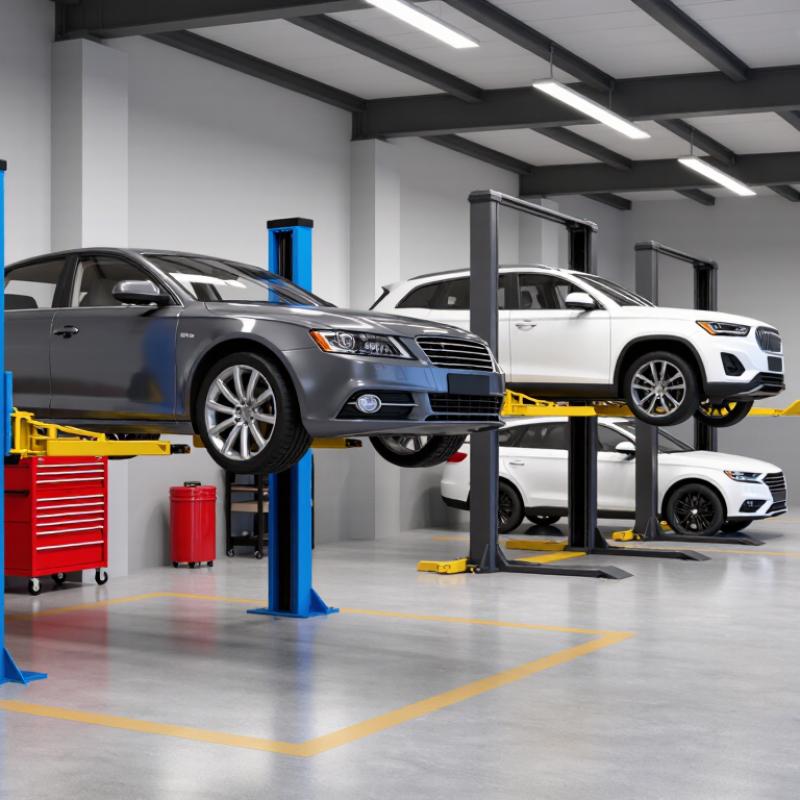
How to Choose the Best Car Garage Lift?
Identify the Main Types of Car Garage Lifts
A two-post lift raises a vehicle by its frame using adjustable arms. It leaves the wheels hanging, which helps with tire, brake, and suspension work. Check the lift’s rated capacity, arm reach, ceiling height, and required concrete specifications before installation. Space matters. A narrow garage may not provide enough room to position the arms safely.
A four-post lift supports the tires on long runways. It suits routine inspections and vehicle storage, especially when floor space is limited vertically. Some models accept rolling jacks for wheel service, but those add cost and setup steps. The vehicle stays on its wheels, so access beneath the center can feel restricted. The choice is not always obvious.
Scissor lifts raise a vehicle from beneath its chassis or designated lifting points. Low-rise versions are compact and useful for tires or basic service, while taller designs offer more working clearance. Their platforms can obstruct parts of the underbody, depending on the layout. Portable mid-rise lifts are another option for home garages, though their height may not suit every repair. Compare the work you actually do, not just the maximum lift height. A qualified installer can verify floor suitability and setup requirements. Even a well-chosen lift needs careful positioning and regular inspection.
Typical rated capacity ranges for common garage lift types (lb)
How to read this chart: Each bar shows an illustrative capacity range, not a guaranteed specification. Compare the lift’s rated capacity with your vehicle’s weight, and check its installation requirements, lifting height, and intended use before choosing.
Before choosing a lift, list the vehicles you actually plan to raise. Record each vehicle’s weight, wheelbase, track width, and overall height from its manual or manufacturer specifications. The U.S. EPA’s 2024 Automotive Trends Report puts the average new vehicle weight at about 4,329 pounds for model year 2023. That figure is only a reference; a heavy truck or electric vehicle may be far above it. Choose a lift whose rated capacity comfortably exceeds the heaviest vehicle’s weight, and check its required pickup points.
Measure the garage, not just the parking bay. Note ceiling height, door tracks, lights, beams, and the open garage door. Then check the lift’s total height and width against those obstacles. Leave room to open vehicle doors and move safely around the posts. Measure twice. A few inches can change the fit.
Also check the floor and access route. A lift may fit on paper but leave too little clearance to drive onto its ramps or position its arms. Confirm the slab requirements in the lift’s installation specifications, and have uncertain conditions assessed by a qualified installer. I would not rely on a rough visual estimate here; uneven floors and low tracks are easy to overlook. For a low-ceiling garage, compare the vehicle’s raised height with the actual overhead clearance before buying.
Choosing a car garage lift starts with capacity, not price or ceiling height. The EPA’s 2023 Automotive Trends Report lists the average new light-duty vehicle at 4,329 pounds for model year 2022. That is only an average. A loaded van, truck, or electric vehicle may weigh considerably more. Check the vehicle’s door-jamb label and the lift’s rated capacity, then allow for the heaviest vehicle and any added equipment you expect to service. Do not rely on a vehicle’s appearance. It can be misleading.
Safety features matter every time a vehicle leaves the floor. Look for mechanical locks that engage securely, arm restraints where applicable, and clear operating instructions. Check that the concrete floor and anchor requirements match the lift’s installation specifications. Keep the lifting points in view; a small positioning mistake can become a serious problem. I may be cautious, but rechecking the setup is worth the extra minute.
Check the certification on the exact lift model, not just a general claim on a seller’s page. In the United States, the Automotive Lift Institute’s certification program tests lifts against ANSI/ALI ALCTV requirements. Verify the model in the institute’s directory and look for its certification label. Standards differ by region, so confirm which certification applies where the lift will be installed. A label is useful. It is not a substitute for proper training or maintenance.
Choosing the best car garage lift means matching installation demands to your building, not just the vehicle. Measure ceiling height, bay width, door clearance, and the tallest vehicle you service. Check the concrete slab’s thickness and condition against the lift manufacturer’s installation requirements; there is no safe universal slab specification. A two-post lift needs precise positioning and suitable anchor points. A four-post model takes more floor space but can simplify parking and wheel service. Installation errors are difficult to correct later.
Maintenance deserves equal weight. The Automotive Lift Institute’s published guidance, based on ANSI/ALI ALOIM-2020, calls for a qualified lift inspection at least once every 12 months. That annual interval is a useful planning figure, not a substitute for routine checks. Inspect cables, arms, locks, and hydraulic hoses for wear or leaks. Keep a dated log, and follow the service intervals in the lift manual. Small leaks matter. I would still recheck the floor and anchors after installation; settling can change what looked secure on day one.
Tips: Before buying, photograph the bay and record ceiling and slab measurements. Ask the installer what floor preparation is needed, and who handles inspections. Keep the manual beside the service log.
How to Choose the Best Car Garage Lift?
Choose a Lift That Fits Your Budget and Intended Use
Start with the jobs you expect to do. Routine tire and brake work may suit a two-post lift, while a four-post model can help with vehicle storage and underbody access. Scissor lifts need less overhead space, but some designs limit access beneath the car. Check your vehicle’s weight, wheelbase, and lift-point requirements against the equipment specifications. Close enough is not enough.
Set a full budget, not just a purchase price. Include delivery, installation, electrical work, and any floor improvements a qualified installer recommends. A lift’s rated capacity should comfortably cover the vehicles you plan to raise, including heavy accessories. Have the concrete slab and ceiling clearance assessed before ordering; a low ceiling or unsuitable floor can make a seemingly affordable choice costly. Measure twice.
Think about how often the lift will be used and who will operate it. For occasional home maintenance, simple controls and accessible service parts may matter more than fast lifting speed. For frequent use, durability and routine inspection deserve more of the budget. Safety locks must engage correctly, and operators should follow the lift maker’s instructions every time. Small details matter. It is tempting to buy the largest model for flexibility, but extra capacity can mean extra cost and space. Be honest about the jobs you will actually do.


