Let’s discuss your container requirements
01708 225350
Call Us
sale@modularmarbles.com
Email Us

20ft Containers Tips for Safe and Efficient Use?

When it comes to logistics, 20ft containers are essential. These containers offer flexibility and efficiency for transportation. Their compact size makes them suitable for various cargo types. However, using 20ft containers safely and efficiently requires careful planning.

Understanding how to load and unload these containers is crucial. Improper loading can lead to damage or safety hazards. Additionally, securing cargo inside 20ft containers is vital to prevent shifting during transit. Regular inspections can help identify potential issues. Simple practices can greatly enhance the safety of your cargo.

Consider the environment: weather can impact container usage. Is your container weather-tight? Reflect on how you stack items. Clear organization inside the container is key to easy access. Learning from past mistakes can help improve future container use. Embrace the lessons from each shipment for better outcomes.

20ft Containers Tips for Safe and Efficient Use?

20ft Container Specifications: Understanding Dimensions and Weight Limits

20ft Containers Tips for Safe and Efficient Use?

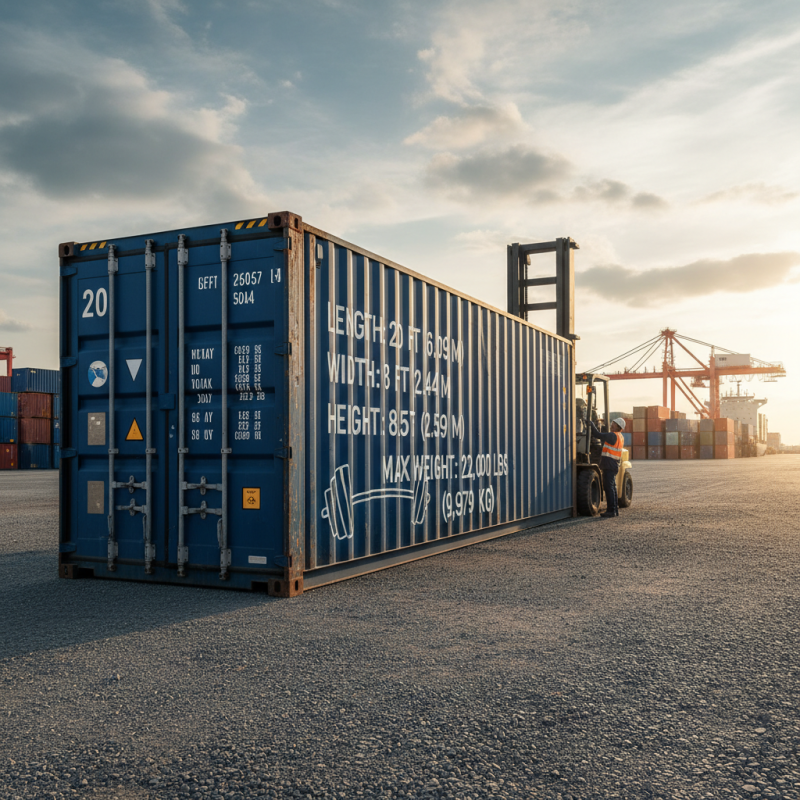
When using 20ft containers, understanding their specifications is crucial. A standard 20ft container measures about 20 feet long, 8 feet wide, and 8.5 feet high. These dimensions help determine how much you can load inside. The weight limit for a 20ft container is typically around 22,000 pounds. This includes the weight of the container itself. Overloading can lead to structural damage and safety hazards during transportation.

It's important to consider the types of items you plan to store. Heavier items should be loaded first, towards the bottom. This method can help maintain balance during transit. Load distribution is vital. If the weight isn't evenly distributed, it may cause the container to tip. Additionally, securing loose items can prevent unnecessary movement, which might lead to damaging both the cargo and the container itself.

Water damage is another issue to ponder. Containers are designed to be weather-resistant, but small leaks can occur. Regular inspections for wear and tear are essential. Ensure that seals are functioning properly. Believe it or not, some users overlook this simple step, leading to ruined cargo. Understanding these specifications and taking proper precautions can enhance your experience significantly.

Common Uses for 20ft Containers in Shipping and Storage Industries

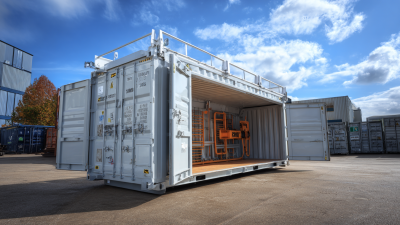
20ft containers have become essential in the shipping and storage industries. They offer flexibility and practicality. Many businesses use them to transport goods. Included in these goods are machinery, electronics, and textiles. The container's sturdy design makes it a reliable choice for various products.

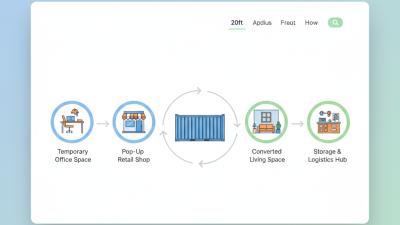
In storage, 20ft containers provide a secure space. They can be used on construction sites, for event storage, or seasonal inventory. Some companies opt for them as temporary offices. While they offer many benefits, proper planning is vital. Not all sites are suitable for container placement. Some may face zoning restrictions or access challenges.

Additionally, ensuring proper ventilation and climate control is crucial. Storing sensitive items in an unventilated container could lead to damage. It’s essential to maintain temperature ranges for items like food or electronics. Regular checks help avoid unpleasant surprises. The effectiveness of using 20ft containers largely depends on careful consideration of these factors.

Best Practices for Loading and Securing Cargo in 20ft Containers

When loading cargo into a 20ft container, organization is key. Begin by assessing the items. Group similar items together. This will help streamline packing. Use pallets for heavier boxes to ensure stability. Ensure heavier items are loaded first, ideally at the bottom. This sets a solid foundation.

It’s common to overlook weight distribution. Check that the load is balanced to prevent any shifting during transport.

Securing cargo requires attention to detail. Use straps and dunnage effectively. Straps should fit snugly, with minimal slack. Fill gaps with dunnage material, like foam or airbags, to prevent movement. This often gets ignored. Many assume cargo won't shift, but movement is a frequent issue.

Inspect your load before closing the container. Look for any items sticking out or areas that might be vulnerable. A few extra minutes of inspection can save a lot of headaches later on.

Safety Protocols: Preventing Damage and Ensuring Stability During Transport

Transporting goods in 20ft containers requires strict adherence to safety protocols. Proper load distribution is critical. Uneven weight can lead to container tipping or structural damage. Always weigh your cargo before loading. Use appropriate packing materials to fill gaps. This reduces movement during transport.

During transit, monitor environmental factors. High winds or rough seas can impact stability. Secure containers with heavy-duty locks and straps. Regularly inspect the container for wear and tear. Small cracks or rust spots can lead to leaks. Address these issues immediately.

Training staff is vital for safe container handling. Many accidents occur due to improper lifting techniques. Provide basic safety training and refreshers. Consider conducting regular drills. Create a culture of safety awareness. Encourage team members to report hazards or inefficiencies. Each small step contributes to overall safety.

20ft Containers Tips for Safe and Efficient Use

Tip No. Safety Protocol Efficiency Strategy Impact on Stability
1 Secure cargo with appropriate dunnage Maximize load space by using collapsible containers Prevents shifting during transport
2 Maintain proper weight distribution Use lighter materials where possible Ensures stability and reduces stress on container
3 Check for structural integrity of container Regular maintenance and inspections Prevents damage during transport
4 Use proper lifting techniques when loading Utilize machinery for heavy loads Reduces risk of accidents and injuries
5 Seal containers properly Implement transparent loading practices Prevents contamination and loss during transit

Maintenance Tips for Extending the Life of Your 20ft Container

20ft Containers Tips for Safe and Efficient Use?

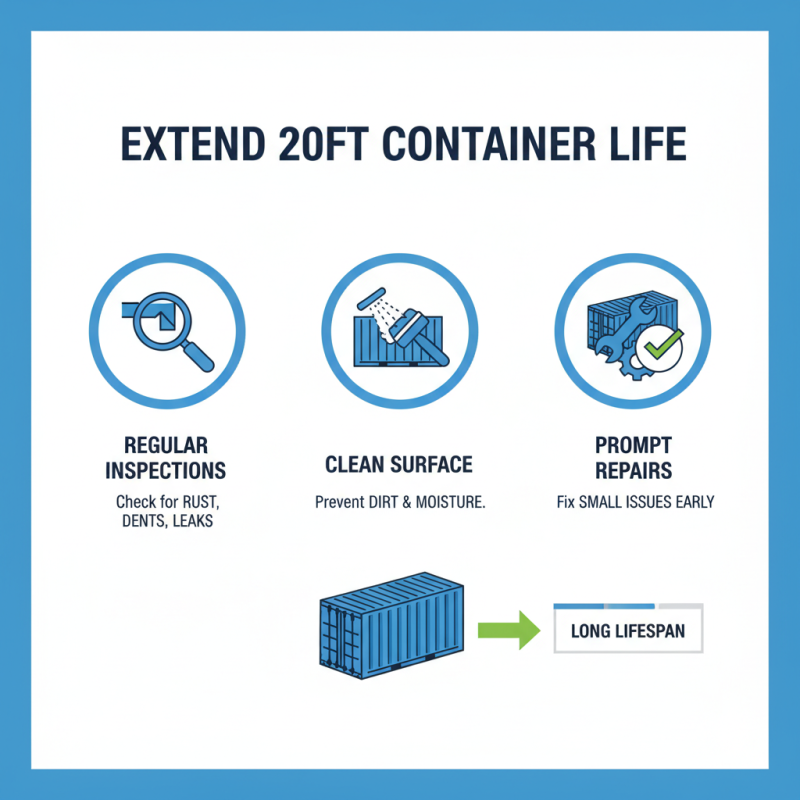
Maintaining a 20ft container is essential for extending its lifespan. Regular inspections can identify rust, dents, or leaks early. Look for signs of corrosion, especially at the corners and edges. Clean the container’s surface to prevent buildup of dirt and moisture. A small issue might escalate quickly if ignored.

Proper ventilation is equally important. Stale air can lead to mold and unpleasant odors. Consider installing vents or leaving doors slightly open during storage. This simple trick can improve air circulation. Additionally, check seals and joints regularly. Damaged seals can allow water ingress, potentially causing damage.

Don’t forget about the container’s placement. Avoid placing it directly on wet ground. Use pallets or blocks to elevate it and promote drainage. Think about environmental factors. Extreme weather can take a toll on your container. Ensure it’s stable and secure to withstand strong winds or heavy rains. Regular attention can make a big difference.

We are proud to support

Registered Company Name: Upminster Containers Limited. Registered Address: Mardyke Works, St Mary's Lane, Upminster, Essex RM14 3PA. Registered Company Number: 00940382
Developed & Maintained By Space Rocket Digital.
chevron-down