A Network Kvm Switch can turn a crowded server room into a workspace managed from one console. Yet brand choice is not just about ports or a polished product page. Buyers need to examine remote access, security controls, compatibility, support, and long-term operating costs. Small details matter. A clear setup guide can save hours when a technician is standing beside a rack of blinking indicators.
John Gage, the former Sun Microsystems chief scientist, is widely associated with the phrase, “The network is the computer.” That idea offers a useful lens for evaluating networked KVM systems: the connection matters as much as the hardware. In this comparison, the leading Chinese brands are assessed through practical criteria, including browser-based management, user permissions, deployment flexibility, and service availability. Product specifications and real operating needs should carry more weight than marketing claims.
The top ten are not automatically right for every organization. Some teams need centralized access across distant sites; others need a dependable switch for a single equipment room. We also recognize a limitation: brand rankings can shift as product lines, firmware, and support change. Treat this list as a starting point, then verify current specifications with each manufacturer. A careful comparison can prevent an expensive mismatch—and the wrong choice is easy to regret.
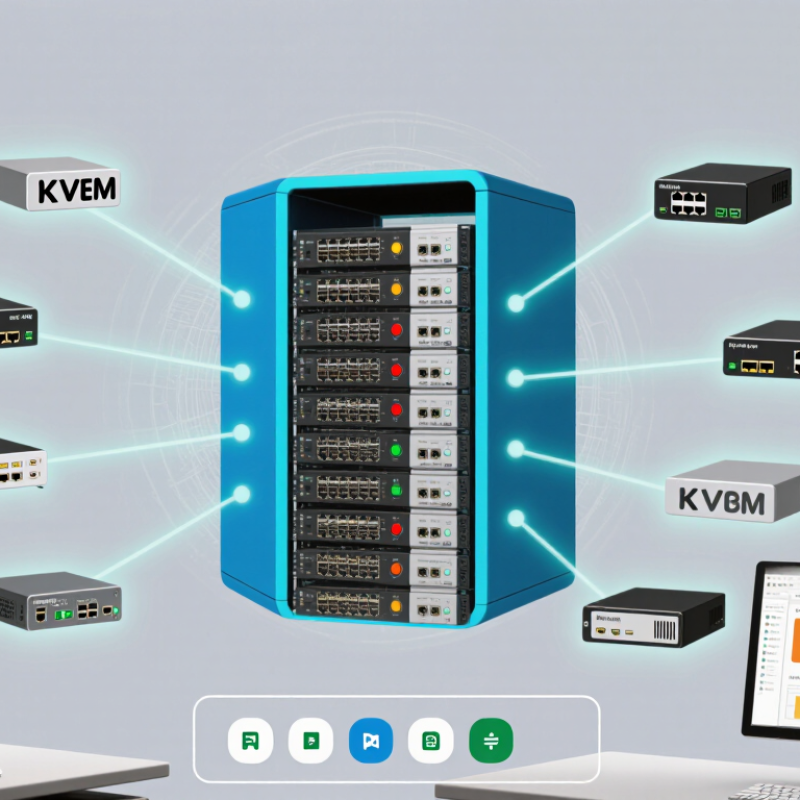
A network KVM switch lets an operator control several computers through a network connection. KVM means keyboard, video, and mouse. Instead of standing beside a rack, a technician can view a server’s screen and send keystrokes from another workstation. Some systems also offer remote power control or virtual media, though these features depend on the equipment.
A standard KVM switch usually connects nearby computers to one monitor, keyboard, and mouse. The user presses a button or selects a channel to change machines.
A network KVM adds remote access over a local network or, when configured securely, another network. It is not simply a standard switch with a longer cable. It encodes and transports screen and input data, so network quality can affect responsiveness.
Practical considerations
That distinction matters during practical work. A technician might inspect a server’s startup screen from a separate office, even before its operating system loads. But lag can make precise tasks frustrating. A dropped connection can interrupt control. The boundary is not always tidy: some systems combine local ports with network access. Buyers should check supported video formats, access controls, and recovery options rather than assuming every remote KVM behaves alike.
A network KVM switch connects multiple computers to one set of keyboard, video, and mouse controls. An administrator selects a machine through a local console or an authorized network session. The switch captures that computer’s video output and sends keyboard and mouse commands back. No operating system agent is usually needed, so access can remain available during startup or system recovery. That matters.
For remote use, the KVM appliance joins the management network through an Ethernet connection. Users sign in through a browser or compatible client, then choose an assigned computer. Access controls can limit who may view or operate each system. Encryption and network segmentation add protection, but their availability depends on the equipment and its configuration. Check those details before deployment.
Responsiveness depends on video encoding, network quality, and distance. A cursor may feel delayed over a congested link, even when the computer itself is working normally. In practice, test the setup with real screens, including firmware menus and high-resolution displays. One overlooked cable can interrupt access. Network KVM is useful, but it is not magic; clear permissions, stable connections, and documented recovery steps still require human attention.
A useful comparison starts with the work a network KVM switch must handle. Check supported server interfaces, video resolutions, and the number of ports. Then test remote sessions during ordinary maintenance tasks. Can an operator read small console text without zooming? Does the connection remain steady when several devices are active? These details matter more than a long feature list.
Look closely. Security controls should include role-based permissions, encrypted connections, and audit records that show who accessed each server. Ask for technical documents and independent test evidence, then verify that the exact hardware model matches them. In China, also consider local-language documentation, response times, warranty terms, and the availability of replacement units. A polished specification sheet cannot tell you how quickly support resolves a failed port.
Reliability deserves a practical trial. Connect the switch to a mixed rack, simulate a network interruption, and check whether access recovers cleanly. Measure switching delay and inspect image clarity at the resolutions your team actually uses. Compatibility claims can be vague, so request a tested device list. No single score captures every installation. A small lab test may miss problems that appear in a busy data center, and that limitation should stay visible in any comparison.
The table below presents a suggested 100-point framework for comparing network KVM switch products. Weights are evaluation guidelines, not published market rankings or scores for specific brands.
| Assessment criterion | Weight | What to evaluate | Useful evidence |
|---|---|---|---|
| Security and encryption | 18% | Protected management access, secure transport, credential handling, and timely security updates. | Security documentation; supported TLS versions and configuration options; published vulnerability and firmware-update process. |
| Authentication and access control | 14% | Individual accounts, role-based permissions, and support for centralized identity services such as LDAP or RADIUS, where required. | Administration guide; configuration test with the organization’s identity system; documented account and permission controls. |
| Remote console functionality | 13% | Reliable keyboard, video, and mouse control, including access during operating-system startup when supported by the connected hardware. | Hands-on tests across representative servers; supported resolutions, browsers or clients, and documented BIOS/UEFI access behavior. |
| Server and platform compatibility | 12% | Compatibility with the organization’s server models, operating systems, connection interfaces, and management environment. | Current compatibility list; connection specifications; pilot tests using the actual server and network configuration. |
| Auditability and accountability | 10% | Recording of relevant login and administrative events, with practical options to review or export logs. | Sample audit logs; documented log fields, retention settings, timestamps, and export or integration options. |
| Reliability and availability | 10% | Stability under expected operating conditions, recovery behavior, and any required power or network redundancy. | Published environmental and power specifications; warranty terms; documented failover features and operational testing. |
| Scalability and port capacity | 8% | Available server ports and practical options for expanding or organizing access as the environment grows. | Port-count and cascading specifications; installation requirements; test of the proposed deployment layout. |
| Remote media and maintenance features | 6% | Support for tasks such as remote media mounting or file transfer, if these functions are needed for maintenance. | Feature documentation; supported media formats and client requirements; practical installation or recovery test. |
| Management and network integration | 5% | Ease of configuration and fit with existing network operations, monitoring, and administrative procedures. | Network and management documentation; available monitoring interfaces; configuration and administration trial. |
| Support, warranty, and lifecycle | 4% | Availability of technical documentation, warranty coverage, firmware maintenance, and a clear support process. | Written warranty and support terms; documentation access; published firmware and product-lifecycle information. |
| Total | 100% | Apply the same evidence-based scoring method to every product being compared. | |
China’s top ten network KVM suppliers should be compared by capability, not just price or port count. A useful shortlist covers data-center equipment makers, specialist remote-management vendors, and established server-infrastructure providers. In this category, practical differences matter: encrypted browser access, low-latency video, virtual media, audit logs, and support for multiple user roles. Test them on real hardware.
Reliability deserves close attention. Uptime Institute’s 2024 Annual Outage Analysis reports that 54% of respondents said their latest significant outage cost more than $100,000. Sixteen percent reported costs above $1 million. This is not KVM-specific evidence, but it shows why remote access must remain dependable during incidents. Ask suppliers to demonstrate failover, firmware recovery, and access logging—not merely list these features.
A credible top-ten comparison should also examine deployment details. Check whether the console supports your server operating systems, browser policies, and network segmentation. Confirm warranty terms and the availability of local technical support in China. Small details matter. Test video quality over a busy link, then verify that a second administrator can take control without disrupting the session. No ranking is definitive without published, comparable market-share data, so treat “top ten” claims as a starting point for technical evaluation.
These figures show the maximum raw link bandwidth specified for each interface version—not the throughput of a KVM switch. Actual supported bandwidth depends on the interface version implemented by the device.
Network KVM switches let authorized staff control servers over an IP network without standing beside each rack. In data centers, they can help technicians diagnose a frozen machine, change firmware settings, or restart equipment after hours. A branch office may use one to manage a compact server cabinet remotely, reducing routine site visits. Control rooms also benefit when operators need access to several systems from one console.
Small details matter. A delayed screen refresh, for example, can make precise setup work frustrating.
When comparing options, check supported server interfaces, operating systems, video resolutions, and USB device compatibility. Count ports with future growth in mind; filling every port on day one leaves little room for expansion. It is easy to overvalue port count, though: a larger unit is not automatically the safer choice.
Review remote-access protections, including encryption, multi-factor authentication, user permissions, and audit logs. Check for redundant power and network connections if downtime could disrupt operations. Test access speed on your actual network, not only in a quiet lab.
Lag is real.
Finally, examine firmware update procedures and technical support response times; specifications rarely tell the whole story.


