China’s control-relay suppliers serve automation, power distribution, machinery, and building-control markets. Comparing them requires more than checking product prices. Buyers should examine switching ratings, coil voltage options, electrical endurance, test records, and after-sales support. A relay may look identical in a catalog yet behave differently under repeated switching or dusty cabinet conditions.
MarketsandMarkets estimated the global relay market at USD 9.8 billion in 2023 and forecast USD 14.4 billion by 2028. This figure covers relay types broadly, not Control Relays alone, so it should not be treated as a China-specific market measure. Still, it signals sustained demand for dependable switching components. Quality expert W. Edwards Deming wrote, “Quality comes not from inspection, but from improvement of the production process.” His principle is relevant when assessing suppliers’ process controls, not just their final inspection claims.
The distinction matters. This guide compares Chinese suppliers through product range, documented specifications, manufacturing capability, and evidence of quality systems. It also considers practical details: response time to technical questions, customization limits, and consistency between samples and repeat orders. Public information cannot reveal every factory’s field-failure rate. No list is perfect. Use the shortlist as a starting point, then verify certifications, test documentation, and samples against your application before placing an order.
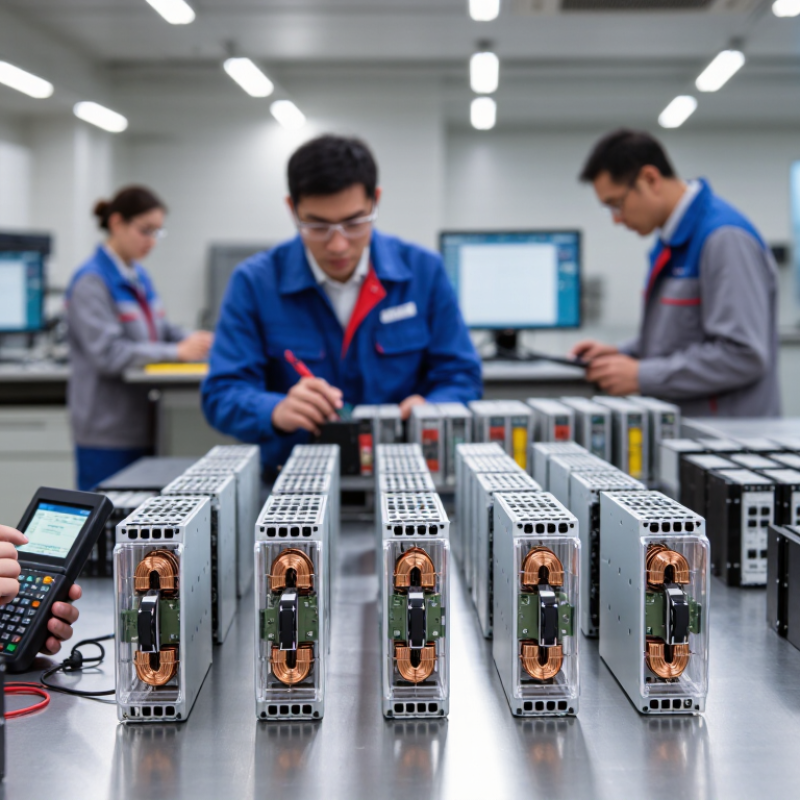
A control relay is an electrically operated switch used to control a circuit with a separate, low-power signal. Inside an electromechanical relay, a coil creates a magnetic field when energized. The field moves an armature, opening or closing contacts that connect the controlled load. Click. That small movement can start a motor, signal an alarm, or switch a panel light.
The coil and contacts serve different jobs. This separation lets a control circuit command a higher-power circuit, within the relay’s rated limits. When the coil loses power, a spring usually returns the armature to its resting position. Solid-state relays work differently: semiconductor components switch the load without moving contacts. They avoid mechanical wear, but heat and leakage current deserve attention. Not magic.
Selection depends on coil voltage, contact configuration, load type, switching frequency, and electrical life. A relay rated for a resistive load may not suit a motor, where starting current can be much higher. IEC 61810-1 sets general requirements and tests for electromechanical elementary relays. MarketsandMarkets’ 2023 Relay Market report estimated the broader global relay market at USD 9.7 billion, with a forecast of USD 14.6 billion by 2028. This market figure covers relay types and applications, not control relays alone. A practical check still matters: compare the actual load and operating conditions with the datasheet, rather than choosing by appearance. I have seen that step overlooked. Often, it is the difference between dependable switching and premature contact wear.
Control relays perform small switching tasks that keep larger systems coordinated. In manufacturing, they sequence motors, pumps, conveyors, and alarms. A relay can isolate a control signal from a higher-current circuit, but it must match the load, switching frequency, and operating environment. A tidy wiring diagram can still hide heat, vibration, or poor terminal access. That detail matters.
In commercial buildings, relays switch ventilation fans, lighting circuits, and water pumps in response to sensors or control panels. In power systems, they support switching and status logic; dedicated protection devices remain essential for fault protection. Renewable-energy installations also use control circuits to coordinate inverters, cooling, and auxiliary equipment. The International Energy Agency’s Global Energy Review 2025 reported that global electricity demand grew by 4.3% in 2024. This growth adds pressure to manage electrical systems reliably, though it does not by itself measure relay demand. Choosing a relay by current rating alone is not enough. Engineers also check coil voltage, contact life, enclosure conditions, and maintenance access. Sometimes the simplest relay is the wrong one.
Control relays are used in industrial automation, HVAC and building controls, power distribution, transportation, and process equipment. The chart compares common contact configurations by pole count; it does not represent supplier rankings or market share.
Pole counts follow the configuration names: SPST and SPDT have one pole, DPDT has two, and 4PDT has four. The appropriate configuration depends on the circuit and application.
When evaluating control relay suppliers in China, verify the actual test evidence, not just a polished catalogue. Ask for IEC 60947-5-1 reports, rated-load endurance results, coil-voltage limits, and contact-material traceability. A 2024 IEA report projects global electricity demand to grow by an average 3.4% annually through 2026, increasing pressure on electrical equipment supply chains. That wider trend makes production capacity worth checking, but it does not prove any supplier’s relay quality. Numbers matter.
Request samples from the same production line used for bulk orders. Compare contact resistance, pickup and release voltage, temperature rise, and switching performance against your application. Check whether the factory records serial or batch numbers and can link them to inspection results. Review its quality system, corrective-action records, and change-notification process. A certificate alone is not enough. Ask for recent records and confirm that the tested model matches your specification. I would still verify this in person or through an independent audit; paperwork can miss the small process changes that cause field failures.
Tips: Send a clear load profile and operating-cycle estimate before requesting quotations. Ask how the supplier handles a failed sample, delayed shipment, or component substitution. Compare response times, test detail, and consistency—not price alone. A short trial order can expose gaps, though it cannot predict every long-term failure.
Use this supplier-neutral scorecard to compare control relay manufacturers. The suggested weights are an evaluation framework, not a ranking or verified score for any specific supplier.
| Evaluation Dimension | Suggested Weight | What to Evaluate | Evidence to Request or Check |
|---|---|---|---|
| Standards and regulatory compliance | 20% | Confirm that the proposed relay type and intended application are covered by the applicable safety and product requirements. | Current product certificates and test reports; verify the model, ratings, issuing body, and validity. IEC 60947-5-1 covers control-circuit devices and switching elements; IEC 61810-1 covers electromechanical elementary relays. |
| Technical fit and documentation | 20% | Check coil voltage, contact configuration, rated operational values, mounting, terminal type, operating environment, and compatibility with the application. | Model-specific datasheet, dimensional drawing, wiring diagram, operating instructions, and clearly stated test conditions. Compare ratings only under equivalent load and operating conditions. |
| Quality management and testing | 15% | Assess incoming-material controls, process inspection, final testing, traceability, and corrective-action practices. | Quality-management-system certificate where applicable, sample inspection records, test procedures, lot traceability examples, and nonconformance or corrective-action process. |
| Manufacturing capability | 15% | Evaluate whether production processes, equipment, and capacity match the required product type, volumes, and quality controls. | Factory audit, process flow, production-capacity details, equipment list, and evidence that the quoted product is made at the stated facility. |
| Customization and engineering support | 10% | Review support for application-specific coil, contact, terminal, mounting, marking, or packaging requirements. | Written technical responses, sample-development process, change-control procedure, and confirmation of any tooling, minimum-order, or lead-time conditions. |
| Supply continuity and delivery | 10% | Assess production planning, component sourcing, order communication, and the supplier’s ability to manage changes or disruptions. | Quoted lead time, order-confirmation process, capacity-planning information, contingency arrangements, and delivery-performance records where available. |
| After-sales service and commercial clarity | 10% | Check responsiveness, warranty terms, complaint handling, replacement process, and clarity of quotation and trade terms. | Written warranty and returns policy, named support contacts or service channels, complaint-response procedure, and a complete quotation with applicable terms. |
| Total suggested weight | 100% | Score each supplier against the same evidence requirements, then apply the weights to calculate a comparable evaluation result. | |
Profiles of leading control-relay suppliers in China are clearer when grouped by specialization, not catalogue size. Some focus on factory automation, offering compact relays for control cabinets, conveyors, and machine tools. Others serve vehicle, power, or building-equipment manufacturers, where vibration resistance and consistent switching matter. A third group provides OEM production and custom coil or contact configurations. These profiles describe capabilities, not a verified ranking; public product listings alone cannot confirm factory capacity or field reliability.
Demand context is useful, but it is not relay-market data. The IEA’s Global EV Outlook 2024 reports that China accounted for nearly 60% of global electric-car sales in 2023. That growth supports demand for electrical equipment, including relays used in charging and production systems.
Buyers should compare rated load, coil voltage, electrical life, insulation performance, and temperature limits against the actual application. Ask for test records and traceability details. A polished datasheet is not enough.
Tips: Request samples and test them under your real switching load. Check whether the supplier can provide consistent batch records. Small documentation gaps matter. They can slow qualification.
Comparing control relay suppliers in China starts with the application, not the catalogue. Define coil voltage, contact arrangement, load type, switching frequency, and operating temperature. Then ask each supplier to confirm these details in writing. A relay that handles a resistive load may behave differently with an inductive one. Small differences matter.
Request datasheets, dimensional drawings, and test records for the exact model under review. Check contact ratings, insulation details, mechanical life, and expected electrical life under your load conditions. Ask how incoming materials and finished units are inspected. Ask for evidence. A clear sample process also helps: confirm lead time, labeling, packaging, and how design changes are communicated. If possible, test samples in the actual panel or control system before approving a larger order.
Compare more than unit price. Review response speed, technical support, production capacity, traceability, and the supplier’s process for handling defects. A factory visit or independent audit can clarify what a video call cannot, though it takes time. I would not treat a polished brochure as proof of consistency. Nor would I reject a supplier over one slow reply without checking the context. Keep a simple scorecard, record unanswered questions, and revisit your assumptions when test results differ from the documents.


