Let’s discuss your container requirements
01708 225350
Call Us
sale@modularmarbles.com
Email Us

China Top Remote Controlled Animatronics Suppliers?

China’s Remote Controlled Animatronics suppliers serve a growing experience economy, from themed attractions to museums and family entertainment centers. The TEA/AECOM 2023 Theme Index and Museum Index reported that attendance at the world’s top 25 theme parks reached 242.6 million, up 23% from 2022. That figure measures visitor numbers, not animatronics purchases. Still, it shows the scale of venues where convincing moving figures can support an immersive experience.

Choosing a supplier takes more than comparing a character’s appearance or quoted price. Buyers should examine motion range, control-system responsiveness, operating noise, power requirements, and access to replacement parts. For outdoor installations, ask how the unit handles rain, dust, and temperature changes. Request test footage, technical specifications, and clear maintenance guidance. Details matter.

This guide looks at how to assess China-based suppliers of Remote Controlled Animatronics, including their customization capabilities, production quality, communication, and after-sales support. A polished showroom demonstration is useful, but it cannot prove dependable daily operation. Ask what the demonstration does not show: cycle testing, repair procedures, or performance under real installation conditions. No checklist catches everything. Supplier claims also deserve independent verification, especially when product specifications or delivery timelines are vague. The right partner is not necessarily the cheapest; it is one that can explain its design choices, document its testing, and support the animatronic after delivery.
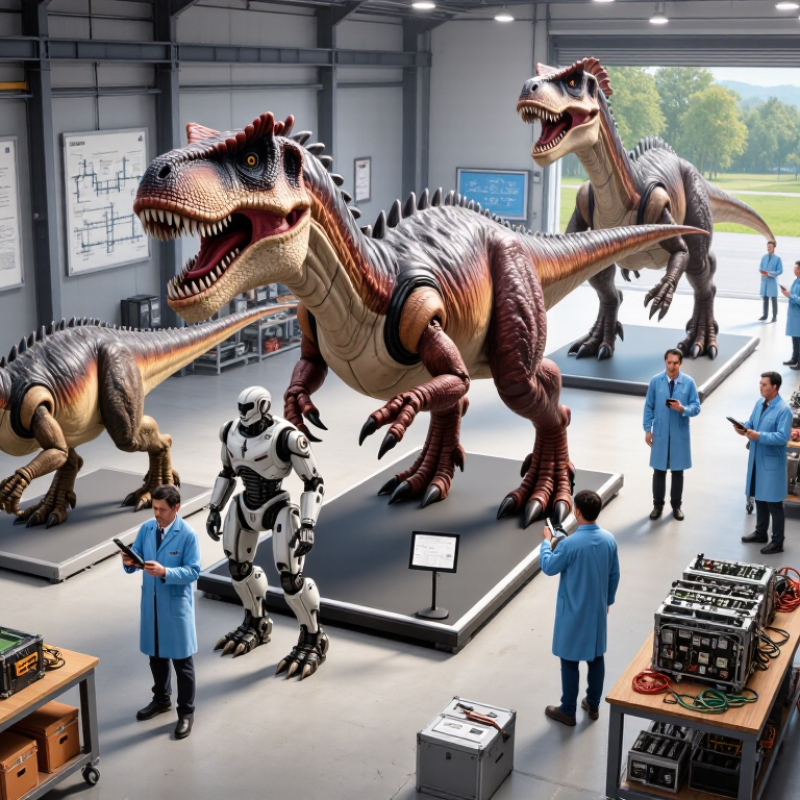
China Top Remote Controlled Animatronics Suppliers?

What Are Remote-Controlled Animatronics?

Remote-controlled animatronics are mechanical figures operated from a distance through a handheld transmitter, control panel, or programmed system. Inside, motors or pneumatic actuators can turn a head, blink eyelids, move a jaw, or lift an arm. A receiver interprets commands and sends them to these components. Small figures may use compact servos; larger displays need stronger drives, stable frames, and carefully routed cables. The controller may offer simple buttons, variable-speed joysticks, or preset motion sequences. Real-time control and automation are not identical. That distinction matters.

Museums, exhibitions, themed attractions, and live events use these figures to create movement without placing a performer inside the character. Before operation, a technician typically checks control range, power supply, joint limits, and emergency-stop behavior. Smooth motion depends on more than the controller: weight balance, actuator placement, and software timing all affect the result. A head that turns too quickly can look startling rather than lifelike. Not always. For buyers comparing suppliers in China, request clear specifications, operating videos, maintenance guidance, and spare-parts information. A polished demonstration is useful, but it cannot reveal every failure point. Ask how the mechanism performs after repeated cycles; that detail is easy to overlook, even for experienced teams.

How China’s Animatronics Supplier Market Is Structured

China’s remote controlled animatronics market is not one uniform industry. It is a mix of design studios, mechanical workshops, electronics teams, and export-oriented project integrators. Some suppliers build the creature’s frame and skin in-house. Others coordinate separate specialists for sculpting, movement, control systems, and finishing.

That distinction matters. A supplier showing a convincing dinosaur head may not manufacture its controller or motion hardware. Ask who handles each stage, and request a simple production flow. On a factory visit, look for practical evidence: a test rig, wiring diagrams, spare actuators, and technicians checking movement before the outer skin is fitted. Small details reveal more than polished showroom photos.

Control options also vary. Basic units may use a handheld remote for repeatable movements, while larger installations need coordinated channels, limit settings, and accessible emergency stops. Ask about operating cycles, sound levels, replacement parts, and how the unit performs after hours of use. Get these answers in writing.

The market can be hard to compare. Specifications are not always presented consistently, and a sample may behave differently from a finished installation. This picture is useful, but imperfect. A clear prototype review and a named point of contact can reduce surprises, especially when several workshops share responsibility.

What Products and Services Do Top Suppliers Offer?

Top remote controlled animatronics suppliers offer more than moving figures. They help buyers match character size, motion range, sound, and finish to a venue. A small museum display may need slow head turns and clear speech. A theme attraction may require coordinated gestures, lighting, and timed effects. Good suppliers ask about audience distance, daily operating hours, and available space before recommending a design.

Product options often include robotic figures, animal models, interactive characters, and custom-built displays. Control systems can range from handheld remotes to programmed sequences or sensor-triggered actions. Suppliers may also provide installation, operator training, spare parts, and maintenance plans. Details matter. Ask how quickly a component can be replaced, and whether the controls are simple enough for staff to use during a busy shift.

Reliable service should cover testing, motion limits, cable routing, and routine inspections. Clear documentation helps teams identify wear before a performance is interrupted. Customization is useful, but every added movement can increase setup and upkeep. A dramatic gesture may impress visitors once, then feel repetitive. Fit varies. Buyers should review a working demonstration and confirm the supplier’s support process before approving a final specification.

China Top Remote Controlled Animatronics Suppliers: Products and Services

A representative overview of product and service categories commonly offered for remote-controlled animatronics.

Values count representative offering types listed for each category. They are not supplier counts, market shares, or a ranking. Actual capabilities vary by supplier and project.

How to Evaluate and Compare Chinese Suppliers

China Top Remote Controlled Animatronics Suppliers?

A supplier’s catalogue can look impressive, but it rarely shows how a figure behaves after hours of operation. Compare suppliers using the same written brief: character dimensions, movement range, control method, indoor or outdoor use, and expected daily runtime. Details matter. Request recent test footage showing the complete unit, not only close-ups or edited highlights.

Check how each supplier documents its work. Ask for wiring diagrams, material specifications, a maintenance schedule, and a clear list of included components. For remote control, confirm operating distance under realistic conditions, battery life, signal response, and what happens if the connection drops. Ask for a sample inspection or a live video walkthrough. A polished video is not proof. I would also speak with a previous customer, though references may not reveal every problem.

Compare quotations line by line, including packing, shipping preparation, spare parts, repair support, and production lead time. Confirm who handles troubleshooting and how quickly replacement components can be supplied. Request written answers, then check that they match the contract and final drawings. A low price may reflect fewer test hours or thinner support, but that is not always obvious. Supplier claims deserve verification; even a careful evaluation can miss something.

China Top Remote Controlled Animatronics Suppliers? - How to Evaluate and Compare Chinese Suppliers

Use this evaluation framework to compare suppliers using the same product brief. The suggested weights are buyer-selected starting points, not audited supplier ratings. Confirm all claims with product-specific documentation and testing.

Evaluation dimension What to compare Evidence to request Warning signs Suggested weight
Movement and control Number and type of movements, motion range, control method, remote-control range under stated test conditions, and synchronization of movement with sound or lighting. A continuous demonstration of the proposed configuration; control-system description; movement list; and written operating limits. Demo shows a different model, movements are described vaguely, or control performance is promised without test conditions. 20%
Build quality and materials Frame construction, exterior skin or covering, joints, fasteners, cable routing, finish quality, and suitability for the intended indoor or outdoor environment. Material and finish specifications, close-up photos, sample inspection, and a written statement of environmental limitations. Materials are not identified, exposed wiring or uneven finishes appear in samples, or outdoor suitability is claimed without supporting details. 15%
Safety and compliance documentation Electrical and mechanical safety features, emergency stop or safe shutdown options where appropriate, and conformity requirements for the destination market and intended use. Product-specific test reports, declarations, manuals, and component details. Check which requirements apply to the finished product in the target market. Certificates cannot be matched to the quoted model, documentation names a different product, or the supplier treats a general certificate as proof of every requirement. 15%
Reliability and maintenance Expected operating schedule, maintenance intervals, access to serviceable parts, spare-part availability, and procedures for diagnosing common faults. Maintenance schedule, parts list, troubleshooting guide, and test records for the quoted configuration, including the test method and duration. No maintenance guidance, no identification of replaceable parts, or unsupported lifetime claims. 15%
Customization and engineering Ability to adapt dimensions, appearance, movement sequence, control interface, sound, and installation details; clarity about design ownership and revision limits. A written scope, drawings or renderings, revision process, prototype approval stages, and a clear list of included and excluded changes. Custom work is quoted without a defined specification, approval milestones, or agreement on tooling and design files. 10%
Production and quality control Production schedule, inspection stages, functional testing before shipment, packaging checks, and process for recording and resolving defects. A project schedule, inspection checklist, sample test report, and agreement on pre-shipment inspection and acceptance criteria. Dates are given without milestones, inspection is not documented, or acceptance criteria are left undefined. 10%
Warranty and after-sales support Warranty period and exclusions, response process, remote troubleshooting, replacement-part terms, and responsibility for shipping costs. Written warranty terms, support contact process, parts pricing or policy, and a clear description of how claims are handled. Only verbal assurances, unclear exclusions, or no defined process for parts and repair support. 10%
Total cost and delivery terms Itemized equipment, customization, tooling, packaging, shipping, installation, spare parts, and payment terms; compare quotations on the same delivery basis. A dated, itemized quotation; stated trade and delivery terms; shipment dimensions and weight; and a schedule showing key dependencies. A single unitemized price, unclear exclusions, or delivery estimates that omit approval and shipping stages. 5%
Total suggested weighting 100%

Comparison tip: Score each supplier against the same written specification, using a consistent scale (for example, 1–5), and record the supporting evidence beside every score. Treat unverified claims as unconfirmed rather than as proven performance.

How to Select a Supplier for Your Project

Choosing a remote controlled animatronics supplier starts with the project’s actual demands. Define the character’s size, movement range, operating hours, indoor or outdoor use, and audience distance. A compact head mechanism may suit a display, while a large moving figure needs stronger supports and careful motion limits. Ask suppliers for videos of comparable builds, not only polished renderings. Request details about materials, control systems, maintenance access, and expected service life. Clear evidence is more useful than broad promises.

Tips: Share a simple brief with reference images, target dimensions, and a list of required movements. Ask who handles installation and staff training. Confirm spare-part availability and response times in writing. Check how the supplier tests movement, noise, and stopping behavior before delivery. Small details matter.

Before choosing, review a written scope, schedule, payment milestones, and acceptance criteria. If possible, arrange a live demonstration or inspect a working unit. Test the controller yourself. Are the movements smooth? Can an operator stop the figure quickly? One overlooked issue is access for repairs; a neatly finished shell can make routine work difficult. It is worth asking for revisions, even when the design looks nearly complete. A supplier’s willingness to explain limitations may be more reassuring than a promise that every feature will work perfectly.

We are proud to support

Registered Company Name: Upminster Containers Limited. Registered Address: Mardyke Works, St Mary's Lane, Upminster, Essex RM14 3PA. Registered Company Number: 00940382
Developed & Maintained By Space Rocket Digital.
chevron-down