Let’s discuss your container requirements
01708 225350
Call Us
sale@modularmarbles.com
Email Us

Top Rod Heaters for Industrial Heating Applications

Industrial heating rarely happens under ideal conditions. A production line may need steady heat through a long shift, while a compact tank or die requires fast, localized warming. Rod Heaters serve these demanding roles in molds, platens, packaging equipment, and process tanks. Their simple cylindrical form can fit tight spaces, but performance depends on more than wattage.

The International Energy Agency’s Tracking Industry 2023 report estimates that industry accounts for about 37% of global final energy use. The U.S. Department of Energy’s Industrial Decarbonization Roadmap also identifies process heat as an important area for efficiency improvements. These reports do not compare individual heater models. They do explain why matching a heater to its process matters. Small choices matter.

This guide compares top Rod Heaters for industrial heating applications through practical selection factors: sheath material, diameter, heated length, voltage, watt density, and control method. A heater with excessive watt density may create hot spots; an undersized unit may struggle to maintain temperature. Neither outcome is solved by a product ranking alone. Installation, heat transfer, and maintenance affect results, too. That part is easy to overlook.

Use the comparisons as a starting point, not a substitute for engineering review. Confirm operating temperature, available space, and process conditions with the heater manufacturer before specifying a unit. A good fit is often less dramatic than expected: stable heat, fewer interruptions, and a design that suits the actual equipment.
Top Rod Heaters for Industrial Heating Applications

What Rod Heaters Are and How They Work

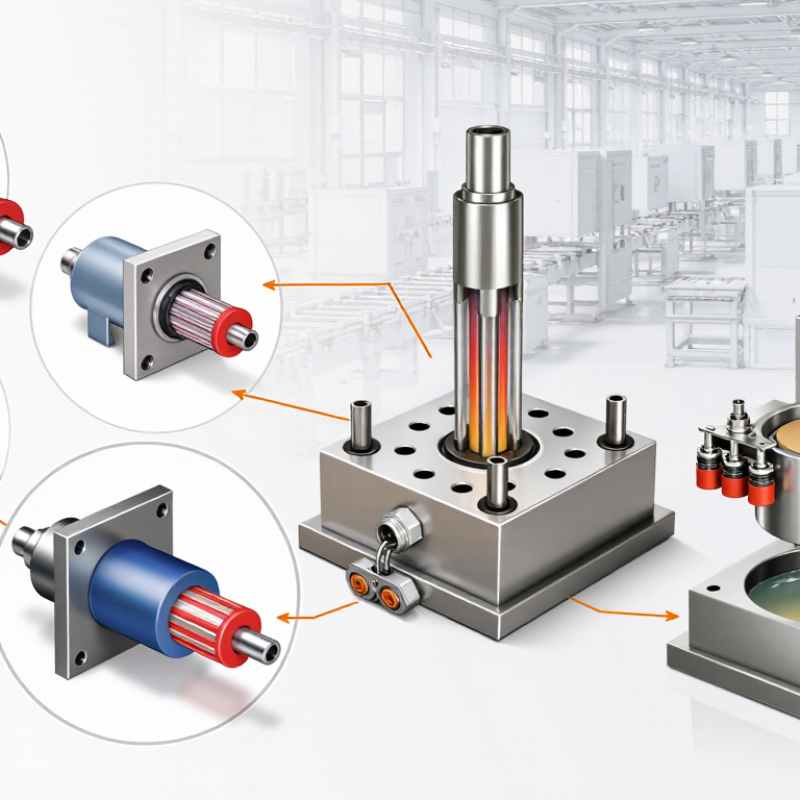
Rod heaters are compact electric elements designed to transfer heat into metal blocks, plates, molds, or other solid parts. Many use a resistance wire inside a metal sheath, with electrically insulating magnesium oxide packed around the wire. When current passes through the resistance wire, it produces heat. The insulation allows heat to move outward while helping keep the conductor electrically separated from the sheath. Heat moves outward.

In industrial equipment, a rod heater may slide into a drilled hole or fit into a clamped assembly. A close fit supports heat transfer; a loose fit can create hot spots and shorten service life. The sheath then warms the surrounding metal, which distributes heat to the work area.

Temperature controls and sensors can help maintain a set range, but placement matters. A sensor too far from the heated zone may report a comfortable reading while the workpiece remains cool. That detail is easy to miss.

Heater length, diameter, voltage, and watt density should match the equipment and operating conditions. Higher watt density is not automatically better; it can raise surface temperatures and increase wear. Even a well-chosen element needs sensible installation and regular inspection.

Key Designs and Materials Used in Industrial Rod Heaters

Industrial rod heaters use a compact resistance element to transfer heat into dies, plates, tanks, or process equipment. In many tubular designs, a nickel-chromium resistance wire sits inside a metal sheath, surrounded by compacted magnesium oxide. The insulation conducts heat while separating the energized wire from the sheath. Fit matters. A loose bore can slow heat transfer and create uneven temperatures.

Sheath material should match the operating environment. Stainless steel is common where strength and general corrosion resistance are needed; nickel-chromium alloys may suit higher temperatures or more demanding conditions. Neither choice is universal. Moisture, chemicals, vibration, and repeated thermal cycling can change service life. Ceramic components may also appear in specialized assemblies, but they need protection from impact and abrupt temperature changes.

A practical selection starts with the equipment, not just the heater’s rated wattage. Check bore diameter, insertion depth, available voltage, target temperature, and heat loss from the surrounding metal. A tightly fitted rod can improve heat transfer, yet an overly tight fit may complicate installation or replacement. That trade-off is easy to overlook. Confirm temperature limits and electrical connections against the heater specification, and measure temperatures near the working surface during commissioning. The first readings may expose hot spots that calculations missed.

How to Select a Rod Heater for an Industrial Process

Selecting a rod heater starts with the process, not the catalog. Define the material being heated, its starting and target temperatures, and the required warm-up time. Estimate the energy needed from the material’s mass and heat capacity, then account for heat lost through tanks, piping, and airflow. The first calculation is rarely the whole answer. A heater that looks adequate on paper may struggle during a cold start.

Check the available voltage, phase, insertion depth, and mounting space. For a liquid tank, confirm the heater stays submerged at the lowest operating level. For a metal block or die, make sure the bore fits closely enough for good heat transfer. Sheath material must also suit the fluid and operating temperature. Small details matter. A narrow flow path, for example, can create local overheating even when the average temperature seems safe. Review watt density with the heater supplier and process engineer.

Choose a control method that matches the process response. A thermocouple or resistance sensor placed near the heated zone can reveal temperature swings that a distant sensor misses. Include suitable over-temperature protection, and consider moisture, vibration, and terminal access during installation. Test under load. Record warm-up time and temperature at several points; results may expose assumptions worth revisiting. Regular checks for loose connections, scaling, or sheath damage can help catch trouble before production is affected.

Top Rod Heaters for Industrial Heating Applications — How to Select a Rod Heater for an Industrial Process

Compare common rod-style electric heater configurations by application, heat transfer, and installation needs. The figures below are indicative selection ranges, not guaranteed operating limits; actual ratings depend on element design, materials, temperature, airflow or fluid conditions, and the equipment manufacturer’s specifications.

Rod Heater Configuration Typical Industrial Applications Heat Transfer Method Indicative Watt-Density Considerations Key Selection Factors Advantages Important Limitations
Tubular rod element Ovens, dryers, process-air ducts, heating plates, and custom machinery Conduction to a mounting surface, or convection and radiation to air or surrounding materials Often designed at relatively moderate surface loading for air heating; the suitable value depends strongly on airflow, sheath temperature, and element geometry. Element length and shape, sheath material, operating temperature, airflow, mounting method, and available electrical supply Flexible shapes and mounting options; robust construction; suitable for many dry-heating duties Insufficient airflow or poor heat sinking can cause excessive element temperature and premature failure.
Cartridge rod heater Molds, dies, platens, packaging equipment, and localized metal heating Primarily conduction from the heater sheath into a close-fitting bore or metal block Can support higher localized loading than many air-heating designs when the bore fit and heat transfer are good; loose fits can sharply reduce allowable loading. Bore diameter and tolerance, insertion depth, heater-to-bore fit, temperature uniformity, and lead protection Compact, concentrated heat source; straightforward installation in drilled holes; suitable for controlled zones Requires a correctly sized, clean bore and adequate heat transfer. Removal can be difficult if the bore is distorted or contaminated.
Immersion rod heater Process tanks, water and oil heating, cleaning systems, and compatible chemical baths Direct transfer from the rod sheath to a liquid Must be selected for the liquid, circulation, and sheath material. Lower surface loading is generally needed for viscous, fouling, or temperature-sensitive fluids. Fluid chemistry, viscosity, liquid level, flow, deposits, corrosion resistance, and over-temperature protection Direct and efficient liquid heating; can be installed through a tank opening or suitable fitting Never operate without the required immersion or fluid coverage. Dry firing, scaling, or corrosion can lead to rapid damage.
Finned tubular rod heater Forced-air heaters, ventilation equipment, industrial ovens, and air-handling ducts Convection from extended fin surfaces to moving air Fin area increases heat transfer to air, but allowable output still depends on air velocity, inlet temperature, spacing, and pressure drop. Airflow rate, duct dimensions, fin spacing, dust loading, element arrangement, and fan or airflow interlocks Greater air-side heat-transfer area than a bare element; useful for duct and forced-convection applications Dust or deposits can reduce airflow and heat transfer. Airflow monitoring and suitable cleaning access may be necessary.
Circulation heater with rod elements Closed-loop heating of water, thermal fluids, oils, and other compatible process liquids Rod elements heat fluid flowing through a pressure-rated vessel Set according to fluid properties, flow rate, inlet temperature, and permissible film temperature; confirm vessel and element ratings together. Design pressure, flow rate, fluid compatibility, outlet-temperature control, pressure relief, and low-flow protection Compact inline heating; can provide controlled heating in a recirculating process loop Requires correctly engineered pressure equipment, flow safeguards, and protection against overheating or inadequate circulation.

Selection checklist: Define the process medium and target temperature; calculate the required heat input and warm-up time; confirm voltage, phase, and control requirements; check sheath and terminal compatibility; verify heat transfer, flow, and mounting conditions; and include appropriate temperature, low-level, low-flow, or over-temperature safeguards. Have final watt density and ratings confirmed for the specific installation.

Comparing Top Rod Heater Options by Performance and Use

Top Rod Heaters for Industrial Heating Applications

Comparing Top Rod Heater Options by Performance and Use

Rod heaters differ less by appearance than by how they transfer heat. Cartridge heaters concentrate heat inside drilled metal blocks, making them useful for dies, platens, and compact tooling. Tubular elements can be formed into varied shapes for ovens, ducts, and surface heating. Immersion rods heat liquids directly, but require compatible fluids, secure mounting, and protection against dry operation. Fit matters.

The International Energy Agency’s Energy Efficiency 2023 report estimates that industry uses about 37% of global final energy. That scale makes heat loss and control quality important, not just the heater’s rated wattage. The U.S. Department of Energy’s Improving Process Heating System Performance sourcebook likewise emphasizes insulation, temperature control, and system assessment. A cartridge heater may respond quickly in a small metal block, while a tubular element can spread heat across a larger area. Immersion designs can transfer heat efficiently to liquids, though deposits or poor circulation may create hot spots.

Compare operating temperature, watt density, response time, sheath material, and maintenance access against the actual process. A high-watt-density cartridge can be a poor choice in a loosely fitted bore; the air gap reduces heat transfer and can shorten service life. A lower rating is not automatically safer, either. Measure temperatures at the workpiece, not only at the controller.

One detail is easy to miss: real installations rarely behave exactly like catalog test conditions.

Installation, Safety, and Maintenance for Rod Heaters

Rod heaters can provide steady heat in tanks, ducts, and process equipment, but installation conditions matter. Before fitting one, isolate power and check the equipment drawing, heater rating, and required clearances. Confirm the heated material can tolerate the intended temperature. A probe placed too close to the rod may give a misleading reading.

Support the heater so it cannot sag, vibrate, or touch nearby surfaces. Allow room for thermal expansion, and protect electrical connections from moisture and process residue. Keep leads away from hot metal. Small details matter. In practice, crews sometimes tighten supports before checking alignment; that can leave the rod under strain. It is worth pausing to inspect the full length before closing the enclosure.

During operation, follow the specified temperature limits and never energize a heater unless its design permits the surrounding conditions. Use suitable over-temperature protection, and verify grounding and terminal tightness during scheduled service. Disconnect and lock out power before inspection, then allow the assembly to cool. Check for cracked insulation, corrosion, loose fittings, and deposits that can trap heat. Replace damaged components rather than improvising a repair. Maintenance records help reveal gradual changes, though a log cannot replace a careful visual check.

We are proud to support

Registered Company Name: Upminster Containers Limited. Registered Address: Mardyke Works, St Mary's Lane, Upminster, Essex RM14 3PA. Registered Company Number: 00940382
Developed & Maintained By Space Rocket Digital.
chevron-down