
China’s scale makes it an important place to investigate Stick Welding Sticks suppliers. The World Steel Association’s World Steel in Figures 2024 reported that China produced 1,019.1 million tonnes of crude steel in 2023, about 54% of global output. That figure describes steelmaking, not electrode sales. Still, it signals the size of the industrial base serving construction, fabrication, shipbuilding, and equipment maintenance.
Supplier choice needs closer checks than a large factory photo or a low quotation. Buyers should compare electrode classifications, applicable standards, batch traceability, coating consistency, and the documents provided with each shipment. Ask for current test reports and confirm that the specified diameter, coating type, and welding position match the job. Small details matter. A damp carton or inconsistent coating can cause trouble at the worksite. The right checks also depend on the base metal and welding procedure.
This guide examines leading Chinese suppliers through product range, manufacturing evidence, quality controls, export support, and communication. Public company claims are useful, but they are not independent verification. Request samples and review documentation before placing a substantial order. Market rankings can be imperfect; supplier performance may vary by product line and production batch. That distinction matters. A dependable partner should explain limitations clearly, not just promise the lowest price.
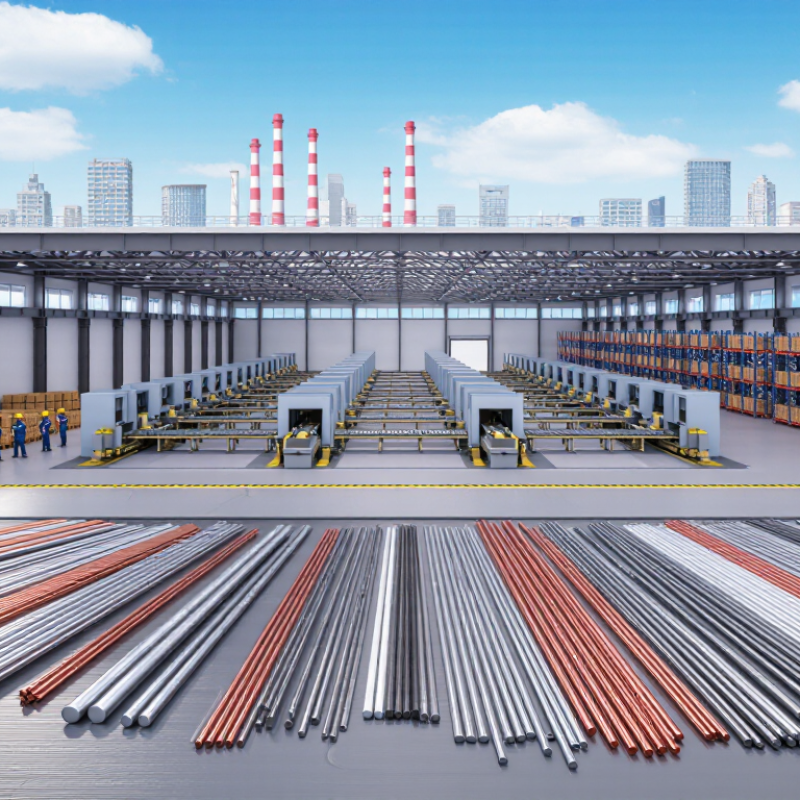
Stick welding electrodes are metal rods with a consumable core and a flux coating. The core carries welding current and supplies filler metal; the coating helps stabilize the arc, shields the molten pool, and forms protective slag. As the rod burns, the coating can affect spatter, bead shape, and how easily slag separates. Small differences are visible: one electrode may leave a smooth, flat bead, while another produces heavier slag.
The AWS A5.1/A5.1M classification system gives useful numeric guidance for carbon-steel electrodes. In E6013, “E” means electrode, “60” indicates a minimum tensile strength of 60,000 psi, and “1” identifies all-position use. The final digits describe coating and usable current. E7018, for example, specifies 70,000 psi minimum tensile strength and a low-hydrogen coating. These are classification values, not a promise that every weld will reach them. ISO 2560 also classifies covered electrodes using properties such as strength, impact toughness, and chemical composition. The systems do not map neatly onto each other. The coating matters. Check the applicable standard, product certificate, and welding procedure; electrode color alone is not reliable identification. The label is only part of the story.
| Category | Data Dimension | Factual Information | What Buyers Should Check |
|---|---|---|---|
| Stick Welding Electrode Basics and Classification | |||
| Definition | Welding process | Stick welding, also called shielded metal arc welding (SMAW), uses a flux-coated consumable electrode to create the arc and supply filler metal. The flux forms shielding gases and slag during welding. | Confirm that the electrode is intended for the base metal, welding position, and process specified for the job. |
| AWS classification | Example: E7018 | In common AWS carbon-steel electrode classifications, “E” identifies an electrode; the first two digits indicate minimum tensile strength in thousands of pounds per square inch; the next digit indicates permitted welding positions; and the final digit identifies coating and current characteristics. | Read the applicable AWS specification and product data sheet. Classification details and requirements depend on the specific specification and edition. |
| Position code | Common AWS A5.1 position indicators | In AWS A5.1 classifications, “1” generally indicates all-position usability, while “2” indicates flat and horizontal fillet positions. The complete classification should be checked for its exact scope. | Match the position designation to the joint location and the required welding procedure. |
| E6010 | Typical coating and use | A cellulosic electrode commonly used for pipe welding and root passes. It is generally designed for DC electrode-positive operation and produces a forceful arc. | Verify polarity, pipe-welding suitability, and compatibility with the applicable welding procedure. |
| E6011 | Typical coating and use | A cellulosic electrode commonly available for AC or DC operation, depending on the specific product. It is used for general-purpose fabrication and applications where an aggressive arc is useful. | Confirm the permitted current type and polarity on the product data sheet. |
| E6013 | Typical coating and use | A rutile-type electrode commonly used for general fabrication, sheet metal, and work requiring relatively easy arc starting and a smooth bead. | Check the recommended material thickness, position, and current range for the particular electrode diameter. |
| E7018 | Typical coating and use | A low-hydrogen iron-powder electrode commonly used for structural and fabrication work. Current and polarity options vary by product classification and manufacturer. | Follow the specified storage, exposure, and any reconditioning instructions; moisture control is important for low-hydrogen electrodes. |
| E7024 | Typical coating and use | An iron-powder electrode designed for high deposition rates, generally used in flat and horizontal fillet welding. | Confirm that the joint position and welding setup are suitable for this electrode type. |
| Standards | Classification documents | AWS A5.1/A5.1M covers carbon-steel electrodes for SMAW. ISO 2560 covers covered electrodes for manual metal arc welding of non-alloy and fine-grain steels and uses its own classification system. | Specify the required standard, edition, and classification system. Do not assume that designations from different systems are interchangeable. |
| Consumable format | Dimensions and packaging | Electrodes are commonly supplied in different diameters and lengths, with packaging options such as cartons or moisture-resistant containers. Available sizes and packaging vary by product. | Request the size range, net weight, packaging details, and storage guidance for the exact item being quoted. |
| Supplier Evaluation Criteria for China-Based Sourcing | |||
| Product conformity | Classification and documentation | A qualified supplier should be able to identify the applicable electrode classification and provide product documentation relevant to the offered item. | Request a technical data sheet, classification details, and a batch-specific inspection or test document where required by the purchase specification. |
| Quality controls | Manufacturing and traceability | Production controls and lot identification help buyers connect delivered goods with manufacturing and inspection records. A quality-management certificate describes a management system, not the performance of every electrode batch. | Check certificate scope and validity, lot marking, inspection records, and the supplier’s process for handling nonconforming product. |
| Testing | Mechanical and usability evidence | Depending on the specification and application, electrode qualification may involve tests such as tensile testing, impact testing, chemical analysis, or weld-metal examination. | Agree in advance on required tests, acceptance criteria, sampling, and whether testing must be performed by an independent laboratory. |
| Application support | Technical assistance | Electrode selection depends on base-metal grade, joint design, position, service conditions, and the approved welding procedure. | Provide the intended application and ask for written recommendations supported by the applicable classification and product data. |
| Export readiness | Shipping and documentation | International shipments may require agreed packaging, shipping marks, commercial documents, and transport arrangements. Requirements depend on the destination and purchase terms. | Confirm packaging protection, labeling, lead time, inspection arrangements, and the documents needed for import clearance before placing an order. |
| Supplier comparison | Objective selection method | There is no single universal ranking of electrode suppliers that applies to every application. The best fit depends on conformity, consistent quality, technical support, delivery capability, and total purchasing requirements. | Compare shortlisted suppliers using the same classification, test requirements, sample-evaluation method, packaging, delivery terms, and quotation scope. |


