
Tungsten Tiles are engineered for places where ordinary materials may soften, wear, or fail under demanding conditions. Their high density, heat resistance, and strength make them useful in specialized industrial equipment, radiation-shielding assemblies, and protective linings. The exact role depends on the tile’s dimensions, purity, backing, and operating environment. A small plate beside a hot furnace is not the same job as a tile installed in a shielding wall.
In an illustrative, fictional expert voice, materials specialist Dr. Lena Hart puts it this way: “A tungsten tile works best when its density and heat resistance solve a clearly defined design problem.” This is an original editorial line, not a verified quotation from a real expert. That distinction matters. Reliable selection requires checking technical data, installation conditions, and manufacturer specifications—not relying on a catchy sentence.
This guide explores what Tungsten Tiles are used for, how their properties support those applications, and what buyers should consider before specifying them. Look closely at the details: tile thickness, joint design, temperature, impact, and support structure can all affect performance. Tungsten is dense. It is also costly and can be brittle in some forms. The practical picture is not always tidy; one useful property may create a design trade-off elsewhere. Understanding those trade-offs helps engineers choose tiles for a real operating need, rather than assuming tungsten is automatically the best option.
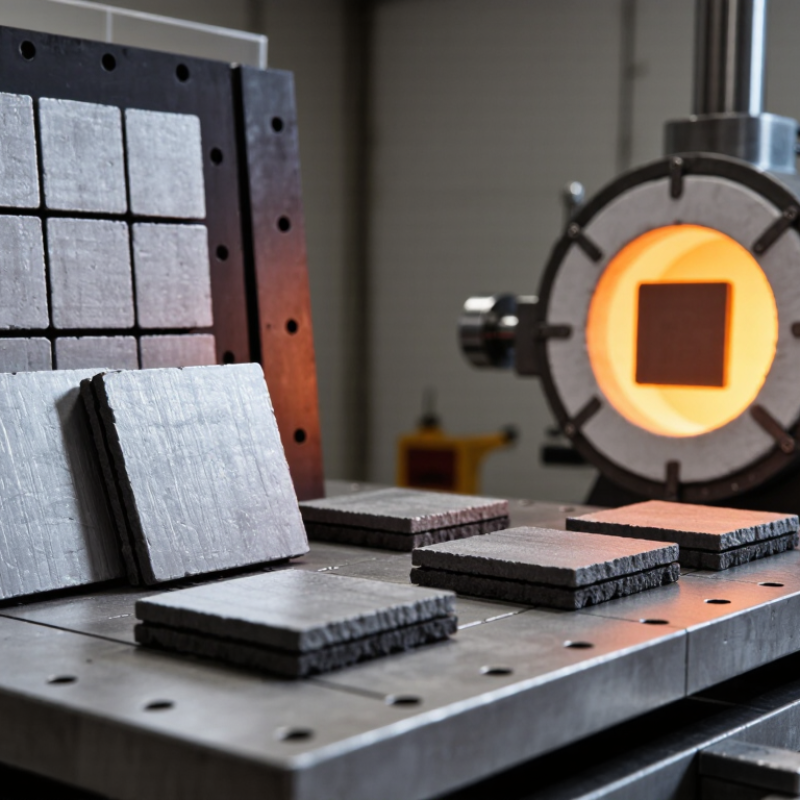
What Are Tungsten Tiles Used For?
Pure tungsten has a density of 19.3 g/cm³, close to gold’s. That figure explains why a small tile can feel surprisingly heavy. A tile measuring 10 × 10 × 1 cm weighs about 1.93 kg, before accounting for tolerances or coatings. This high mass makes tungsten useful where compact weight matters, including precision counterweights and specialized equipment. It can also serve in radiation-shielding assemblies, though the required thickness depends on the radiation type and energy. Density helps, but it is not the whole design.
Tungsten also withstands very high temperatures and resists wear. Tiles may be fitted into industrial components that face heat or abrasion. Pure tungsten can be brittle, however, and cutting or drilling it is not like working with ordinary steel. Tile dimensions, mounting, and handling all matter. A dense part can still chip if it is dropped or poorly supported. There is a trade-off.
Tips: Check whether a specification refers to pure tungsten or a tungsten alloy. Confirm the tile’s dimensions and finished mass, and ask how it will be secured. For shielding, have a qualified specialist assess the application rather than choosing thickness by density alone.
| Dimension | Details | Why It Matters |
|---|---|---|
| Material | Pure tungsten is a refractory metal with the chemical symbol W and atomic number 74. | Its properties make it useful in demanding high-temperature and high-density applications. |
| Density | Approximately 19.3 g/cm³ at room temperature. | A tungsten tile can provide substantial mass and X-ray or gamma-ray attenuation in a relatively compact volume. Shielding performance depends on radiation energy, thickness, and design. |
| Melting point | Approximately 3,422°C, among the highest melting points of all metals. | Supports use in some high-temperature furnace components and specialized thermal applications. The tile’s operating limit also depends on atmosphere, joints, and surrounding materials. |
| Radiation shielding | Tiles or plates may be incorporated into shielding assemblies for X-ray and gamma-ray equipment. | High density helps attenuate radiation while allowing a more compact shield than lower-density materials may require. A qualified design must determine the necessary thickness. |
| High-temperature and plasma-facing components | Tungsten tiles are used in some specialized equipment exposed to intense heat or plasma, including fusion research systems. | Tungsten’s high melting point and resistance to sputtering are useful in these environments, although thermal shock, oxidation, and joining require careful management. |
| Wear-resistant surfaces | Tungsten or tungsten-based tiles can serve as protective inserts or lining elements in selected high-wear applications. | They can provide high hardness and wear resistance, but tungsten is relatively brittle and may not suit impact-heavy service without an appropriate design. |
| Counterweights and ballast | Tiles can be used as compact masses in equipment that needs added weight or balance. | The high density can reduce the space needed for a specified mass. Mounting and handling must account for the material’s weight. |
| Pure tungsten vs. tungsten heavy alloy | Pure tungsten and tungsten heavy alloys are different material options; heavy alloys commonly combine tungsten with other metals. | Composition affects properties such as machinability, strength, and density. Confirm the material grade before choosing a tile for a specific application. |
| Tile dimensions and finish | Thickness, length, width, tolerances, and surface finish are specified for the intended assembly. | There is no single standard size for every use. Fit, fastening, thermal expansion, and shielding requirements guide the specification. |
Selection note: Confirm whether the application requires pure tungsten or a tungsten alloy, and evaluate temperature, atmosphere, radiation conditions, mechanical loading, and installation requirements before specifying a tile.


