A Stationery Hardware Manufacturer produces the small metal and plastic parts that make folders, binders, notebooks, and presentation products function. These parts may include ring mechanisms, clips, eyelets, rivets, corners, fasteners, and locking components. They are easy to overlook. Yet a weak hinge or poorly aligned ring can damage an entire product experience.
A professional manufacturer combines material knowledge, precision tooling, and dependable quality control. Engineers may select stainless steel for corrosion resistance, coated steel for cost efficiency, or reinforced plastic for lighter designs. Production teams usually manage stamping, forming, plating, assembly, and inspection. Measurements matter. A fraction of a millimeter can affect page movement or closing strength. Reliable suppliers also provide samples, test reports, batch records, and clear communication about tolerances. These details help brands evaluate performance before large-scale production.
The work is practical.
Experience matters when a custom mechanism behaves differently after repeated use. A capable factory investigates the cause instead of hiding the defect. It may review tooling wear, coating thickness, spring tension, or packaging pressure. No production line is flawless. That limitation deserves honest discussion, especially when buyers request low prices and demanding specifications together. A trustworthy Stationery Hardware Manufacturer explains those trade-offs and recommends realistic solutions. It should also follow applicable safety, environmental, and labor requirements in its operating markets. The definition is broader than manufacturing alone; it includes responsible sourcing, traceability, testing, and after-sales support. In this guide, readers can examine how these manufacturers work, what services they offer, and how to judge their reliability.
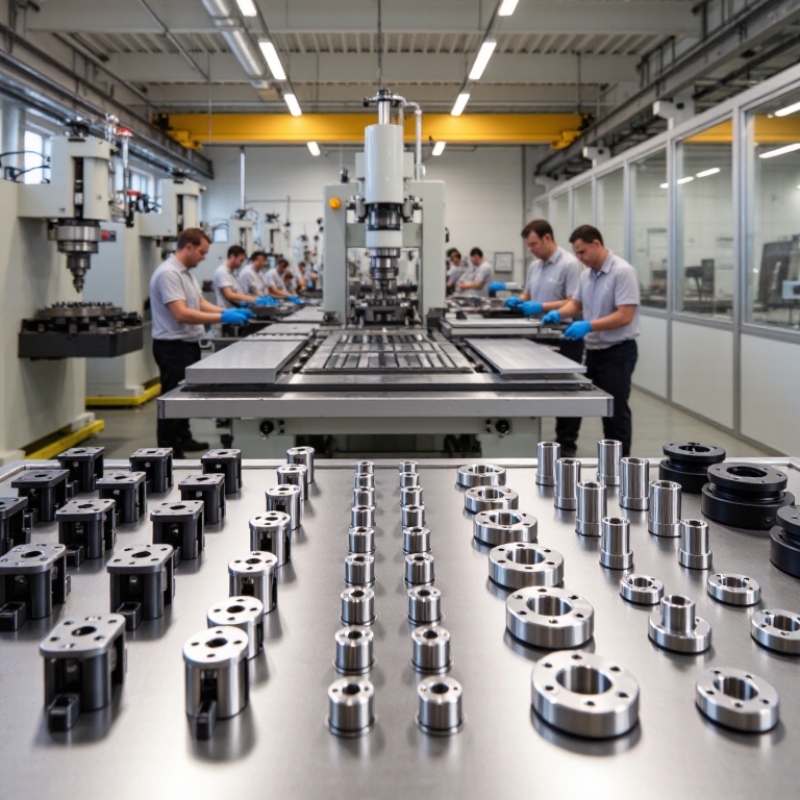
A stationery hardware manufacturer produces the functional metal and plastic parts used in writing and filing products. These parts include binder rings, paper clips, eyelets, clasps, corner protectors, and adjustable mechanisms. Unlike a finished stationery maker, this manufacturer focuses on components that make a product open, close, hold, or organize paper.
The scope usually begins with material selection and technical design. Engineers may choose steel for spring strength, brass for corrosion resistance, or recycled plastic for lighter parts. Production can involve stamping, bending, injection molding, riveting, polishing, plating, and assembly. A reliable factory checks dimensions with gauges, tests repeated movement, and records each production batch.
Small details matter. A ring that misaligns by one millimeter may tear pages or frustrate users.
Experienced manufacturers also support prototypes, tooling, packaging, and quality documentation. They review drawings with buyers and suggest changes for safer, simpler production. However, the process is not perfectly predictable. Surface color can vary between batches, and a prototype may perform better than a mass-produced part. Clear tolerances, sample approval, and inspection records prevent more problems than attractive promises. Their wider role is technical partnership, not merely metal forming.
What Is a Stationery Hardware Manufacturer?
Core Products and Components They Produce
A stationery hardware manufacturer makes the small mechanical parts that give office and school products strength, movement, and reliable handling. Its work may include metal clips, binder rings, eyelets, rivets, springs, hinges, buckles, and wire mechanisms. These parts often remain hidden. Their quality becomes obvious when a notebook bends poorly or a folder will not close.
Manufacturers usually combine stamping, wire forming, CNC machining, plating, riveting, and quality inspection. Material choices matter. Stainless steel resists corrosion, while coated carbon steel can reduce cost. Common checks include dimensional tolerance, surface finish, opening force, and cycle testing. Grand View Research reported that the global stationery products market reached about USD 90.6 billion in 2023, with continued growth expected through 2030. The figure covers finished stationery, not hardware alone, but it shows the scale of demand. Market boundaries remain imperfect.
Tips: Ask for material certificates, tolerance records, and sample testing before approving production. A supplier should explain its tooling life and replacement plan. Confirm whether components meet relevant ISO or national testing requirements. Do not judge a part only by its polished surface. A bright finish can hide weak riveting, uneven spring tension, or poor corrosion resistance. Experienced buyers test real assemblies, because laboratory samples may not reflect daily handling.
Stationery hardware manufacturers produce metal products and precision components used to fasten, organize, punch, bind, or reinforce paper. The chart shows the typical number of core hardware parts found in common stationery products.
Core parts may include formed metal bodies, springs, pins, handles, anvils, washers, and wire elements. Counts represent typical product architecture rather than market-share or company-specific data.
A stationery hardware manufacturer produces the metal and mechanical parts used in notebooks, folders, planners, and writing tools. These parts include rings, clips, eyelets, springs, and corner protectors. Materials usually include stainless steel, carbon steel, aluminum, or brass. Each option changes strength, weight, surface feel, and production cost.
Material selection begins with the product’s daily use. Stainless steel resists rust in humid offices, while aluminum keeps a cover assembly light. Carbon steel can provide strong spring action after suitable treatment. Engineers also check thickness, hardness, and coating adhesion. A bright finish may look attractive, but fingerprints and scratches can expose weak surface preparation. Small details matter.
Design work connects appearance with reliable movement. A ring mechanism must open smoothly and align without catching paper. A clip needs enough pressure to hold sheets without leaving deep marks. During sampling, manufacturers test repeated opening, pull strength, and edge safety. In my production observations, a polished sample can mislead. Real testing often reveals loose rivets or uneven plating. That feedback should change the design, even when revisions delay delivery.
Manufacturing commonly includes stamping, bending, machining, polishing, plating, assembly, and inspection. Stamping forms consistent shapes from metal sheets. Bending tools must control angles within tight limits. Automated equipment improves repeatability, yet skilled workers still notice burrs, noise, and rough movement. Quality teams measure dimensions with gauges and inspect surfaces under direct light. A few defective pieces may seem harmless, but they can damage user trust across an entire shipment.
A stationery hardware manufacturer produces the small metal parts that make writing products reliable and usable. These parts may include binder rings, clips, eyelets, pen components, and decorative fittings. In practical production, precision matters. A ring that opens unevenly can damage paper or frustrate users. Experienced manufacturers inspect dimensions, surface finish, strength, and assembly performance throughout production.
Quality standards should be visible in daily work, not only written in documents. Engineers may use gauges, torque checks, coating tests, and sample inspections to control consistency. Materials must match the product’s purpose, whether it needs corrosion resistance, smooth movement, or a polished appearance. No process is flawless. A rushed inspection can still miss a weak spring or a tiny scratch, so reliable factories review defects and adjust procedures instead of hiding them.
Customization is another important service. A manufacturer can develop different sizes, colors, shapes, finishes, and packaging methods from technical drawings or physical samples. Clear communication prevents expensive misunderstandings. Supply services may include prototype support, production scheduling, batch inspection, packing, and shipment coordination. A dependable supplier also reports delays early and keeps records for traceability. Small orders can be challenging. They may require more planning, but they often reveal whether the supplier truly supports growing product ideas.
A stationery hardware manufacturer produces metal and plastic components used in notebooks, folders, binders, writing instruments, desk organizers, and related office products. The table below summarizes common product areas, quality practices, customization options, and supply services.
| Product Area | Typical Components | Common Materials | Quality and Compliance Checkpoints | Customization Options | Supply Services |
|---|---|---|---|---|---|
| Binding Hardware | Binder rings, lever-arch mechanisms, notebook loops, and fasteners | Steel Stainless steel Zinc alloy | Ring opening and closing cycle checks, alignment inspection, spring-force testing, burr removal, corrosion evaluation, and functional testing on finished assemblies. | Ring diameter, hole spacing, mechanism shape, surface finish, plating color, mounting pattern, and packaging format. | Prototype sampling, production scheduling, assembly support, lot inspection, export packaging, and shipment documentation. |
| Notebook and Journal Hardware | Elastic closures, corner protectors, metal book corners, eyelets, and ribbon attachments | Brass Iron Aluminum Polyester | Dimensional checks, pull-strength testing, color consistency, edge-safety inspection, attachment security, and surface-finish assessment. | Custom dimensions, logo-free decorative patterns, material selection, color matching, attachment method, and bundled accessory sets. | Component kitting, small-batch production, replenishment orders, barcode labeling, and protective inner packaging. |
| Writing Instrument Parts | Pen clips, tips, springs, buttons, refills, and decorative fittings | Brass Stainless steel Aluminum Engineering plastics | Fit and function testing, clip retention checks, spring compression testing, dimensional inspection, ink-flow verification for applicable refills, and visual inspection. | Component geometry, clip tension, plating or coating, spring specification, refill format, color, and assembly configuration. | Sample approval, component assembly, quality records, batch traceability, inventory planning, and scheduled deliveries. |
| Folder and Filing Accessories | Paper clips, file fasteners, slide bars, label holders, and document clips | Galvanized steel Stainless steel ABS plastic Polypropylene | Load and retention testing, repeated-use testing, dimensional accuracy, edge and burr inspection, coating adhesion, and material verification. | Length, width, hole pattern, clip force, profile, color, finish, and compatibility with specific paper or board thicknesses. | Assortment packing, multi-size sets, carton customization, stock holding, and container-load planning. |
| Desk Organization Hardware | Drawer pulls, pen-cup fittings, cable clips, label frames, and small brackets | Zinc alloy Steel Aluminum Silicone | Load-bearing checks, dimensional inspection, coating uniformity, sharp-edge control, assembly fit, and packaging protection for finished surfaces. | Shape, mounting method, finish, color, hole spacing, adhesive or screw attachment, and material combination. | Design-for-manufacturing review, tooling coordination, assembly, mixed-SKU packing, and quality inspection reports. |
| Surface Finishing | Decorative and protective treatments for metal stationery components | Nickel plating Chrome plating Zinc plating Powder coating | Appearance inspection, coating adhesion, thickness monitoring, corrosion-resistance evaluation where specified, and color consistency checks. | Gloss or matte effect, metallic color, brushed texture, antique appearance, transparent coating, and defined visual samples. | Pre-production finish samples, process records, protective separators, anti-scratch packing, and batch consistency control. |
| Quality Management | Incoming materials, in-process controls, final inspection, and corrective actions | Raw metals, plastics, coatings, springs, adhesives, and packaging materials | A quality management system may be structured around ISO 9001 principles. Inspection plans commonly include dimensions, appearance, function, packaging, and sampling records. | Customer specifications, approved drawings, reference samples, inspection standards, acceptance criteria, and change-control procedures. | Pre-production samples, first-article approval, in-process inspection, final inspection, nonconformance handling, and traceability records. |
| Regulatory and Material Control | Material declarations, restricted-substance review, and product documentation | Metals, polymers, coatings, adhesives, inks, and packaging substrates | Depending on the destination market and product use, documentation may address restrictions associated with RoHS, REACH, packaging regulations, or product-safety requirements. | Material substitutions, coating selection, low-odor options, recycled-content targets, and documentation packages for specific markets. | Supplier declarations, test reports where required, technical data sheets, shipment documents, and compliance-file management. |
| Supply and Logistics | Forecasting, production, warehousing, consolidation, and delivery coordination | Bulk components, assembled parts, retail-ready sets, and export cartons | Quantity verification, carton-drop protection, moisture control where needed, labeling accuracy, and shipment inspection. | Pack quantity, carton dimensions, pallet configuration, labels, inserts, language requirements, and delivery schedule. | Minimum order quantities, sample orders, scheduled replenishment, safety-stock programs, consolidated shipments, and sea, air, or courier delivery options. |
Note: Exact tolerances, testing methods, minimum order quantities, compliance documentation, and delivery times depend on the product design, material, destination market, order volume, and agreed technical specifications.
A stationery hardware manufacturer produces the functional parts used in everyday writing and filing products. These parts may include metal clips, binder mechanisms, rings, fasteners, pen components, and desk organizers. Unlike a paper mill, this manufacturer focuses on structure, movement, durability, and assembly. Small details matter. A loose spring can damage a product’s reputation quickly.
Schools are major customers because classrooms need affordable, safe, and durable supplies. Office suppliers also purchase hardware for folders, storage systems, filing tools, and desktop accessories. Their buyers often request consistent dimensions and dependable delivery. Print shops may need custom binding parts for reports, manuals, and presentation materials. Retail distributors usually seek attractive packaging, stable quality, and flexible order quantities.
Other customers include hotels, hospitals, libraries, government offices, and industrial companies. Each sector has different expectations. Hospitals may prefer easy-clean surfaces and corrosion-resistant materials. Libraries often require hardware that withstands repeated handling. Industrial buyers may request special coatings, precise tolerances, or private packaging.
Reliable manufacturers normally inspect raw materials, test moving parts, and record production results. They should also explain limitations clearly. A low-cost component may look efficient, yet fail after months of daily use.
I have found that even careful specifications can miss real working conditions. Samples and field testing remain valuable. Sometimes, the simplest design performs best.


