Let’s discuss your container requirements
01708 225350
Call Us
sale@modularmarbles.com
Email Us

Where to Buy Second Hand Shipping Containers in China?

Finding reliable second hand shipping containers in China requires more than comparing online prices. Buyers should assess condition, origin, documentation, and delivery costs before paying a deposit. Major port areas, including Shanghai, Ningbo, Qingdao, and Shenzhen, often have dealers and container yards. Availability changes with shipping schedules and local demand. A low listing price may hide repainting, floor damage, or expensive inland transport. That matters.

An experienced buyer usually asks for recent photos, a video inspection, the container number, and the CSC safety plate when relevant. For storage, check door seals, roof leaks, corner posts, and the plywood floor. For international transport, confirm that the unit meets the carrier’s and destination country’s requirements. Not every used box remains suitable for cargo movement. Some are better treated as stationary storage units.

This guide explains where to search, how to compare Chinese suppliers, and which questions reveal practical reliability. Direct yard visits can show rust bubbles, patched panels, and uneven doors that photographs miss. Independent inspections may cost extra, but they can prevent a costly mistake. Still, inspection is not magic; hidden corrosion can remain. Buyers should verify business licenses, written specifications, payment terms, and after-sales responsibilities. Clear contracts help.

The right purchase is not always the newest container or the cheapest one. It is the unit that matches your use, budget, route, and risk tolerance.
Where to Buy Second Hand Shipping Containers in China?

Types of Second Hand Shipping Container Sellers in China

China has several types of second hand shipping container sellers. Depot operators usually sell units recently released from transport service. Their containers may have clearer usage records, but stock changes quickly. Independent traders collect containers from different depots and resell them nationwide. They offer more choices, although condition descriptions can vary.

Refurbishing workshops repair doors, roofs, floors, and corner castings before resale. These units look cleaner and may suit storage or site offices. However, fresh paint can hide old corrosion. Freight forwarders sometimes sell surplus containers after completing transport projects. Their prices may be attractive, but available sizes and locations are limited. Ask for the container number, manufacturing year, repair history, and current depot address.

Tips: Request recent photos of the roof, floor, locking bars, and internal corners. Check the CSC plate when ocean transport is required. Measure the doorway and confirm the external dimensions. Ask whether delivery, lifting, and local taxes are included. A video inspection helps, but it cannot replace a physical check. Some sellers provide incomplete records. That is worth questioning.

Where to Buy Second-Hand Shipping Containers in China?

Types of second-hand shipping container sellers and their typical market roles

This comparison reflects common industry characteristics in China. A value of 1 means the seller type typically provides that service, while 0 means it is not usually its primary role. Availability, condition, and delivery options should be confirmed for each individual seller.

Major Chinese Markets for Used Shipping Containers

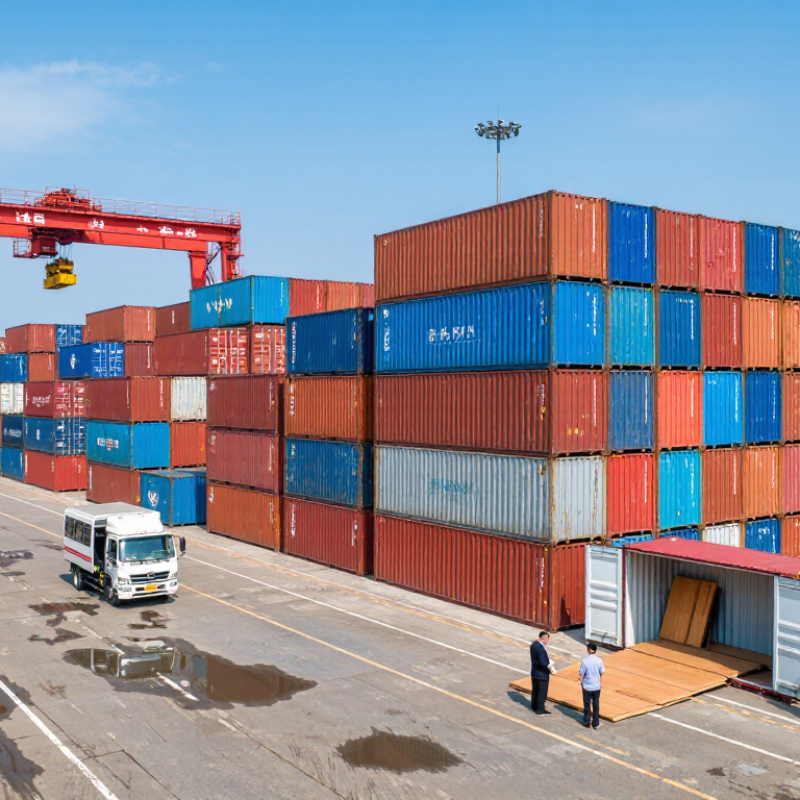
Shanghai, Ningbo-Zhoushan, and Qingdao are major Chinese markets for used shipping containers. They serve dense export corridors, so empty units often return to nearby depots after cargo delivery. The Ministry of Transport reported China’s container throughput at about 330 million TEU in 2024. That volume supports wider second-hand availability, especially around port-side storage yards. Prices can still vary sharply. A 20-foot dry container near Shanghai may differ from one in inland Zhejiang after transport and handling costs.

Southern buyers often inspect markets around Shenzhen, Guangzhou, and nearby river terminals. Northern demand is concentrated around Tianjin, while inland trading activity appears near Zhengzhou, Chongqing, and Xi’an. These inland locations may offer lower purchase prices, but relocation can become expensive. UNCTAD’s Review of Maritime Transport 2024 recorded global container port throughput of approximately 858 million TEU in 2023. High circulation does not mean every used unit is suitable. Check the door seals, floor strength, corner posts, roof patches, and visible corrosion. Ask for recent inspection photographs and the container’s manufacturing plate. Small defects matter.

A practical mistake is judging only by paint. Fresh paint can hide repairs. I would also confirm depot access, loading equipment, delivery height, and local tax documents before payment. Reports provide market direction, not a guaranteed quotation. Availability changes weekly with vessel schedules, repositioning, and seasonal export demand. Two nearby depots may quote differently. That is normal, but unexplained differences deserve questions.

How to Evaluate Container Condition and Specifications

When buying second-hand shipping containers in China, condition matters more than a fresh coat of paint. UNCTAD’s Review of Maritime Transport 2024 reported an 8.8% increase in the global container-ship fleet during 2023. More circulation can mean more available units, but also uneven wear. Ask for the container’s build year, serial number, inspection history, and CSC safety plate. Check that the plate is readable and matches the unit.

Look closely at the corner posts, roof, door hinges, locking bars, and floor. Surface rust is usually manageable. Deep corrosion, bent frames, cracked welds, or soft plywood deserve rejection. Open the doors fully. Daylight should not enter through the roof or side panels. A simple daylight test helps, but it is not perfect. Water testing is better when practical. Measure the internal length, width, and height, then confirm door clearance and payload against the stated specifications. ISO 6346 identification rules help verify the container’s code and ownership record.

Request clear photos, recent inspection videos, and a written defect list. The Bureau International des Containers promotes standardized container identification and inspection practices, which improves traceability. Still, paperwork can be incomplete. I would not rely on photographs alone. A local independent inspector should check the floor, underside, and frame before payment, especially when the container will be used for storage or transport. Small dents may be acceptable; structural distortion is not.

Steps for Buying and Transporting a Used Container

Where to Buy Second Hand Shipping Containers in China?

Buying a used shipping container in China requires more than comparing online prices. Start with a verified local supplier, a trading market, or a container depot near the loading port. Ask for the container’s identification number, manufacturing year, repair history, and current location. Request recent photos of the roof, floor, doors, corner posts, and interior walls. Photos can hide rust, so an independent inspection is worth the cost.

Choose a wind-and-watertight unit for storage, or a cargo-worthy unit for transport use. Check the door seals, locking bars, floor condition, and corner fittings carefully. A valid safety approval plate may be necessary for international shipping. Put the agreed condition, price, inspection result, and refund terms in writing. Do not rely on a casual promise. Small misunderstandings become expensive at the port.

Tips: Confirm the container’s exact dimensions before booking a truck. Measure the access road, gate width, turning space, and unloading area. Arrange a suitable trailer and lifting equipment in advance. A crane may be needed at delivery. Ask a licensed freight forwarder to handle shipping documents, customs procedures, and port scheduling. Keep copies of invoices and inspection records. One detail is easy to miss: transport damage should be assigned clearly in the contract. Even careful buyers sometimes overlook this. Recheck everything before payment.

Legal, Pricing, and Payment Considerations in China

Where to Buy Second Hand Shipping Containers in China?

Legal checks should come before price discussions. Ask for the seller’s business license, ownership proof, depot release note, and inspection records. For international transport, confirm the container has a valid CSC safety plate. Containers used for buildings may also require local construction, fire, and zoning approvals. UNCTAD’s Review of Maritime Transport 2024 projected maritime trade growth of 2% in 2024 and 2.4% in 2025. Demand can therefore influence depot pricing, but no universal used-container price exists.

Request an itemized quotation. It should separate the container price, repairs, repainting, inland delivery, lifting, export documentation, VAT, and possible port charges. A low offer may exclude these costs. Check floor condition, door seals, corner posts, and corrosion through dated photos or an independent inspection. Payment terms deserve equal attention. The contract should state currency, tax treatment, delivery point, inspection rights, refund conditions, and payment milestones. The bank beneficiary should match the contracted seller. This simple check is often missed.

Tips: Compare at least three depots. Verify the tax invoice. Use staged payment. Consider escrow for large orders. Keep every inspection photo. Container xChange market analyses also show strong price differences between locations and equipment conditions. I would not treat online averages as final evidence. Distance, repair quality, and availability can change the quote within days.

Where to Buy Second Hand Shipping Containers in China? - Legal, Pricing, and Payment Considerations in China

Container Type / Condition Common Buying Channel in China Indicative Price Range (RMB) Typical Inspection Points Key Legal / Documentation Considerations Common Payment Structure
20-foot used, cargo-worthy Container depots, freight yards, and specialized online trading platforms near major ports ¥8,000–¥18,000 Floor condition, door seals, corner posts, roof leakage, frame distortion, and corrosion Confirm ownership, serial number, sale invoice, and whether the unit has a valid CSC safety plate if it will be used for international transport Usually 30%–50% deposit, with the balance paid before collection or loading after inspection
40-foot used, cargo-worthy Port-area depots, leasing-fleet disposal channels, and container logistics yards ¥12,000–¥28,000 Twist-lock areas, underframe, cross members, doors, roof bows, and evidence of previous repairs Check external dimensions, maximum gross weight, tare weight, and transport restrictions before arranging domestic delivery Bank transfer is common; payment terms should be written into a purchase contract with delivery and acceptance conditions
40-foot high-cube used Large coastal port yards and regional container resale markets ¥15,000–¥32,000 Internal height, roof clearance, corner castings, door operation, floor load condition, and water-tightness Verify that the higher overall height is acceptable for road permits, bridges, warehouse access, and final-site handling Use a pro forma invoice showing unit price, quantity, delivery terms, tax treatment, and payment milestones
Wind-and-water-tight unit Secondary-use depots and yards selling units for storage or site applications ¥6,000–¥15,000 for 20-foot units Light leakage, pinholes, door gasket condition, floor moisture, and structural deformation A wind-and-water-tight classification does not automatically mean the container is approved for international cargo transport Avoid full prepayment without dated inspection photographs, a written condition report, and a defined refund or replacement clause
Storage-grade or repair-grade unit Local depots, construction-material markets, and clearance sales ¥3,000–¥10,000 Large dents, corrosion, floor damage, contaminated surfaces, missing parts, and repair quality Obtain a written statement that the unit is sold for storage or non-transport use if it lacks cargo-worthy certification Payment should be linked to acceptance at the depot; transport, crane, and repair costs should be itemized separately
Refrigerated container, used and non-operational Specialized reefer yards and equipment liquidation channels ¥20,000–¥60,000, depending on condition Insulation panels, floor channels, refrigeration machinery, electrical components, and refrigerant condition Confirm whether the refrigeration system is operational and whether refrigerant recovery or environmental compliance is required Require a separate equipment-condition report; do not treat the price of the box as including commissioning or repair
Domestic purchase with local delivery A depot or seller located close to the final installation site Add approximately ¥1,500–¥8,000 for short- to medium-distance delivery Truck access, unloading space, crane or side-loader requirements, and site-ground condition Clarify whether the quoted price includes VAT, loading, transport, unloading, and any local road or handling charges Use a written delivery order and obtain an official receipt or tax invoice where required for accounting purposes
Purchase for export from China Port-area seller arranging export documentation or a licensed freight-forwarding service Container price plus inland haulage, port charges, documentation, freight, insurance, and destination costs CSC plate validity, identification number, structural condition, cleanliness, and compatibility with the intended carrier Define Incoterms, export responsibility, customs documentation, inspection requirements, and destination import obligations before payment Use a controlled transaction process with beneficiary verification, staged payment, and document release tied to inspection or shipment milestones

Pricing note: The ranges are indicative secondary-market estimates in China and may vary by port, age, steel condition, paint quality, season, delivery distance, tax treatment, and exchange rate. Confirm the final price with a dated inspection report and a written quotation.

We are proud to support

Registered Company Name: Upminster Containers Limited. Registered Address: Mardyke Works, St Mary's Lane, Upminster, Essex RM14 3PA. Registered Company Number: 00940382
Developed & Maintained By Space Rocket Digital.
chevron-down