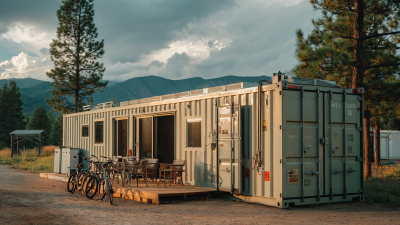
China remains a major hub for container production, steel fabrication, and modular construction. UNCTAD’s Review of Maritime Transport 2024 reports that over 80% of global merchandise trade by volume moves by sea. This scale creates steady demand for reliable shipping container modifications, from refrigerated units and workshops to offices, retail cabins, and emergency facilities. China’s manufacturing ecosystem also supports laser cutting, robotic welding, insulation, electrical installation, and surface treatment within one supply chain.
Quality is not measured by factory size alone. It depends on engineering control, material traceability, weld inspection, corrosion protection, and documented testing. ISO 668 provides the dimensional framework for freight containers, while ISO 1496 addresses structural and testing requirements for several container types. Modified units may also require careful review under the International Convention for Safe Containers, especially when they return to international transport.
This guide examines leading Chinese manufacturers through practical criteria. These include production capacity, customization experience, certification records, export support, and after-sales responsiveness. A dependable supplier should provide drawings before fabrication, identify steel grades clearly, and explain load paths around every new opening. Small details matter. A poorly sealed door can ruin insulation performance.
There is no single, universally accepted ranking of China’s “top” manufacturers. That point deserves honesty. Company websites may highlight impressive projects, but independent verification is still necessary. Buyers should request factory evidence, sample inspection reports, and references for comparable modifications. Cost matters, but the cheapest quotation may hide weaker coatings, thinner panels, or incomplete compliance documentation. The following overview therefore focuses on manufacturers that demonstrate repeatable workmanship, technical depth, and transparent communication.
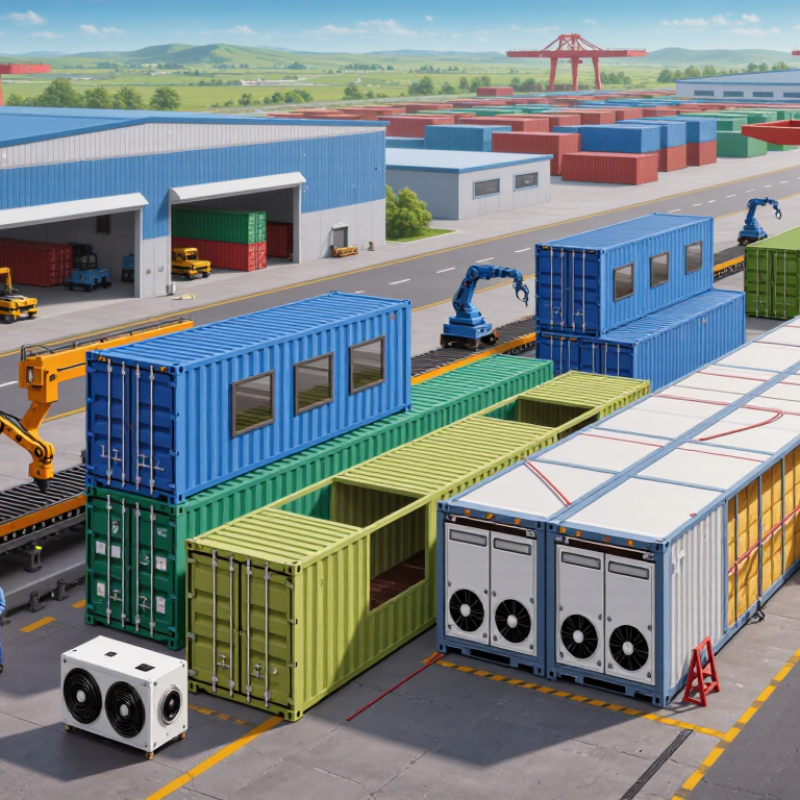
China’s container modification industry is shaped by TEU and FEU demand. A TEU represents a standard 20-foot container. An FEU represents a 40-foot unit. This distinction affects steel use, labor hours, transport cost, and workshop capacity.
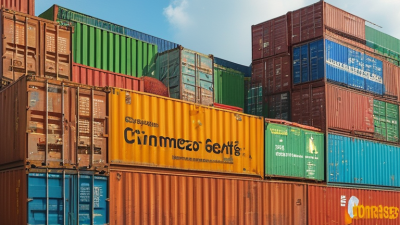
UNCTAD’s Review of Maritime Transport 2024 reported global container port throughput of about 858 million TEUs in 2023. China’s ports handled nearly 296 million TEUs during the same year, according to China’s Ministry of Transport. These figures support steady demand for modified units, including offices, workshops, storage rooms, and temperature-controlled spaces.
Scale matters, but it is not everything. A 20-foot conversion may suit smaller sites and easier inland delivery. A 40-foot modification offers more usable floor area, but lifting and transport planning become harder. ISO corner fittings, door alignment, ventilation, insulation, and load distribution require careful inspection. Small errors become expensive at the installation site.
Manufacturers should document steel grades, welding procedures, coating systems, and dimensional checks. The Container Census 2024 by BIC estimated the global container fleet at over 50 million units, showing the industry’s large operating base. Yet fleet volume does not guarantee conversion quality. Some project assumptions remain too optimistic, especially when corrosion, local climate, or foundation conditions are ignored. A reliable supplier therefore combines factory experience with engineering review, testing records, and realistic delivery calculations.
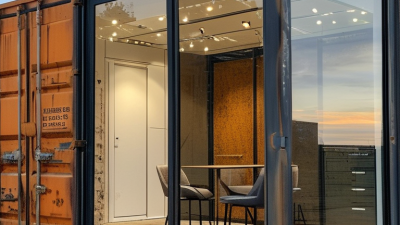
When comparing container modification manufacturers in China, ISO 668 dimensions should guide every design decision. A standard 20-foot container measures approximately 6,058 millimetres long, 2,438 millimetres wide, and 2,591 millimetres high externally. A standard 40-foot container measures approximately 12,192 millimetres long, 2,438 millimetres wide, and 2,591 millimetres high. These figures describe nominal external dimensions, not guaranteed internal working space.
Internal measurements can change with wall thickness, corner fittings, flooring, and door construction. Manufacturers with practical fabrication experience should provide technical drawings, tolerance notes, and verified measurements. A modified 20-foot unit may need equipment clearance near the doors, while a 40-foot unit offers more length but not extra width. That difference affects ventilation, insulation, shelving, and service access. High-cube models add height, but they must be specified separately from standard ISO 668 units.
Quality control should include dimensional checks before cutting, welding, and coating. I have found that small alignment errors can complicate door operation later. Measure twice. A careful supplier also checks frame squareness, roof loading, floor level, and lifting points after modification. Drawings are useful, but they are not perfect. Site conditions, accumulated tolerances, and installation methods can expose weaknesses that paperwork misses. Manufacturers should explain these limits clearly and retain inspection records for each converted container.
When a container is cut, welded, or fitted with doors, its original approval cannot be assumed. ISO 1496 provides a technical basis for checking dimensions, load paths, corner fittings, doors, floors, and weather resistance. In practice, inspectors compare drawings with the finished unit. Small changes matter.
A modified container may need visual inspection, dimensional checks, weld examination, and load testing. Test loads should reflect the intended service, not an optimistic workshop estimate. Corner posts and rails deserve close attention. A misaligned fitting can affect lifting safety. Doors must close evenly, seal against rain, and withstand repeated operation. Floors should be checked for deflection, fastener security, and local damage.
CSC 1972 focuses on safe operation and periodic examination. A modification that changes structural strength, tare mass, or handling points may require review by an authorized inspection body. Records should include material certificates, welding qualifications, test results, repair history, and updated identification data. This paperwork is not decoration. It connects the container to its safety decision.
Field experience shows that rushed modifications often create hidden stress around openings. That lesson is easy to overlook. Measurements can also be inconsistent between workshops. Independent verification helps, although it adds time and cost. The safest process is not always the fastest one. Each unit should be assessed for its actual design and use.
China Top Shipping Container Modification Manufacturers
How to Evaluate China’s Top Manufacturers by Capacity and Certifications
Evaluating a container modification manufacturer requires more than checking a polished website. Visit the production site, if possible. Look for organized steel storage, covered welding areas, and clear material labels. Ask for monthly capacity, current order volume, and typical lead times. A large workshop may still depend heavily on subcontractors. That detail matters.
Capacity should match your project, not merely appear impressive. Review equipment lists, workforce stability, and the number of completed units. Request photographs from similar projects, dimensional inspection records, and loading test results. Experienced manufacturers can explain their cutting, welding, insulation, coating, and electrical inspection procedures clearly. Vague answers deserve careful questions.
Certifications need verification. Check whether ISO 9001 covers the actual production facility and quality system. For modified containers used in international transport, confirm relevant CSC requirements with an authorized inspection body. Electrical, fire, lifting, and environmental standards may differ by destination. Certificates alone prove little. Review issuing organizations, expiry dates, scope, and test reports. Independent inspection before shipment can expose weak welds, uneven doors, or poor sealing. These problems are easy to miss in photographs. A factory may pass one audit and still need improvement. Keep written acceptance criteria, require traceability for critical materials, and compare sample quality with delivered units. Small gaps often become expensive delays.
China’s top shipping container modification manufacturers increasingly serve modular, refrigerated, and offshore projects. This shift reflects a larger logistics market. UNCTAD’s Review of Maritime Transport 2024 reported global container ship capacity above 29 million TEU in mid-2024. More capacity creates stronger demand for adaptable equipment, not simply standard boxes.
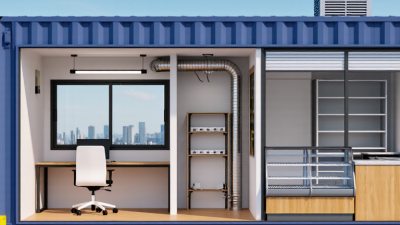
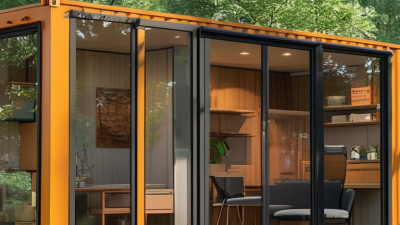
Chinese specialists modify containers for site offices, laboratories, accommodation units, and temperature-controlled storage. Experienced workshops begin with load calculations, insulation design, drainage, ventilation, and electrical protection. Refrigerated units need stable airflow and accurate temperature monitoring. Small design errors can damage cargo or increase energy consumption. ISO 1496-2 provides a useful reference for thermal containers, while ISO 668 supports dimensional compatibility. These standards should guide production, not replace project-specific testing.
Offshore containers require stricter engineering. Certification may involve DNV 2.7-1 requirements, lifting points, frame strength, impact resistance, and corrosion protection. Practical inspections should check weld quality, door sealing, floor loading, and traceable material records. The International Energy Agency has also highlighted growing electricity demand from cooling, making efficient refrigeration increasingly important. Yet customization is not automatically better. A heavier modified unit can raise handling and transport costs. That assumption needs testing. Reliable Chinese manufacturers combine workshop experience with documented calculations, inspection reports, and clear maintenance instructions. Buyers should request prototype testing before approving large production.
| Modification Segment | Common Container Formats | Typical Technical Scope | Relevant Standards and Requirements | Typical Applications | Key Quality-Control Points |
|---|---|---|---|---|---|
| Standard Dry-Container Conversion | 20-foot, 40-foot and 40-foot high-cube ISO containers | Personnel doors, windows, ventilation, insulation, internal partitions, electrical systems, flooring, access ramps and lifting points | ISO 668 dimensional series; ISO 1496-1 structural requirements; CSC safety approval where the modified unit remains intended for international transport | Site offices, workshops, storage rooms, classrooms, security cabins and temporary facilities | Frame alignment, weld quality, corrosion protection, door sealing, floor loading and preservation of corner-post strength |
| Modular Buildings and Site Facilities | Single-container modules and multi-unit configurations based on 20-foot or 40-foot units | Steel or composite insulation panels, HVAC provisions, lighting, plumbing, fire exits, sanitary systems and connection interfaces | Local building, electrical, fire-safety and occupational regulations applicable at the installation site | Worker accommodation, offices, medical rooms, canteens, laboratories and emergency response facilities | Thermal performance, moisture control, electrical protection, fire resistance, safe egress and module connection accuracy |
| Refrigerated Container Modification | 20-foot and 40-foot refrigerated containers, including high-cube configurations | Insulated cargo space, refrigeration-unit integration, temperature monitoring, remote alarms, drain systems and optional controlled-atmosphere equipment | ISO 1496-2 for thermally controlled containers; applicable electrical, food-safety and transport requirements | Frozen food, fresh produce, pharmaceuticals, laboratory materials and temperature-sensitive chemicals | Insulation continuity, door-gasket performance, temperature uniformity, airflow, power compatibility, alarm accuracy and condensate drainage |
| Offshore and DNV-Certified Containers | Offshore cargo-carrying units, baskets, tanks, frames and equipment modules | Reinforced frames, forklift pockets, pad eyes, lifting sets, slings, cargo restraints, impact protection and marine-grade coatings | DNV 2.7-1 legacy requirements or current DNV-ST-E271, together with applicable offshore project specifications | Offshore oil and gas, marine construction, wind-farm maintenance and offshore logistics | Design lifting load, proof testing, weld procedures, non-destructive testing, marking, traceability and corrosion resistance |
| Dangerous-Goods and Chemical Units | Tank containers, chemical storage modules and ventilated equipment containers | Secondary containment, compatible linings, pressure-relief devices, ventilation, spill control, grounding and hazardous-area equipment | Applicable IMDG Code, ADR, RID, CSC and tank-container requirements according to cargo and route | Chemical logistics, fuel handling, industrial maintenance and hazardous-material storage | Material compatibility, leak testing, pressure testing, grounding continuity, labeling and emergency-response provisions |
| Power, Battery and Generator Modules | 20-foot and 40-foot high-cube containers adapted for electrical equipment | Cable entry systems, switchgear rooms, battery racks, fire detection, forced ventilation, HVAC, acoustic treatment and service access | Applicable IEC electrical standards, local grid codes, battery safety rules and hazardous-area requirements where relevant | Energy storage, backup power, renewable-energy projects, telecom systems and construction sites | Thermal management, ventilation, fire separation, cable protection, earthing, noise control and equipment-maintenance access |
| High-Cube and Special-Access Conversions | 40-foot high-cube units with an external height of approximately 2.896 metres | Oversized access doors, removable panels, internal cranes, equipment skids, cable trays and reinforced mounting foundations | ISO dimensional and structural requirements, transport-route restrictions and project-specific lifting or installation criteria | Industrial machinery, mobile laboratories, broadcasting equipment and large technical systems | Transport clearance, center of gravity, payload distribution, removable-component security and lifting configuration |
| Sustainability and Refurbishment | Used or new dry and refrigerated ISO containers selected after inspection | Blast cleaning, repainting, floor replacement, seal renewal, insulation repair, component reuse and energy-efficiency upgrades | ISO container condition requirements, coating specifications and project-specific environmental criteria | Temporary facilities, circular-economy projects, storage, construction support and export refurbishment | Steel thickness, hidden corrosion, floor condition, water tightness, coating adhesion, material reuse and documentation |