Let’s discuss your container requirements
01708 225350
Call Us
sale@modularmarbles.com
Email Us

Top 10 20ft Shipping Containers for Sale Worldwide

Choosing among the Top 10 20ft Shipping Containers for Sale Worldwide requires more than comparing prices. Buyers must examine condition, specifications, supplier history, and delivery arrangements. A 20ft container may look sound outside while hiding damp flooring, distorted doors, or deep frame corrosion.

John Fossey, a respected container equipment and leasing analyst at Drewry, has said, “The right container is an asset, not simply a steel box.” This principle remains practical today. A reliable inspection should check the CSC safety plate, ISO dimensions, door gaskets, locking bars, roof panels, timber flooring, and previous repair marks. Ask for recent photographs, inspection reports, production year, and clear details about wind and watertight condition. Small details matter. Rust around the corner castings can affect handling and resale value.

This guide compares 20ft containers from established sellers and manufacturers across major markets. It considers new, one-trip, and used units, while recognizing that availability varies by port, season, and regional demand. Delivery costs may also change the final price significantly. A lower advertised price is not always the lower total cost.

No ranking is perfect. Container condition can differ between units from the same batch. Buyers should verify certification and local requirements before purchase. Still, careful evaluation can reduce surprises, protect stored goods, and support a more confident international buying decision.
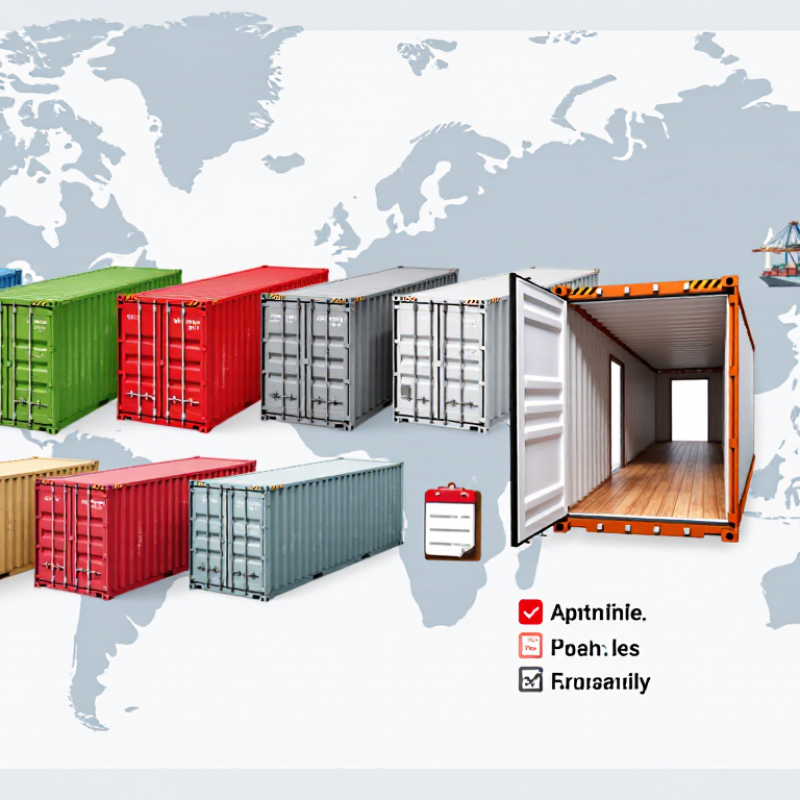
Top 10 20ft Shipping Containers for Sale Worldwide

Definition and Standard Dimensions of a 20-Foot Shipping Container

A 20-foot shipping container is a standardized intermodal unit, commonly called one TEU. Under ISO 668:2020, its nominal exterior length is 6.058 metres, with a width of 2.438 metres. Standard height is 2.591 metres. Small differences matter when a container must fit a chassis, vessel slot, or warehouse doorway. Measure carefully.

Inside, a typical general-purpose unit offers roughly 5.9 metres of usable length, 2.35 metres of width, and 2.39 metres of height. Internal measurements and capacity vary by manufacturer and build. A common volume is about 33 cubic metres, but doors, wall ribs, and flooring reduce practical loading space. The ISO 1496-1 series sets testing and specification requirements for general-purpose freight containers; it does not make every unit identical. Check the individual container’s data plate and inspection records.

The scale is enormous. UNCTAD’s Review of Maritime Transport 2024 reports global container-port throughput of about 858 million TEUs in 2023. Because one TEU corresponds to a 20-foot unit, consistent dimensions support planning across ships, terminals, and road transport. Yet “standard” is not a promise of perfect fit. Door clearances, internal width, tare weight, and payload can differ. Measure the actual unit before choosing cargo or transport equipment.

Top 10 20ft Shipping Containers for Sale Worldwide — Definition and Standard Dimensions of a 20-Foot Shipping Container

A 20-foot shipping container is a standardized intermodal freight unit commonly built to ISO dimensions. A typical standard dry container has external dimensions of approximately 6.06 m × 2.44 m × 2.59 m (20 ft × 8 ft × 8 ft 6 in) and a capacity of about 33 m³. Specifications, internal dimensions, payload, and availability vary by design, manufacturer, and unit condition.

No. Container type Typical use Approx. external dimensions (L × W × H) Typical capacity or feature Key considerations
1 Standard dry container General cargo, cartons, palletized goods, and equipment 6.06 × 2.44 × 2.59 m About 33 m³; typical internal length is about 5.9 m The most widely used 20-foot format. Internal dimensions and payload depend on construction and tare weight.
2 High-cube dry container Lightweight or bulky cargo needing additional vertical space About 6.06 × 2.44 × 2.90 m Approximately 30 cm taller than a standard-height unit 20-foot high-cube units are less common than standard 20-foot containers; confirm route and equipment availability.
3 Refrigerated container (reefer) Temperature-controlled food, pharmaceuticals, and other sensitive cargo About 6.06 × 2.44 × 2.59 m Insulated enclosure with powered refrigeration equipment Usable internal space is reduced by insulation and machinery. Requires an appropriate electrical supply and operating checks.
4 Open-top container Tall, heavy, or top-loaded cargo such as machinery and scrap About 6.06 × 2.44 × 2.59 m Removable roof cover; loading access from above Some models use a removable roof bow arrangement. Cargo and cover must be secured for transport.
5 Flat-rack container Oversized, heavy, or irregularly shaped cargo About 6.06 m long; width and end-wall arrangement vary Open sides; fixed or collapsible end walls on many models Not enclosed like a dry container. Cargo securing, lashing points, and permitted dimensions are essential.
6 Tank container Bulk liquids, gases, and certain food-grade or chemical products Typically a tank mounted in an approximately 6.06 m frame Tank capacity varies by product and design; often around 20,000–26,000 L Product compatibility, pressure rating, cleaning, certification, and applicable dangerous-goods rules must be checked.
7 Ventilated container Cargo needing air circulation, including some agricultural products About 6.06 × 2.44 × 2.59 m Ventilation openings or channels in the container structure Ventilation does not provide active temperature or humidity control; suitability depends on cargo and conditions.
8 Double-door container General cargo needing access from either end About 6.06 × 2.44 × 2.59 m Door sets at both ends Useful for loading and unloading access, but door hardware and seals should be inspected carefully.
9 Side-door container Long items, staged loading, and cargo requiring side access Approximately 6.06 × 2.44 × 2.59 m; door layout varies One or more side-opening door sections Side access can simplify handling, but openings and door mechanisms may reduce usable wall space.
10 Insulated container Goods needing protection from external temperature changes without active refrigeration About 6.06 × 2.44 × 2.59 m Insulated walls, floor, and roof; no built-in active cooling in a passive unit Performance depends on insulation condition and ambient conditions. It is not equivalent to a powered reefer.

Dimensions and capacities shown are representative estimates, not guaranteed specifications. Always verify the container’s data plate, measured internal dimensions, payload rating, condition, certifications, and suitability for the intended transport or storage use before purchase.
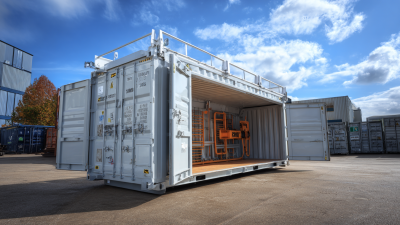
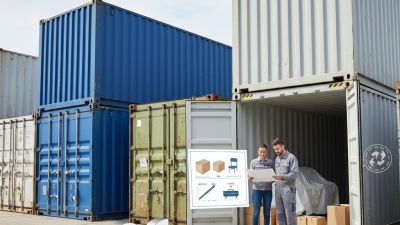
Key Criteria for Comparing 20-Foot Containers Worldwide

Comparing 20-foot shipping containers worldwide takes more than checking the advertised price. Start with the stated dimensions and capacity, then confirm the container’s actual condition. A unit described as “cargo-worthy” should have sound doors, usable seals, and a floor without soft or broken sections. Ask for recent photographs of the roof, corners, and interior. Small dents are common; active leaks are not.

Details matter. Measure the doorway if you plan to load bulky equipment, and check the internal height against your tallest item. A standard 20-foot container usually offers about 33 cubic metres of space, but usable capacity varies with design and condition. Verify tare weight and maximum payload on the data plate, rather than relying only on a listing. Plates can be hard to read. Request a clear image.

Compare delivery terms as carefully as the container itself. Transport access, unloading equipment, and distance from the depot can change the total cost substantially. Ask whether the quoted price includes delivery, placement, and any inspection fees. For international purchases, confirm documentation and applicable import requirements with qualified local authorities. Standards and terminology differ between markets, so two sellers may describe similar units differently. I would not treat a polished photo as proof of quality; an independent inspection may feel like extra effort, but it can expose a damaged floor or misaligned door before delivery.

Ten Types of 20-Foot Shipping Containers Available for Sale

A standard dry container suits cartons, tools, and household goods that need shelter from rain. High-cube models add interior height, though 20-foot versions can be less common. Open-top containers load tall cargo from above, while hard-top units use a removable rigid roof. Check roof seals and locking points closely.

For awkward loads, a flat rack has end walls and no full side panels. An open-side container provides wider access for bulky items. Double-door models open at both ends, which can simplify loading. Refrigerated containers control temperature but need a dependable power supply. Insulated containers reduce heat transfer without active cooling. Tank containers carry compatible bulk liquids in a secured tank frame.

That makes ten types. Availability varies by region and condition. Before buying, confirm external and internal dimensions, door clearance, floor condition, and any repair history. A fresh coat of paint can hide little—or quite a lot. Ask for recent photos of the roof, corners, and underside, then compare the unit against your actual loading method. Used containers may show dents or patched flooring; these details are not always deal-breakers, but they deserve a closer look.

Specifications, Condition Grades, and Price Factors

A standard 20ft dry container measures about 6.06 metres long, 2.44 metres wide, and 2.59 metres high externally. Internal dimensions vary by manufacturer and age, but capacity is typically around 33 cubic metres. Check the data plate for maximum gross weight and payload; do not rely on a seller’s generic listing. The Bureau International des Containers maintains container identification and registration systems, while ISO 668 sets dimensional classifications. Small differences matter: a pallet that fits on paper may not clear a door frame.

Condition grades are useful, but they are not universal guarantees. “Cargo-worthy” usually indicates suitability for transport, subject to inspection and applicable requirements; “wind and watertight” describes protection from ordinary weather, not structural perfection. Look closely at floor damage, door seals, corner castings, and corrosion around roof seams. A fresh coat of paint can hide more than it fixes. Ask for dated photographs and an independent inspection when the unit’s history is unclear.

Prices depend on location, age, condition, availability, and delivery distance. UNCTAD’s Review of Maritime Transport 2024 reported that global container ship capacity grew by 8.2% in 2023, a useful reminder that changing fleet supply can affect equipment availability. Freight benchmarks such as Drewry’s World Container Index track shipping-rate movements, not container purchase prices, but they help explain delivery-cost swings. Compare the unit price with haulage, unloading, and repair estimates. I would still budget for one unexpected repair.

Top 10 20ft Shipping Containers for Sale Worldwide

Indicative price ranges by condition grade (USD). Actual prices vary by location, availability, delivery, inspection results, and market conditions.

How to read this chart: Lower-grade units may need repairs and may not be suitable for cargo transport. Cargo-worthy containers are generally inspected for transport use; one-trip units have typically made a limited journey. Confirm dimensions, CSC plate validity where relevant, condition, and delivery costs with the seller before purchase. Prices shown are broad illustrative market ranges, not live quotes.

Supplier Verification, Delivery, and Regulatory Requirements

A 20ft container can look sound in a listing and still arrive with stiff doors or a soft floor. Ask the supplier for recent, dated photographs of the exact unit, its identification plate, and close-ups of the roof, corner castings, door seals, and floor. Request a written condition grade and clarify what it covers. Vague promises are not proof. Where practical, arrange an independent inspection before payment; even experienced buyers can miss hidden corrosion.

Confirm the supplier’s legal business details and make sure the sales contract names the unit, condition, price, and delivery terms. Check that the container’s dimensions and gross weight suit your site and intended transport. A tight driveway matters. Measure gate width, overhead clearance, turning space, and the area needed for a crane or truck. Ask who unloads the container and who pays if access fails. Delivery estimates can slip, so leave room in the schedule.

Rules depend on destination and use. For international transport, verify that the container’s safety approval plate and inspection status meet applicable requirements. For import, check customs documents, taxes, and any local port or transport rules with the relevant authorities or a qualified broker. If you plan to use the unit for storage or as a structure, ask local officials about permits, foundation, and fire requirements. Requirements vary, and paperwork is easy to misread. Verify it before dispatch.

We are proud to support

Registered Company Name: Upminster Containers Limited. Registered Address: Mardyke Works, St Mary's Lane, Upminster, Essex RM14 3PA. Registered Company Number: 00940382
Developed & Maintained By Space Rocket Digital.
chevron-down