Let’s discuss your container requirements
01708 225350
Call Us
sale@modularmarbles.com
Email Us

2026 Best Onsite Storage Containers for Global Buyers?

Choosing the best onsite storage containers for global buyers in 2026 requires more than comparing prices and photographs. Location, climate, handling equipment, and delivery distance can change the real purchase cost. A container that works beside a dry warehouse may fail near a humid coastline.

UNCTAD’s Review of Maritime Transport 2024 reported that global maritime trade grew by 2.4% in 2023. It also highlighted continuing pressure from route disruptions, port congestion, and freight-rate volatility. These conditions make local availability, verified lead times, and flexible delivery planning important for onsite storage containers. Buyers should examine steel condition, door seals, ventilation, floor loading, locking systems, and repainting quality. Small details matter. A warped door can waste hours every week.

The World Bank’s Logistics Performance Index 2023 compares logistics performance across 139 economies. Its indicators include infrastructure, shipment reliability, tracking, and timeliness. These measures provide a useful framework for evaluating suppliers, not merely containers. ISO 668 dimensions support predictable handling, while the CSC framework remains relevant when units are moved through international transport networks. However, standards do not guarantee a perfect product. Inspection still matters.

This guide compares container types, supplier practices, regional availability, and ownership costs for 2026. It considers new, one-trip, refurbished, and rental options. Some recommendations may change as freight markets and regional inventories shift. That uncertainty deserves attention. A lower quote is not always a lower cost. Global buyers should request inspection photos, specification sheets, delivery terms, warranty details, and corrosion records before committing.
2026 Best Onsite Storage Containers for Global Buyers?

What Are Onsite Storage Containers and How Do They Work?

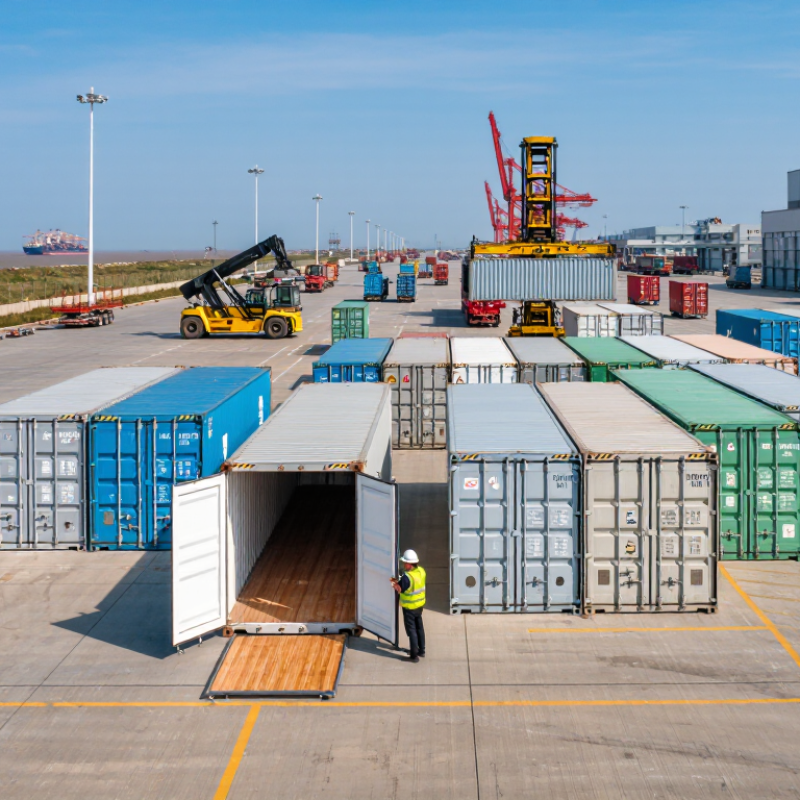
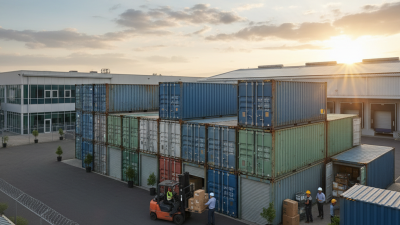
Onsite storage containers are secure, movable units placed near a workplace, warehouse, farm, or construction area. They usually use a steel body, reinforced doors, and a lockable entry point. The container arrives by truck and is positioned on firm, level ground. Timber supports or concrete pads can improve stability and reduce floor contact with wet soil.

Inside, goods are stored directly on the floor or on pallets and shelving. Ventilation openings help reduce condensation, while weather-resistant seals limit rain and dust. However, ventilation alone cannot prevent moisture problems in every climate. Buyers should check roof condition, door alignment, floor strength, corrosion protection, and internal dimensions before purchasing.

A practical inspection includes opening each door, testing the locking system, and checking for daylight through seams. Measure the delivery route too. Narrow gates, weak bridges, or overhead cables can delay placement. Global buyers should also confirm transport limits, lifting requirements, material specifications, and local site standards. I would not treat a container as a simple metal box. Poor leveling can twist the frame, and careless loading can damage doors or floors. Regular checks after heavy rain, strong wind, or relocation help reveal small faults before they become expensive repairs.
Which Onsite Storage Container Types Suit Different Global Needs?

Global buyers rarely need one universal storage container. Their choice depends on climate, cargo access, duration, and handling equipment. UNCTAD reported that global maritime trade grew by 2.4% in 2023, increasing pressure on flexible storage and logistics planning.

Standard dry containers suit boxed goods, tools, furniture, and palletized inventory. Twenty-foot units are easier to position in narrow yards. Forty-foot units offer better volume efficiency. High-cube containers add approximately 30 centimeters of internal height, helping with bulky but lightweight products. However, taller units may create clearance problems near low gates or overhead structures.

Open-side containers support frequent loading from the long wall. They work well for pipes, timber, event equipment, and irregular cargo. Refrigerated containers serve temperature-sensitive food, medicines, and laboratory materials. FAO estimated that 13.2% of food was lost between harvest and retail in 2021, showing why temperature control matters. Insulated units can protect heat-sensitive goods, but they do not replace active refrigeration.

Site conditions deserve equal attention. Coastal buyers should inspect door seals, flooring, and corrosion before acceptance. High humidity can damage cardboard faster than expected. A lockbox improves security, yet it cannot correct poor placement or weak access control. The best specification may still be imperfect. I would confirm local lifting capacity, ventilation needs, and service availability before ordering, because a suitable container can become impractical after delivery.

2026 Best Onsite Storage Containers for Global Buyers

Which onsite storage container types suit different global needs?

Typical internal volume is based on commonly used ISO container specifications. Standard 20-foot containers suit compact sites and moderate storage needs, while 40-foot high-cube containers provide the greatest dry-storage capacity. Open-top units are useful for oversized or top-loaded cargo, and refrigerated containers are designed for temperature-sensitive goods but usually offer less usable internal volume because of insulation and cooling equipment. Actual dimensions vary by manufacturer and equipment configuration.

How to Evaluate Size, Materials, Security, and Weather Resistance

For global buyers, storage containers should be judged by site conditions, not appearance alone. UNCTAD’s Review of Maritime Transport 2024 notes that maritime shipping carries over 80% of world merchandise trade. That scale makes durability a practical concern. Measure usable internal space, door clearance, and delivery access. A container may fit the product but block a narrow yard entrance.

Steel thickness, weld quality, floor construction, and corrosion protection deserve close inspection. Galvanized or weathering steel can reduce surface damage, but neither removes maintenance needs. Check roof seams, door gaskets, drainage points, and ventilation openings. The WMO’s State of the Global Climate 2024 reported that 2024 was likely the first calendar year above 1.5°C over the pre-industrial average. Heat, heavy rain, and stronger storms may challenge weak seals and poorly anchored units. Security also needs layers. Use protected locking points, concealed hinges, tamper-evident seals, and optional monitoring. Cargo theft reports show repeated targeting of unattended freight, although risks vary sharply by region.

Tips: Request material certificates, weld photographs, load ratings, and a recent inspection record. Test the doors physically. Check whether they close evenly after rain. Leave airflow around stored goods. Raise the container above standing water. A perfect specification sheet cannot replace a site visit. I would also question vague claims such as “all-weather” or “high security.” They often lack measurable standards, and that weakness can become expensive later.

2026 Best Onsite Storage Containers for Global Buyers? — How to Evaluate Size, Materials, Security, and Weather Resistance

Container Type Typical External Size Approximate Internal Volume Typical Payload Capacity Main Construction Materials Security Features to Evaluate Weather-Resistance Features Best Onsite Applications Important Buying Considerations
10-Foot Standard Approximately 3.0 m L × 2.44 m W × 2.59 m H Approximately 15 m³ Commonly about 8,000–10,000 kg, depending on tare weight and design Corrosion-resistant weathering steel body; steel frame, corrugated side panels, and timber or composite floor Locking-bar doors, protected lockbox, internal locking rods, tamper-resistant hinges, and optional alarm or access-control hardware Continuous door gaskets, sealed roof seams, raised floor, exterior protective coating, and drainage around the door sill Small construction sites, retail inventory, tools, landscaping equipment, and compact urban locations Check local delivery access, crane or forklift requirements, door swing clearance, and usable floor area around the container
20-Foot Standard Approximately 6.06 m L × 2.44 m W × 2.59 m H Approximately 33 m³ Commonly about 21,000–28,000 kg, depending on the container design Weathering steel frame and panels; marine-grade plywood or composite flooring is commonly used Two-door locking bars, recessed lockbox, high-security external padlock, tamper-evident seals, and optional CCTV monitoring Replaceable door seals, sealed corner posts, roof designed to shed rainwater, anti-corrosion primer, and topcoat General onsite storage, machinery parts, building materials, archives, and medium-volume stock A practical balance of capacity and transportability; verify floor loading, internal height, and ventilation requirements
40-Foot Standard Approximately 12.19 m L × 2.44 m W × 2.59 m H Approximately 67 m³ Commonly about 25,000–29,000 kg, depending on tare weight and permitted gross mass Weathering steel shell, reinforced steel end frames, corrugated panels, and heavy-duty flooring Protected lockbox, multi-point locking bars, internal hasp protection, tamper-evident seals, and optional electronic monitoring Full perimeter door gaskets, sealed welds, corrosion-resistant coating system, roof drainage, and raised floor construction Large project sites, warehouses, event logistics, agricultural supplies, and long-term inventory storage Requires a long, level placement area; confirm turning radius, delivery route, ground bearing capacity, and local placement rules
40-Foot High Cube Approximately 12.19 m L × 2.44 m W × 2.90 m H Approximately 76 m³ Commonly about 25,000–29,000 kg, subject to the container’s gross mass rating Weathering steel structure with reinforced frame, corrugated steel walls, and heavy-duty floor panels Standard locking bars plus lockbox protection, security seals, optional internal partitions, lighting, and access-control systems Door compression seals, coated steel surfaces, sealed roof and wall joints, ventilation openings with covers, and elevated flooring Bulky goods, tall equipment, modular fit-outs, high-volume stock, and applications requiring additional vertical clearance Provides roughly 30 cm more internal height than a standard unit; verify overhead clearance and wind exposure at the site
Open-Side Container Usually based on a 20-foot or 40-foot footprint; one full side opens through multiple doors Similar to the equivalent standard-length container, with slightly less usable space around door hardware Generally similar to the equivalent standard-length unit, subject to its structural rating Steel frame and corrugated steel body with full-length side-door assemblies and reinforced hinges Multiple locking points, protected lockbox, tamper-resistant hinges, independent side-door restraints, and optional monitored access Multiple gasketed doors, reinforced door thresholds, sealed locking hardware, corrosion-protection coating, and controlled drainage Palletized goods, long materials, machinery loading, retail displays, and sites where forklift access from the side is useful Side doors require a wider clear zone; inspect gasket alignment and door operation carefully because more moving parts require maintenance
Insulated Storage Container Often available in standard 20-foot or 40-foot footprints; external dimensions vary with insulation thickness Lower than an equivalent dry container because wall, ceiling, and floor insulation reduces internal volume Usually lower than a standard dry container when refrigeration or additional equipment is installed Steel exterior with insulated wall and ceiling panels; insulation may use polyurethane or another closed-cell system Lockbox, gasketed doors, controlled key access, internal temperature monitoring, and optional alarm notification Improved thermal stability, insulated doors, sealed panel joints, vapor control, corrosion protection, and protected drainage Temperature-sensitive materials, electronics, pharmaceuticals requiring controlled conditions, and moisture-sensitive inventory Insulation does not automatically provide active temperature control; verify thermal performance, power needs, condensation control, and monitoring
Modified Site Office or Storage Unit Commonly based on 20-foot or 40-foot dimensions; doors, windows, shelving, and electrical systems reduce storage area Depends on internal partitions, insulation, electrical equipment, and installed fixtures Must be confirmed after modifications; structural and floor-load ratings may differ from a standard container Steel container shell with added insulation, wall lining, electrical components, windows, personnel doors, or shelving Commercial-grade personnel door, multipoint lock, protected external hardware, window security film or bars, and optional intrusion alarm Weather-sealed personnel doors, flashed windows, sealed cable penetrations, insulated roof and walls, and rust-protection treatment Onsite offices, secure tool rooms, project control rooms, welfare areas, and combined storage-workspace applications Request drawings, electrical certification, fire-safety details, modification records, and confirmation that alterations preserve structural integrity

Note: Dimensions, payload figures, floor loads, insulation performance, and corrosion-protection systems vary by construction standard, modification, and local regulations. Buyers should verify the manufacturer’s technical drawing, maximum gross mass, door clear opening, wind and snow-load requirements, placement permits, and delivery conditions before purchase.

What International Buyers Should Know About Standards and Shipping

For global buyers, an onsite storage container is not simply a steel box delivered to a property. Its dimensions, door design, ventilation, floor loading, and corrosion protection affect daily use and transport planning. A practical inspection starts with the purchase specification, not a supplier photograph. Ask for steel grade, wall thickness, tare weight, payload, coating system, and test records. Photographs can mislead. Check the actual unit.

International shipments require more than a quoted freight price. Confirm whether the container moves by road, rail, or sea, because handling limits and equipment vary. The seller should state packing details, lifting points, dimensions, gross weight, and unloading requirements. Ask which product, labeling, customs, and wood-packaging rules apply in the destination market. Requirements differ. A local customs broker or standards professional can verify current obligations before payment. Do not rely on a copied certificate; match its model number and issue date to the offered container.

For placement, check ground bearing, drainage, access width, turning space, and local planning controls. A container may arrive, yet fail to fit through the gate. This mistake is common. Request a pre-shipment inspection, serial-number photos, and a written damage-report process. Insurance should clarify who carries risk during loading, transit, port storage, and final delivery. Cheap freight may hide crane fees, demurrage, or inland surcharges. Even experienced buyers miss these details. That deserves a second review.

How to Compare Suppliers, Costs, Installation, and Long-Term Value

2026 Best Onsite Storage Containers for Global Buyers?

How to Compare Suppliers, Costs, Installation, and Long-Term Value

Comparing onsite storage containers starts with the supplier, not the product photo. Request steel thickness, coating details, load ratings, factory inspection records, and recent project references. Experienced suppliers should provide dimensional drawings and clear tolerances. Ask how they manage delays, replacement parts, and warranty claims across borders. A polished quotation is not proof of reliable service.

Price needs a wider lens. Compare the container, inland transport, ocean freight, insurance, duties, unloading, foundation work, and local installation. A low factory price can become expensive after port handling and crane rental. In one project, the missing unloading charge changed the budget by several thousand dollars. Spreadsheets help, but they can miss downtime and site preparation. Leave room for uncertainty.

Installation depends on ground conditions and daily use. Check drainage, wind exposure, snow loads, access width, anchoring, and local building requirements before shipment. A level concrete base usually improves door alignment and reduces water problems. Measure the delivery route carefully; a narrow gate can stop a large vehicle. Long-term value comes from corrosion resistance, replaceable seals, secure locking points, ventilation, and modular expansion. Maintenance records should be simple enough for site staff to follow. The cheapest option may still win, but only after its weaknesses are visible.

We are proud to support

Registered Company Name: Upminster Containers Limited. Registered Address: Mardyke Works, St Mary's Lane, Upminster, Essex RM14 3PA. Registered Company Number: 00940382
Developed & Maintained By Space Rocket Digital.
chevron-down