In 2026, arranging storage container delivery is not simply a matter of choosing a container size. The truck needs a clear route, a suitable drop-off area, and enough room to position the unit safely. A narrow gate or soft ground can change the plan. Small details matter.
The American Trucking Associations’ American Trucking Trends 2024 report says U.S. trucks moved 11.27 billion tons of freight in 2023. That figure does not measure container deliveries alone, but it highlights how much freight depends on road transport. Fred Smith, FedEx founder, captured a related logistics principle: “The information about the package is just as important as the package itself.” For a container delivery, that information includes the site address, access restrictions, placement instructions, and a reliable contact number.
This guide explains how to select a container, compare delivery options, prepare the site, and confirm the drop-off details. Measure the entrance, check overhead clearance, and photograph the proposed placement area before booking. Ask the provider how the container will be unloaded and what equipment the site requires. Plans can slip. Rain, traffic, or an overlooked obstacle may affect the schedule, and even a careful checklist cannot eliminate every surprise. A realistic delivery plan leaves room to adjust.
Before arranging storage container delivery in 2026, list what you need to store and how long you expect to keep it. Measure bulky items, such as a sofa, mattress, or shelving unit, and note their dimensions. A quick sketch helps reveal awkward gaps. Leave room for a narrow aisle if you will retrieve items later. Measure twice.
The Self Storage Association’s 2023 Self Storage Demand Study estimated that 11.1% of U.S. households used self-storage. That figure shows how common storage needs are, but it cannot tell you which container size fits your belongings. Build your estimate from an inventory instead. Include boxes, tools, seasonal equipment, and anything that cannot be stacked safely. Then ask the supplier for usable interior dimensions, not just exterior measurements. A container’s walls and door can reduce practical space.
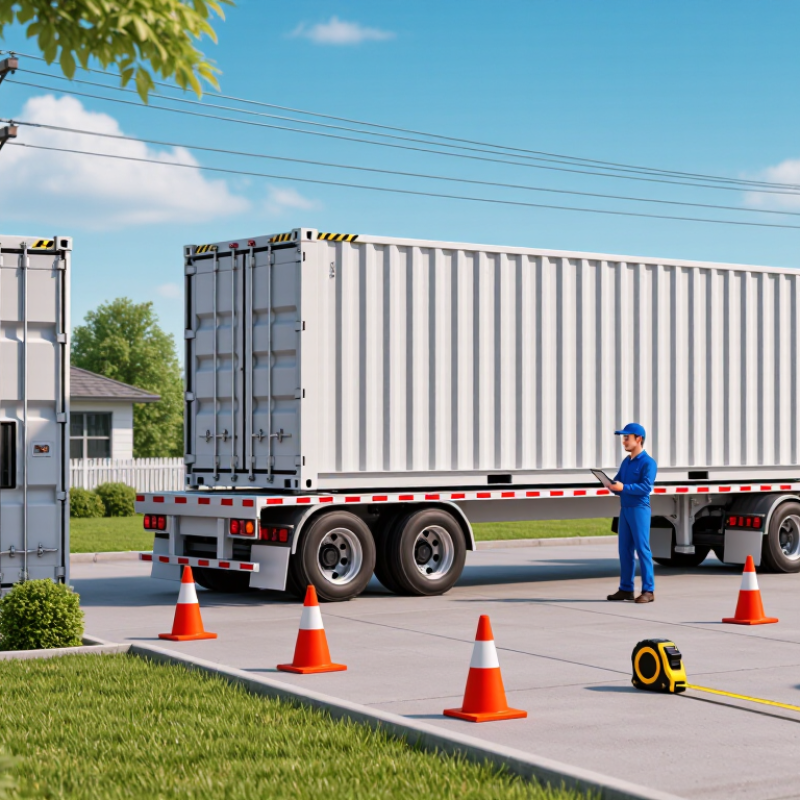
Next, check the delivery site. Measure gate openings, driveway width, overhead branches, and the turning area for the delivery vehicle. Photograph tight corners and slopes; descriptions alone can miss a problem. Confirm the planned drop-off surface, access hours, and whether the container door will face a usable path. A delivery window is not a guaranteed arrival time, so keep someone available and move vehicles beforehand. It is easy to overlook the door swing. That small mistake can make a well-sized container frustrating to use.
| Planning Dimension | Typical Information | How to Define Your Requirement | Delivery Consideration |
|---|---|---|---|
| Items to be stored | Furniture, boxed household goods, tools, equipment, or building materials may require different layouts and access. | Make an inventory, note unusually large or heavy items, and identify anything that must remain accessible. | Tell the delivery provider about heavy, oversized, fragile, or restricted items when requesting a container. |
| Estimated storage volume | A 20-foot container is commonly listed at approximately 1,170 cubic feet of interior volume; a 40-foot container at approximately 2,390 cubic feet. Actual usable space varies by container design. | Compare your estimated volume with the container’s stated usable capacity, and allow room for safe loading and access. | Confirm the exact internal dimensions and capacity of the unit being delivered rather than relying only on its nominal length. |
| Container size | A standard 20-foot container is about 20 ft long, 8 ft wide, and 8 ft 6 in high externally. A standard 40-foot container is about 40 ft long, 8 ft wide, and 8 ft 6 in high externally. | Choose a size based on the inventory, available site area, and whether you need room to organize or retrieve items. | External dimensions are approximate and can vary. Check the delivered unit’s measurements and plan for the delivery vehicle’s operating space. |
| Door and loading access | Container doors are located at one end. The opening is smaller than the full external width and height. | Measure bulky items and compare them with the door opening dimensions supplied for the specific container. | Leave the door end accessible after placement. Confirm the requested door orientation before delivery. |
| Storage duration and access frequency | Short-term projects may need frequent access; longer-term storage may prioritize weather protection and a secure location. | Estimate how long the container will be needed and how often people or vehicles must reach it. | Check whether the placement location remains accessible throughout the rental period and whether local rules apply. |
| Placement surface | A firm, level surface helps support the container and allows its doors to operate properly. | Inspect the site for soft ground, slopes, drainage issues, overhead obstructions, and underground utilities. | Describe the surface and any site constraints to the delivery provider. Ask what preparation or support is required for the selected unit. |
| Access route | Delivery vehicles need a suitable approach, turning area, and clearance to position the container. | Measure narrow gates, driveways, turns, and low branches or wires. Share photos or a site plan when possible. | Ask the provider to confirm vehicle access requirements; needed clearance depends on the truck, equipment, and placement method. |
| Placement area | The site must accommodate the container footprint plus the space needed for delivery, positioning, and door access. | Mark the intended location and check property boundaries, building entrances, fire lanes, and neighboring access. | Confirm the precise placement location in advance and obtain permission from the property owner or manager if needed. |
| Permits and local requirements | Rules for temporary containers can differ by municipality, property type, and placement location. | Check with the local authority, landlord, property manager, or homeowners’ association before scheduling delivery. | Confirm permit, setback, duration, and access requirements before the container arrives. |
| Delivery appointment | Delivery timing depends on the provider’s schedule, site readiness, and access conditions. | Choose a date when someone can confirm the placement area and provide access instructions. | Reconfirm the appointment, contact details, arrival instructions, and any site restrictions before delivery day. |