China Top 10 20ft Container Manufacturers for Global Buyers
Choosing the right 20ft containers manufacturer can shape shipping costs, cargo safety, and long-term operational reliability. Global buyers often compare factory capacity, steel quality, welding standards, certifications, delivery records, and after-sales support. A polished catalog is not enough. Real performance appears in details, such as door alignment, floor treatment, paint thickness, and weather-resistant seals.
This guide examines ten leading Chinese manufacturers serving international markets. It focuses on practical evidence, including production experience, quality-control procedures, export capability, and compliance with recognized container standards. Buyers can expect different strengths across the list. Some factories may offer competitive pricing, while others provide stronger customization, faster lead times, or broader inspection support. Fit varies. A responsible supplier should clearly confirm dimensions, payload ratings, material specifications, and documentation before any purchase decision.
The discussion also considers how manufacturers communicate with overseas customers. Prompt answers, traceable inspection reports, and transparent warranty terms often reveal more than promotional language. Details matter. Independent inspections can help verify workmanship before shipment, especially when orders involve multiple units or demanding routes. No ranking remains perfect for every buyer, because budget, destination, cargo type, and delivery schedule change the priorities. This overview therefore provides a practical starting point, not a substitute for supplier due diligence. It aims to help procurement teams compare credible options with clearer expectations and fewer costly surprises.
20ft Containers: Types, Standards, and Common Global Uses
China Top 10 20ft Container Manufacturers for Global Buyers
20ft Containers: Types, Standards, and Common Global Uses
A standard 20ft dry container measures about 6.06 meters long, 2.44 meters wide, and 2.59 meters high externally. Its internal space is usually close to 33 cubic meters. Exact dimensions vary slightly by manufacturer, steel thickness, and door design. Buyers should check the data plate, not rely on a sales image.
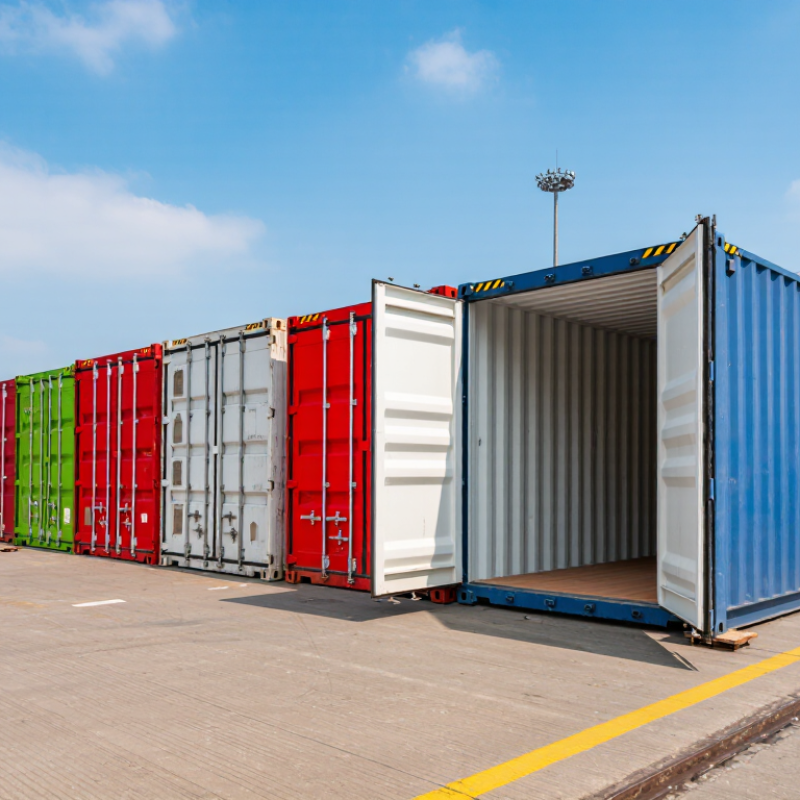
The dry van is the most common type for machinery, packaged food, furniture, and general cargo. Refrigerated 20ft containers maintain controlled temperatures for sensitive goods. Open-top units suit tall equipment, while flat racks carry heavy or unusually shaped machinery. A 20ft high-cube model offers extra height, though availability may be less consistent in some markets.
International shipments commonly follow ISO 668 dimensions and ISO 1161 corner fitting requirements. The CSC safety plate confirms that a container has passed required structural inspections. It should show inspection details clearly. Road, rail, and port operators also check gross weight, axle limits, and lifting points. These rules are practical, not decorative.
A typical unit may carry around 28 tons, but payload depends on tare weight and local transport limits. This is where buyers sometimes misjudge capacity. Salt air, rough handling, and repeated loading can shorten service life. Inspect door seals, floor condition, corner posts, and welds before purchase. A lower price can become expensive after one overlooked repair.
How to Evaluate 20ft Container Manufacturers in China
How to Evaluate 20ft Container Manufacturers in China
A capable 20ft container manufacturer should provide traceable steel certificates, welding records, and dimensional inspection reports. Ask for the factory’s quality plan before requesting a quotation. ISO 668 defines standard external dimensions, while CSC requirements support safe international transport. Check corner castings, door locking bars, floor thickness, and roof welds in person or through an independent inspector.
Data adds useful context. The World Bank’s Logistics Performance Index 2023 gave China a logistics score of 3.7 out of 5. This supports strong manufacturing and export infrastructure, but it does not prove every factory performs equally. UNCTAD’s Review of Maritime Transport 2024 projected about 2% growth in maritime trade during 2024. Demand can encourage faster production, sometimes at the expense of inspection time.
Visit the production line if possible. Look for clean weld seams, dry timber storage, calibrated measuring tools, and separate repair areas. Request salt-spray results, paint-system details, and a written warranty. A serious supplier should explain tolerances clearly, not hide behind general claims.
Low prices still tempt me, sometimes wrongly. Compare total landed cost, including inspection, inland delivery, spare parts, and possible rework. One overlooked detail matters: confirm whether the quoted container is cargo-worthy, wind-and-watertight, or merely new-built. Photos can mislead. Independent verification remains the safer decision.
China’s Top 10 20ft Container Manufacturers for Global Buyers
China’s Top 10 20ft Container Manufacturers for Global Buyers should be judged by evidence, not factory size alone. China remains a major container production base, supported by strong steel processing and export infrastructure. UNCTAD’s Review of Maritime Transport 2024 expects global maritime trade to grow about 2% in 2024. That demand keeps standard dry containers commercially important.
A reliable manufacturer should follow ISO 668 dimensions and provide CSC safety documentation for international use. Buyers should verify 6.058-meter external length, corrosion-resistant steel, and consistent door alignment. The floor should resist heavy cargo, while welds must remain clean around corner castings. Independent inspection records matter more than attractive showroom photographs. Request coating thickness, steel grade, payload data, and water-test results before payment.
Small details reveal experience. Ask whether the factory controls moisture inside plywood floors. Confirm replacement parts and repair support near major ports. Drewry’s container market analysis has repeatedly highlighted equipment imbalances and repositioning costs, so delivery timing deserves serious attention. A cheaper unit can become expensive after delays, repainting, or rejected documentation. I would still compare ten suppliers using the same checklist. No factory is perfect. Even experienced buyers can overlook condensation risk during winter shipping. Verified production samples, traceable quality records, and clear contracts create stronger purchasing decisions for global importers.
Manufacturing Strengths, Certifications, and Product Differences
China Top 10 20ft Container Manufacturers for Global Buyers
Manufacturing Strengths, Certifications, and Product Differences
China’s leading 20ft container manufacturers usually combine steel processing, automated welding, and large-scale coating lines. These capabilities support stable output and shorter production schedules. During factory visits, buyers should inspect weld consistency, corner castings, floor thickness, and door alignment. Small defects often reveal larger quality-control problems.
Certification evidence matters more than attractive brochures. A reliable supplier should provide current ISO 9001 records, CSC safety approval, material certificates, and inspection reports when applicable. Buyers should verify certificate numbers with issuing bodies. Production controls may include dimensional checks, coating-thickness tests, water testing, and load inspections. The process sounds simple. It is not always consistent.
Product differences can be significant. Standard dry containers suit general cargo, while refrigerated units require insulation, temperature controls, and stronger maintenance support. Open-top models help load tall goods. Flat racks serve oversized cargo but demand careful engineering and securing points. Side-opening and customized units may improve access, yet they often require longer lead times. Some manufacturers excel at volume production, while others handle complex modifications better. Neither capability proves universal reliability. A practical comparison should review sample units, after-sales response, spare-part availability, and delivery records. Buyers should also request a pre-shipment inspection. Even experienced purchasing teams can overlook coating damage under a door frame.
China Top 10 20ft Container Manufacturers for Global Buyers
Manufacturing Strengths, Certifications, and Product Differences
Standard Dry
General-purpose steel container for packaged cargo, machinery, and palletized goods.
Refrigerated
Insulated container designed for temperature-controlled cargo; refrigeration equipment increases tare weight.
Open Top
Removable roof construction for tall, heavy, or top-loaded cargo.
Tank Container
ISO-framed tank equipment for bulk liquids and gases, subject to cargo-specific regulations.
Reference values are representative 20ft equipment ratings in metric tonnes. Actual tare weight, payload, and maximum gross mass vary by design and must be verified on the container CSC safety plate. Common buyer checks include ISO 668 dimensional compliance, ISO 1496 equipment requirements, and certification under the International Convention for Safe Containers (CSC).
Pricing, Export Processes, and Supplier Selection Considerations
Buying a 20ft container requires more than comparing factory quotations. Recent UNCTAD Review of Maritime Transport data shows the global container fleet expanded by about 8.5% in 2024. Greater supply can improve availability, but steel grade, flooring, paint, certification, and inland delivery still shape the final price. New standard units often fall near USD 1,500–2,500 before freight, while special coatings or modified doors can raise the cost sharply. Treat online prices as reference points, not promises.
Export procedures need careful checking. Ask for a pro forma invoice, packing details, container number, inspection records, and clear Incoterms. The International Chamber of Commerce’s Incoterms framework separates seller and buyer responsibilities for transport, insurance, customs, and risk. Verify whether the quotation includes local handling and documentation fees. A low factory price may become expensive at the port.
Small details matter. Request recent production photos, weld samples, floor thickness, and a test report for door seals. Independent inspection before loading is usually cheaper than correcting leakage later. The Container xChange 2024 market analysis also highlights continuing volatility in container availability and repositioning costs, so delivery timing deserves written protection. Compare at least three suppliers using the same specification sheet. Check export experience, response speed, replacement policy, and payment milestones. I would not rely on certificates alone; documents can be valid while workmanship remains inconsistent. Supplier rankings help, but traceable evidence matters more.